
 EN
EN
 AR
AR
 HR
HR
 DA
DA
 NL
NL
 FI
FI
 FR
FR
 DE
DE
 EL
EL
 HI
HI
 IT
IT
 JA
JA
 KO
KO
 NO
NO
 PL
PL
 PT
PT
 RO
RO
 RU
RU
 ES
ES
 SV
SV
 TL
TL
 IW
IW
 ID
ID
 LT
LT
 SR
SR
 VI
VI
 SQ
SQ
 HU
HU
 TH
TH
 TR
TR
 AF
AF
 MS
MS
 GA
GA
 BN
BN
 HA
HA
 IG
IG
 MR
MR
 NE
NE
 YO
YO
 MY
MY
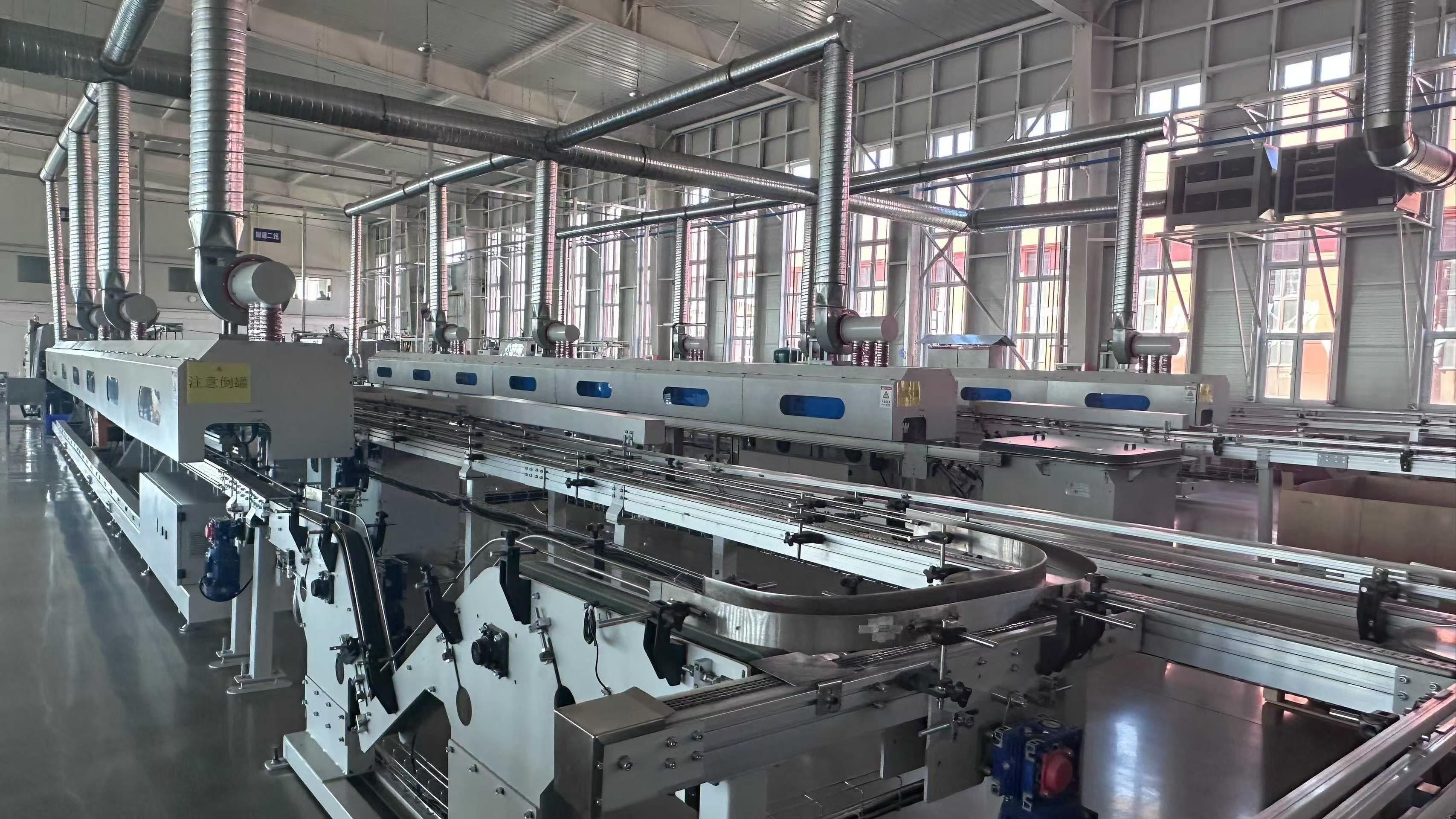
Automatic Conveyor System for 3-Piece Can Production Lines
A can conveyor system rarely gets attention in a factory tour, yet it touches every can on the line, from the first weld to the final pallet. This article explains what an automatic conveyor system does in a 3-piece can line, which conveyor types you'll meet along the way, and how to choose the right layout. It's written by Hubei Baoli Technology, a China-based manufacturer of can-line auxiliary equipment.
What Does a Conveyor System Do in a 3-Piece Can Line?
A three-piece can moves through many stations: welding, coating, curing, necking, flanging, leak testing, seaming, and finally palletizing. Each machine runs at its own pace, and no two are perfectly matched. The conveyor is what absorbs those differences.
A good can manufacturing conveyor does four jobs at once:
- Transports cans between stations, often across different heights and floors
- Buffers cans so a short stop upstream doesn't halt the whole line
- Orients and guides cans so they enter each machine cleanly
- Protects the can body and coating from dents, scratches and jams
At speeds up to 600 cpm, a can passes any point in a fraction of a second. Small conveyor flaws, such as a rough transfer or a loose guide rail, turn into fallen cans and lost output very quickly.
View more video of can conveyor system from our youtube channel:
https://youtube.com/shorts/bZdCz2cXfcc?is=BSuePwuCVGknb_9O
Conveyor Types Used in Tin Can Production
Below is how we typically match conveyor types to each part of the line.
Can Conveyor and Belt Conveyor
The everyday workhorse. A standard can conveyor moves cans in single or multiple lanes between stations, with adjustable guide rails to suit different diameters. Belt conveyors suit gentle transport where surface protection matters, especially for coated or printed cans.
Chain Conveyor and Mesh Conveyor
Chain conveyors handle heavier loads and continuous operation, such as feeding cans into curing or cooling sections. Mesh conveyors allow air to pass through, which is why they're common in cooling and drying areas, where cans need airflow around them.
Magnetic Conveyor
Because tin-plate cans are steel, magnetic conveying is a natural fit. A magnetic conveyor holds cans firmly against the belt, so they can travel steeply upward, downward or even upside down without slipping. That keeps layouts compact and saves floor space.
We build several magnetic versions for different layouts:
- Vertical magnetic conveyor: lifts cans straight up between floors or levels
- S-type magnetic conveyor: moves cans over obstacles or between different heights in a smooth S-shaped path
- Z-shape magnetic conveyor: connects two levels compactly, useful where space is tight
Incline Conveyor and Can Elevator
An incline conveyor lifts or lowers cans at an angle, while a can elevator raises them vertically to a new level. Both are common when connecting a forming line with a packing area on another level, or feeding cans into a palletizer at the correct height.
Flexible Conveyor
A flexible conveyor can bend around corners, columns and existing equipment. It's especially helpful in retrofit projects, where the factory layout is fixed and there is no room for straight runs.
Pallet Conveyor
At the end of the line, a pallet conveyor moves empty and loaded pallets to and from the palletizer, depalletizer, strapping machine and wrapping machine, so the whole packing area flows without forklift interruptions.
How to Choose the Right Conveyor Layout
Before selecting equipment, we usually ask customers a few simple questions:
- What are your can diameter and height ranges?
- What is your target speed, for example 300 or 600 cpm?
- Is your workshop single-level or multi-level, and how much floor space is available?
- Are cans printed, coated or bare, and how sensitive is the surface?
- Do you need buffering or accumulation between stations?
The answers decide whether you need magnetic conveying for height changes, mesh conveying for cooling, or flexible conveying for tight corners. A well-planned layout often improves output more than adding another machine.
| Conveyor Type | Best Used For | Key Advantage |
|---|---|---|
| Can / belt conveyor | General transport between stations | Gentle, adjustable |
| Chain conveyor | Continuous heavy-duty runs | Durable |
| Mesh conveyor | Cooling and drying zones | Airflow around cans |
| Magnetic conveyor | Height changes, steep angles | Saves space |
| Vertical / S / Z magnetic | Multi-level layouts | Compact routing |
| Incline conveyor / elevator | Level changes | Smooth lifting |
| Flexible conveyor | Retrofits, tight spaces | Layout freedom |
| Pallet conveyor | Palletizing area | Continuous pallet flow |
Read more article about can conveyor system in can production line:
https://www.baoli-hubei.com/blog/complete-guide-to-3-piece-can-production-line-automation
About Hubei Baoli Technology
Our founder entered the can-making industry in 2003, and we established the company in 2011. With more than 20 years of accumulated experience, we supply production and palletizing/packaging equipment for tin-plate can lines, plus conveying, depalletizing and palletizing equipment for canned food and beverage lines.
To be transparent: we do not build complete lines or main machines such as shearing machines, welders, combination machines, leak testers, necking machines or flangers. We focus on auxiliary equipment, including conveyors, and work to make it as dependable and energy-efficient as possible. Our systems support speeds up to 600 cpm and are tailored to each customer's layout.
Why You May Not Have Heard of Us
Our equipment has been exported to more than 20 countries, but our name is rarely seen abroad. We've spent our time on design, R&D and manufacturing rather than promotion.
In China, our reputation has earned us about 80% market share in this segment. Many well-known can-making machine builders and trading companies have bought our auxiliary equipment for years and combined it with their main machines into complete lines for overseas buyers. Most exports therefore didn't carry our name, though our own engineers traveled abroad for installation and commissioning. A few overseas customers found us directly and became loyal repeat buyers. We are fully able to accept export orders ourselves.
FAQ
What is a can conveyor system?
It's a set of conveyors that moves, buffers and guides cans between machines in a production line, from forming to palletizing.
Why use a magnetic conveyor for tin cans?
Tin-plate cans are magnetic, so the conveyor can hold them securely on steep or vertical paths, saving floor space and reducing drops.
Can your conveyors handle 600 cpm?
Yes. Our systems are designed to support speeds up to 600 cpm, depending on can size and layout.
Can you customize the layout for my workshop?
Yes. We design around your can dimensions, speed, floor plan and existing equipment.
Do you supply the whole production line?
No. We supply auxiliary equipment, including conveying systems, and integrate smoothly with main machines from other manufacturers.
Do you provide overseas installation?
Yes. Our own engineers handle installation, commissioning and after-sales support on site.
Get in Touch
Planning a new line or fixing a bottleneck? Send us your can size, target speed and workshop layout, and we'll propose a tailored conveyor solution and quotation, directly from the manufacturer.