
 EN
EN
 AR
AR
 HR
HR
 DA
DA
 NL
NL
 FI
FI
 FR
FR
 DE
DE
 EL
EL
 HI
HI
 IT
IT
 JA
JA
 KO
KO
 NO
NO
 PL
PL
 PT
PT
 RO
RO
 RU
RU
 ES
ES
 SV
SV
 TL
TL
 IW
IW
 ID
ID
 LT
LT
 SR
SR
 VI
VI
 SQ
SQ
 HU
HU
 TH
TH
 TR
TR
 AF
AF
 MS
MS
 GA
GA
 BN
BN
 HA
HA
 IG
IG
 MR
MR
 NE
NE
 YO
YO
 MY
MY
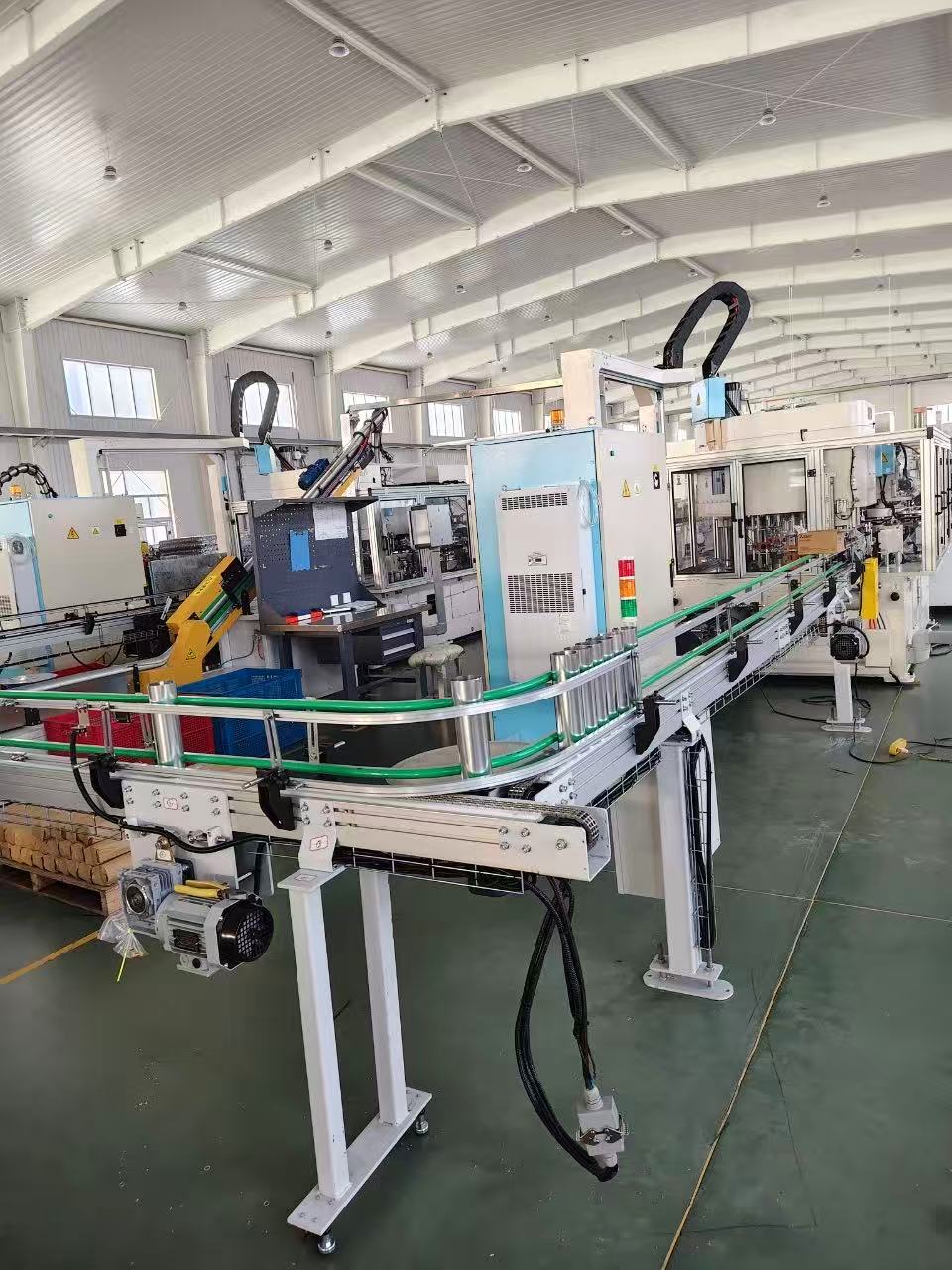
Complete Guide to 3-Piece Can Production Line Automation
A modern 3-piece can production line is much more than a series of individual machines. To achieve stable and efficient production, every process needs to work together, from sheet feeding and can conveying to curing, can handling, cooling, packaging, and palletizing.
For can manufacturers, automation is especially important because production lines often operate continuously at high speed. Even if the main can-making machines are highly automated, inefficient material handling or manual operations between processes can create bottlenecks.
This is where 3-piece can production line automation becomes important
Hubei Baoli Technology specializes in automation equipment connecting every key process of the 3-piece can production line, from sheet handling and can conveying to palletizing and end-of-line packaging. Our solutions are designed to help can manufacturers improve production efficiency, reduce manual handling, and create a smoother production flow.
In this guide, we will look at the typical automation process of a 3-piece can production line and explain how each supporting system contributes to the overall manufacturing process.
What Is a 3-Piece Can Production Line?
A 3-piece can production line is a manufacturing system used to produce metal cans consisting of three main parts: the can body, the top end, and the bottom end.
Unlike 2-piece beverage cans, which are commonly produced from a single piece of metal through drawing and ironing, 3-piece cans are generally made by forming a metal sheet into a cylindrical body and then attaching the ends through a seaming process.
3-piece cans are widely used for:
• Food cans
• Beverage cans
• Paint cans
• Chemical containers
• Aerosol containers
• Industrial metal containers
For many applications, tinplate is the preferred material because it combines the strength of steel with the corrosion protection provided by a thin tin coating.
The complete production process can vary depending on the type of can, but a typical automated production flow can be summarized as:
Sheet feeding → Can body forming → Welding → Coating and curing → Can conveying → Can handling → Cooling → Inspection → Packaging → Palletizing
While the main can-making equipment performs the core manufacturing processes, auxiliary automation equipment plays an important role in connecting these processes.
Why Is Automation Important in a 3-Piece Can Production Line?
A high-speed production line can produce a large number of cans continuously. If workers have to manually move cans or sheets between different processes, production efficiency can quickly become limited by labor.
Automation helps solve this problem by creating a continuous material flow.
A well-designed can production line automation system can provide several benefits:
• Reduce manual handling
• Improve production continuity
• Reduce labor requirements
• Improve product handling stability
• Connect different machines
• Reduce production bottlenecks
• Improve end-of-line efficiency
The goal is not simply to automate one machine. The real value comes from connecting different processes into one coordinated production system.
Step 1: Automatic Sheet Feeding
The production process starts with metal sheets.
For a 3-piece can production line, tinplate sheets need to be supplied to the downstream equipment continuously and accurately. Manual sheet handling can become inefficient when production speeds increase.
An automatic sheet feeding system helps transfer sheets from one process to another while maintaining a stable supply.
The main objectives are:
• Continuous sheet feeding
• Accurate positioning
• Reduced manual handling
• Stable production speed
For factories producing large quantities of cans, automatic sheet handling is an important part of overall production automation.
Hubei Baoli Technology provides automatic sheet feeding equipment designed to connect sheet handling with downstream can-making processes.
Step 2: Can Body Forming and Welding
After the metal sheet is prepared, it enters the main can-making process.
The sheet is cut into blanks according to the required can dimensions. The blank is then formed into a cylindrical shape and the side seam is welded.
Side seam welding is one of the most important steps in a 3-piece can production line because it creates the main body of the can.
The welding process needs to maintain stable quality and accurate alignment during continuous production.
After welding, the can body may go through additional processes such as:
• Internal coating
• External coating
• Drying
• Necking
• Flanging
• Beading
The exact configuration depends on the type of metal can being manufactured.
Step 3: Curing and Drying in the Oven
After coating, the can bodies need to pass through an oven to cure and dry the protective coating.
The curing oven is an important part of tin can manufacturing equipment, especially for production lines that require continuous coating and drying processes.
For food and beverage applications, internal coating also plays an important role in protecting the contents from direct contact with the metal.
The curing process needs to maintain stable temperature and conveying speed.
If the cans remain in the oven for too short or too long a time, coating performance may be affected.
This is why the oven and its conveying system need to work together as part of the overall production line.
Step 4: Can Conveying System
Once the cans leave the main forming and curing processes, they need to be transferred between different machines.
This is where the can conveyor system becomes essential.
A production line may require several types of conveyors depending on the factory layout and can handling requirements.
Common systems include:
• Belt conveyors
• Chain conveyors
• Slat chain conveyors
• Magnetic conveyors
• Roller conveyors
• Incline conveyors
• Vertical conveyors
• Curved conveyors
The conveyor system is effectively the connection between different machines. A well-designed can conveyor system helps move cans smoothly between welding, curing, cooling, inspection, packaging, and palletizing processes.
For example, cans may need to move:
From the welding section to the coating section
From the oven to the cooling section
From the cooling section to inspection
From inspection to packaging
From packaging to palletizing
A properly designed conveyor system helps maintain continuous production while reducing manual handling.
For more information about our conveying solutions, see our Can Conveyor System solutions for 3-piece can production lines.
Step 5: Can Uprighting
During the manufacturing process, the orientation of cans may change depending on the equipment configuration.
Some processes require cans to stand upright before entering the next machine.
A can uprighting system automatically changes the orientation of cans and places them into the required position for downstream conveying or processing.
This seemingly simple step can be very important for production line stability.
Without automatic can uprighting, workers may need to manually adjust the orientation of cans, which increases labor requirements and can interrupt continuous production.
Automatic can uprighting helps maintain:
• Stable can orientation
• Continuous production
• Accurate transfer
• Reduced manual intervention
Step 6: Can Turning and Transfer
In a large factory, different machines are not always installed in a straight line.
The production layout may require cans to change direction or move from one conveyor to another.
A can turning machine or rotary transfer system can be used to change the conveying direction and connect different sections of the production line.
Depending on the layout, cans may need to turn:
• 90 degrees
• 180 degrees
• From one conveyor to another
• From horizontal conveying to another production level
This type of equipment helps make better use of factory space while maintaining continuous can flow.
For automated can factories, the turning system should be designed together with the conveyor layout rather than treated as an independent machine.
Step 7: Can Cooling
After cans pass through high-temperature curing or other heat-related processes, cooling may be required before they continue to downstream operations.
A can cooling conveyor allows the cans to move continuously while giving them enough time to reach a suitable temperature for the next process.
The cooling section needs to be matched with:
• Production speed
• Can size
• Oven temperature
• Conveyor length
• Factory layout
A properly designed cooling system prevents the next process from receiving cans that are still too hot.
This is particularly important when the cans need to enter inspection, packaging, or palletizing equipment after cooling.
Step 8: Inspection and Quality Control
Quality control is another important part of a modern metal can production line.
Depending on the production requirements, manufacturers may inspect:
• Can body appearance
• Welding quality
• Coating condition
• Can dimensions
• Leakage
• Surface defects
Automated inspection systems can help identify defective cans without slowing down the production process.
For food and beverage packaging, quality control is particularly important because the can needs to provide reliable protection throughout storage and transportation.
Modern automated production lines increasingly combine inspection equipment with production data and control systems, allowing manufacturers to monitor production performance more effectively.
Step 9: Automatic Packaging
After the cans have passed production and inspection, they enter the packaging stage.
Packaging requirements vary depending on whether the cans are:
• Empty cans supplied to another factory
• Finished food containers
• Beverage containers
• Industrial containers
Depending on the application, packaging may include:
• Bundling
• Wrapping
• Strapping
• Film wrapping
• Pallet packaging
An integrated packaging system can reduce manual handling and make the transition from production to storage more efficient.
For customers looking for a complete solution, Hubei Baoli Technology provides equipment for conveying, palletizing, strapping, and other end-of-line packaging systems for can manufacturers.
You can also explore our Packaging System solutions for automated end-of-line production.
Step 10: Automatic Palletizing
Palletizing is usually one of the final stages of the production process.
Once cans are ready for storage or transportation, they need to be arranged onto pallets in a stable and efficient pattern.
An automatic palletizer can automatically:
• Arrange cans
• Form layers
• Add empty pallets
• Add layer separators
• Stack cans
• Transfer completed pallets
For metal cans, magnetic palletizing technology can be particularly useful because the cans can be handled efficiently using magnetic force.
Hubei Baoli Technology provides several palletizing solutions, including low-level magnetic palletizers, high-level magnetic palletizers, rotary palletizers, and robotic palletizers. Our can palletizer solutions are designed to help can manufacturers automate the final stage of their production lines.
Explore our Can Palletizer solutions for different production speeds and factory layouts.
How the Complete 3-Piece Can Production Line Works Together
The biggest advantage of automation is not one individual machine. It is the connection between all the processes.
A typical automated workflow can look like this:
Metal sheet → Sheet feeding → Can body forming → Welding → Coating → Curing oven → Can conveying → Can uprighting → Can turning → Cooling → Inspection → Packaging → Palletizing → Warehouse
Each stage has a specific function, but all stages need to communicate and operate together.
If one process is significantly slower than the others, it may become a production bottleneck.
This is why production line planning is so important.
When designing a complete 3-piece can production line, manufacturers should consider the entire production flow rather than selecting each machine separately.
What Equipment Is Most Important for Can Production Line Automation?
The answer depends on the factory's production capacity and existing equipment.
However, several auxiliary systems have a direct influence on overall automation efficiency.
Sheet Feeding Equipment
Used to provide a stable supply of metal sheets to the production process.
Conveyor Systems
Used to connect different machines and transport cans continuously.
Curing Ovens
Used to dry and cure coatings after the coating process.
Can Uprighting Systems
Used to change the orientation of cans automatically.
Can Turning Machines
Used to change conveying direction and connect different production sections.
Cooling Conveyors
Used to cool cans before they enter downstream equipment.
Packaging Equipment
Used to prepare cans for storage and transportation.
Automatic Palletizers
Used to stack cans efficiently and consistently onto pallets.
These systems form an important part of the automation infrastructure surrounding the main can-making machines.
How to Choose the Right 3-Piece Can Production Line Automation Equipment?
Before purchasing equipment, manufacturers should first define their production requirements.
Important factors include:
Can Size
Different can diameters and heights may require different handling and conveying configurations.
Production Speed
The capacity of every auxiliary machine should be compatible with the main production line.
For example, if the can-making machine produces cans at high speed but the palletizer cannot handle the output, the production line may experience a bottleneck.
Factory Layout
The layout determines the length, direction, height, and configuration of conveyors.
A good automation supplier should be able to design the equipment according to the actual factory space.
Future Expansion
Manufacturers should also consider whether production capacity may increase in the future.
A flexible automation system can make future expansion easier.
Integration With Existing Equipment
Not every customer needs a completely new production line.
Some factories may already have can-making machines and only need to upgrade:
• Sheet feeding
• Can conveying
• Palletizing
• Packaging
• End-of-line automation
In this situation, customized auxiliary equipment can be a practical way to improve production efficiency without replacing the entire line.
Why Choose Hubei Baoli Technology for Can Production Line Automation?
Hubei Baoli Technology focuses on automation equipment for the 3-piece can manufacturing industry.
The company specializes in connecting key production processes through customized conveying, handling, packaging, and palletizing solutions.
Our equipment covers areas including:
• Automatic sheet feeding
• Can conveyor systems
• Curing and conveying systems
• Can uprighting
• Can turning
• Cooling conveyors
• Automatic palletizing
• End-of-line packaging
This means customers can work with one automation supplier for multiple stages of the production line instead of coordinating several unrelated equipment suppliers.
The company's products have been widely used in the can manufacturing industry in China and international markets.
3-Piece Can Production Line vs. 2-Piece Can Production Line
When discussing metal can manufacturing, it is important to distinguish between 3-piece and 2-piece production.
A 3-piece can generally consists of:
• One cylindrical body
• One top end
• One bottom end
A 2-piece can normally consists of:
• One body with an integrated bottom
• One top end
3-piece cans are widely used for food cans, paint cans, chemical containers, and other applications where different can sizes and formats are required.
Because the manufacturing processes are different, the equipment configuration and automation requirements are also different.
This article focuses specifically on automation surrounding the 3-piece can production line, particularly conveying, handling, packaging, and palletizing equipment.
The Future of 3-Piece Can Production Line Automation
The can manufacturing industry is moving toward higher levels of automation and integration.
Future production lines are likely to focus more on:
• Higher production efficiency
• Reduced manual handling
• Automated quality inspection
• Intelligent production monitoring
• Integrated packaging
• Automated palletizing
• Better connection with warehouse logistics
According to the International Federation of Robotics, industrial automation and robotics continue to play an increasingly important role in modern manufacturing.
For can manufacturers, this means automation will no longer be limited to individual machines. The focus will increasingly shift toward connecting the entire production process.
Conclusion
A modern 3-piece can production line is a complete system in which every process needs to work together efficiently.
From metal sheet feeding and can body production to curing, conveying, can uprighting, turning, cooling, packaging, and palletizing, each stage contributes to the overall production efficiency.
For manufacturers, investing in can production line automation can help reduce manual handling, improve production continuity, and create a more reliable manufacturing process.
Hubei Baoli Technology specializes in automation equipment connecting key processes of 3-piece can production lines. From sheet handling and can conveying to palletizing and end-of-line packaging, our solutions are designed to help can manufacturers build more efficient production lines.
If you are planning a new metal can production line, upgrading an existing factory, or looking for auxiliary automation equipment, the right solution should be based on your can specifications, production speed, factory layout, and future production plans.
Frequently Asked Questions About 3-Piece Can Production Line Automation
What is a 3-piece can production line?
A 3-piece can production line is a manufacturing system used to produce metal cans consisting of a cylindrical body, a top end, and a bottom end. The process typically includes sheet handling, forming, welding, coating, curing, conveying, inspection, packaging, and palletizing.
What equipment is used in a 3-piece can production line?
The equipment depends on the production process and can specifications. A complete line may include sheet feeding equipment, can-making machines, welding equipment, coating and curing equipment, conveyors, can handling systems, inspection equipment, packaging machines, and palletizers.
What is can production line automation?
Can production line automation refers to the use of automated equipment and control systems to connect different manufacturing processes. In a 3-piece can factory, automation can include sheet feeding, can conveying, can turning, can uprighting, cooling, packaging, and automatic palletizing.
Why is a conveyor system important in a can production line?
A conveyor system connects different machines and allows cans to move continuously through the production process. A properly designed conveyor system can reduce manual handling and help maintain stable production flow.
What is the role of a can palletizer?
A can palletizer automatically arranges and stacks cans onto pallets. It is normally used at the end of the production line and can significantly reduce manual palletizing work while improving stacking consistency.
Can existing can production lines be automated?
Yes. Automation does not always require replacing the complete production line. Existing factories can upgrade specific processes such as sheet feeding, conveying, cooling, packaging, or palletizing according to their production requirements.
What should I consider when choosing automation equipment?
The main factors include can size, production speed, factory layout, existing equipment, required automation level, pallet size, and future expansion plans. A customized solution is often more suitable than a standard machine when the production line has specific requirements.
Table of Contents
- What Is a 3-Piece Can Production Line?
- Why Is Automation Important in a 3-Piece Can Production Line?
- Step 1: Automatic Sheet Feeding
- Step 2: Can Body Forming and Welding
- Step 3: Curing and Drying in the Oven
- Step 4: Can Conveying System
- Step 5: Can Uprighting
- Step 6: Can Turning and Transfer
- Step 7: Can Cooling
- Step 8: Inspection and Quality Control
- Step 9: Automatic Packaging
- Step 10: Automatic Palletizing
- How the Complete 3-Piece Can Production Line Works Together
- What Equipment Is Most Important for Can Production Line Automation?
- How to Choose the Right 3-Piece Can Production Line Automation Equipment?
- Why Choose Hubei Baoli Technology for Can Production Line Automation?
- 3-Piece Can Production Line vs. 2-Piece Can Production Line
- The Future of 3-Piece Can Production Line Automation
- Conclusion
-
Frequently Asked Questions About 3-Piece Can Production Line Automation
- What is a 3-piece can production line?
- What equipment is used in a 3-piece can production line?
- What is can production line automation?
- Why is a conveyor system important in a can production line?
- What is the role of a can palletizer?
- Can existing can production lines be automated?
- What should I consider when choosing automation equipment?