
 EN
EN
 AR
AR
 HR
HR
 DA
DA
 NL
NL
 FI
FI
 FR
FR
 DE
DE
 EL
EL
 HI
HI
 IT
IT
 JA
JA
 KO
KO
 NO
NO
 PL
PL
 PT
PT
 RO
RO
 RU
RU
 ES
ES
 SV
SV
 TL
TL
 IW
IW
 ID
ID
 LT
LT
 SR
SR
 VI
VI
 SQ
SQ
 HU
HU
 TH
TH
 TR
TR
 AF
AF
 MS
MS
 GA
GA
 BN
BN
 HA
HA
 IG
IG
 MR
MR
 NE
NE
 YO
YO
 MY
MY
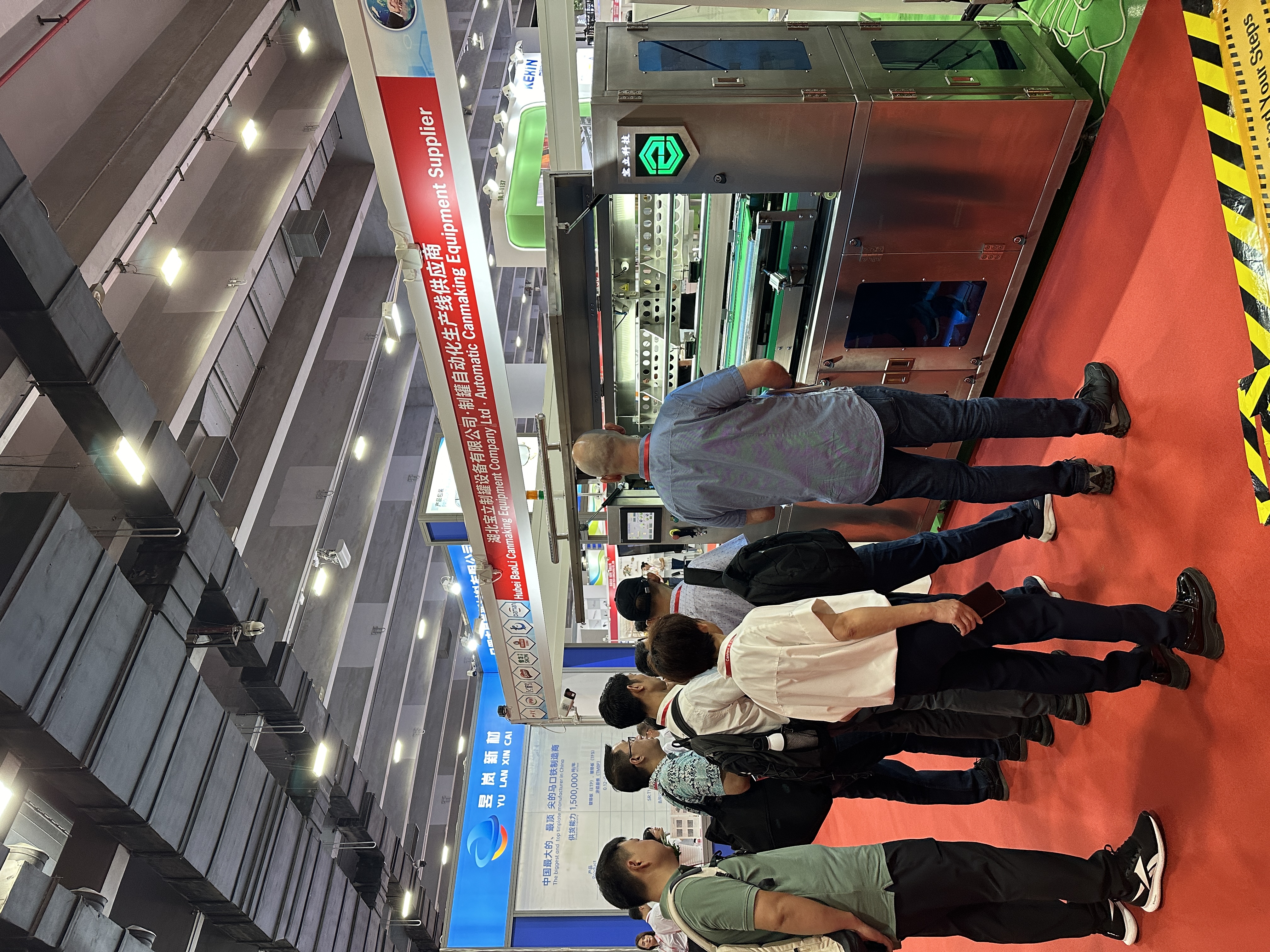
Best Tin Can Making Equipment Manufacturer in China: How a 3-Piece Can Is Made and What You Need
If you're researching tin can making equipment, you've probably noticed that most guides list the big machines and skip everything around them. This article walks through how a three-piece can is actually made, step by step, and shows where the supporting equipment decides whether your line runs smoothly or stalls. It's written by Hubei Baoli Technology, a China-based manufacturer of auxiliary machines for can production.
How Is a 3-Piece Tin Can Made?
A three-piece can consists of a rolled and welded body plus two ends, top and bottom. Compared with drawn two-piece cans, the process has more stages, and each one hands its output to the next. Here is the typical flow.
Step 1: Sheet feeding. Coated tin-plate sheets are cut into body blanks. The body blank sheet feeding machine loads, separates and feeds the sheets one by one. Double-feeds or scratched coatings here cause welding defects later, so this station sets the tone for the whole line.
Step 2: Curing. Printed or lacquered sheets and bodies pass through a curing oven, where coatings harden and bond to the metal. Even heat distribution matters for coating quality, and an efficient design cuts energy use over years of running.
Step 3: Forming and welding. The blank is rolled into a cylinder and its seam is welded. This is the core of tin can making machinery, handled by the shearing machine, welder and combination machine.
Step 4: Shaping and testing. Bodies go through necking, flanging and leak testing. Again, these are main machines built by specialist manufacturers.
Step 5: Seaming the ends. The can lid feeding machine supplies ends in sync with the bodies so seaming runs without gaps or jams. Cans often need to be turned upright first, which is where a can upender handles orientation gently and without dents.
Step 6: Cooling, palletizing and packing. Cans move along a cooling conveyor, then reach the palletizer. Finished loads are secured with a strapping machine and protected by a pallet wrapping machine. On the filling side, a depalletizer unloads empty cans back into the line.
Between all of these stations runs the can conveyor system, which buffers, accumulates and balances speed so one slow machine doesn't stop everything.
Know more about tin can making equipment from our youtube channel:
https://youtube.com/shorts/bZdCz2cXfcc?is=BSuePwuCVGknb_9O
Where Auxiliary Equipment Makes the Difference
Here is something many buyers learn the hard way: a line is only as fast as its weakest link, and that link is rarely the welder. It is often a feeder that double-feeds, an oven with uneven heat, or a palletizer that can't keep up. That's why we focus on metal packaging production equipment that supports the main machines, and why we try to make each one as dependable as possible.
| Equipment | What it does | Why it matters |
|---|---|---|
| Body blank sheet feeding machine | Feeds sheets accurately | Stable welding, fewer rejects |
| Curing oven | Cures coatings evenly | Coating adhesion, energy savings |
| Conveyor system | Links all stations | Smooth flow, no stoppages |
| Can upender | Reorients cans | Prevents dents and jams |
| Cooling conveyor | Cools cans before packing | Protects coating quality |
| Can lid feeding machine | Supplies ends in sync | Seaming stability |
| Palletizer / depalletizer | Stacks and unloads cans | Up to 600 cpm |
| Strapping / wrapping machine | Secures finished pallets | Safe transport |
About Hubei Baoli Technology
Our founder entered this industry in 2003, and we established the company in 2011. With more than 20 years of accumulated experience, we supply production and palletizing/packaging equipment for tin-plate can lines, and conveying, depalletizing and palletizing equipment for canned food and beverage lines.
To be clear about what we do: we do not build complete lines or the main machines such as shearing machines, welders, combination machines, leak testers, necking machines or flangers. We focus on the auxiliary equipment listed above and aim to make it the best it can be. Our systems reach speeds up to 600 cpm, and we keep refining them to fit each customer's layout, can size and output target.
Read more article about can making equipment here:https://www.baoli-hubei.com/blog/complete-guide-to-3-piece-can-production-line-automation
Why You May Not Have Heard of Us
Our equipment has gone to more than 20 countries, yet our name is rarely seen abroad. We've simply spent our energy on design, R&D and manufacturing rather than promotion.
In China, our reputation has earned us roughly 80% market share in this segment. Many well-known can-making machine builders and trading companies have purchased our auxiliary equipment for years, combining it with their main machines into complete lines sold overseas. So most exports didn't carry our name, though our engineers were the ones who traveled abroad for installation and commissioning. A few overseas customers found us directly and became loyal repeat buyers. We are fully able to take export orders ourselves.
FAQ
What is the best tin can making equipment manufacturer in China?
It depends on what you need. Main machine builders and auxiliary equipment specialists serve different roles. We specialize in feeding, curing, conveying, upending, cooling, palletizing and packing equipment, backed by 20+ years of experience.
Do you supply a complete 3-piece can production line?
No. We supply auxiliary equipment and integrate smoothly with main machines from other manufacturers.
How fast can your equipment run?
Up to 600 cpm, depending on configuration and can size.
Can your machines fit an existing line?
Yes. We design around your layout, can dimensions and target speed.
Do you provide overseas installation?
Yes. Our own engineers handle installation, commissioning and after-sales service on site.
Get in Touch
Planning a new line or upgrading an existing one? Send us your can size, target speed and layout, and our team will propose a tailored configuration and quotation, directly from the manufacturer.