
 EN
EN
 AR
AR
 HR
HR
 DA
DA
 NL
NL
 FI
FI
 FR
FR
 DE
DE
 EL
EL
 HI
HI
 IT
IT
 JA
JA
 KO
KO
 NO
NO
 PL
PL
 PT
PT
 RO
RO
 RU
RU
 ES
ES
 SV
SV
 TL
TL
 IW
IW
 ID
ID
 LT
LT
 SR
SR
 VI
VI
 SQ
SQ
 HU
HU
 TH
TH
 TR
TR
 AF
AF
 MS
MS
 GA
GA
 BN
BN
 HA
HA
 IG
IG
 MR
MR
 NE
NE
 YO
YO
 MY
MY
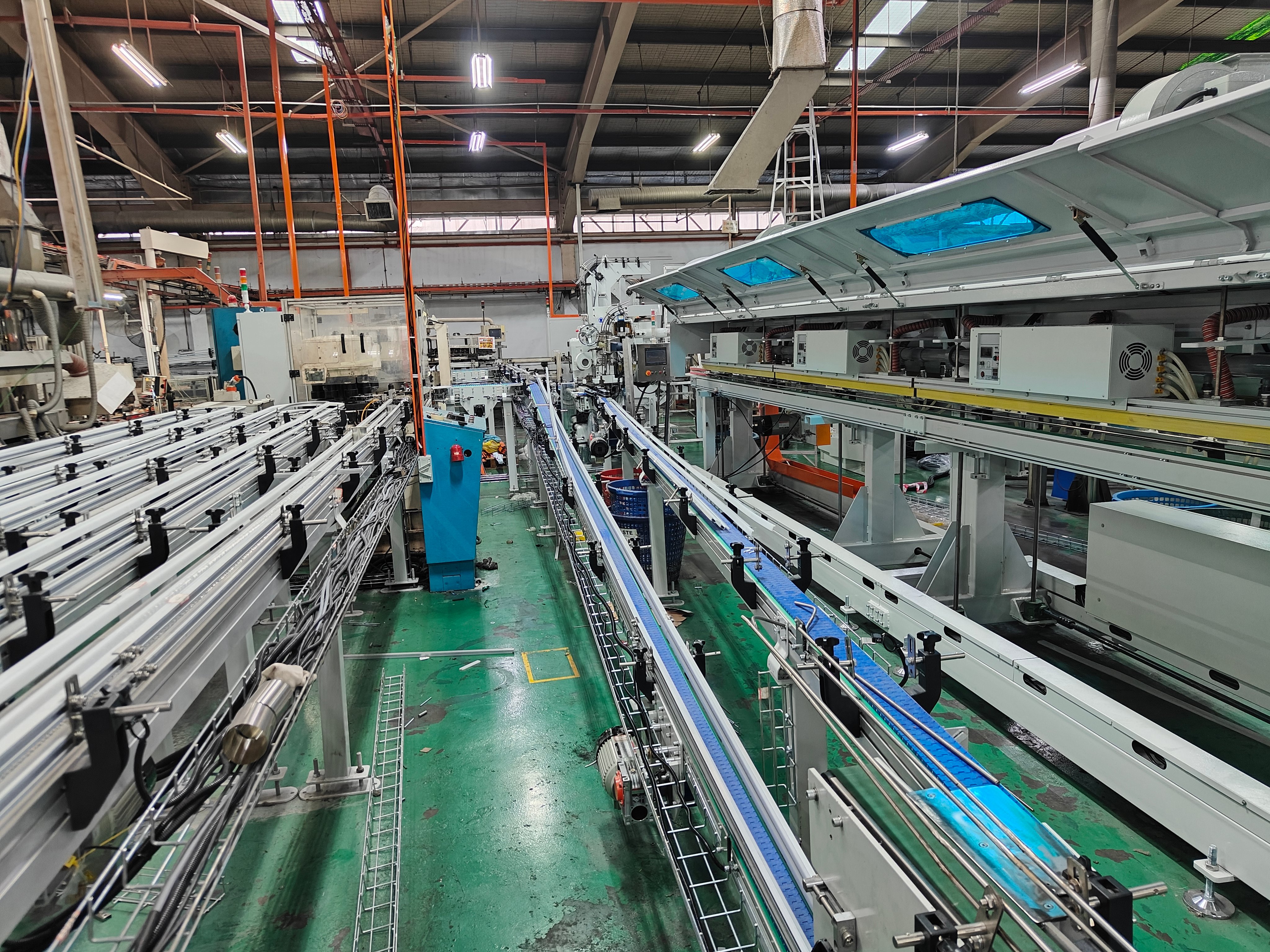
Complete Guide to 3-Piece Can Production Line Automation Equipment
If you've spent any time on the floor of a can factory, you already know that a 3-piece can production line isn't really one machine — it's a chain of specialized stations that all have to work at the same rhythm. Sheet in, can out, and every second of hesitation anywhere along that chain shows up as lost output at the end of the shift. That's the real challenge behind can production line automation: not just buying fast machines, but making sure they talk to each other.
At Hubei Baoli Technology Co., Ltd., we've spent over two decades inside this exact problem — supplying tin can production line equipment to manufacturers who need their lines to run faster, longer, and with fewer people watching over them. This guide walks through what a modern 3-piece can line actually looks like, station by station, and what to consider when automating each part of it.
What Is a 3-Piece Can Production Line?
A 3-piece can is exactly what it sounds like — a can body formed from a rolled tin-plate sheet, plus a bottom end and a top end, welded or seamed together. Unlike 2-piece cans (which are drawn from a single blank), 3-piece lines require a longer sequence of forming, curing, shaping, and joining steps. This makes automation more complex, but it also means there's more opportunity to remove bottlenecks by upgrading individual stations rather than replacing the whole line.
A typical 3-piece line moves through roughly seven stages. Below, we break each one down.
1. Sheet Feeding Machine
Every can starts as a flat tin-plate sheet. The sheet feeding machine is responsible for automatically loading, separating, and feeding sheets into the line at a consistent pace — without double-feeds, misalignment, or damage to the coating. On high-speed lines, even small feeding inconsistencies compound into major downstream defects, which is why feeding accuracy is usually the first thing we check when diagnosing a slow line.
2. Curing Oven
Once printed and coated, can bodies typically pass through a curing oven to cure inks and protective coatings before further forming. Oven temperature uniformity and conveyor speed control directly affect coating adhesion and long-term can integrity — this is an area where energy-efficient design also has a real impact on operating cost over time.
3. Can Upright Machine
Before bodies can be formed into cylinders, sheets or blanks often need to be reoriented. A can upright machine automatically repositions can bodies into the correct vertical alignment for the next forming stage, removing a step that used to require manual handling on older lines.
4. Rotary Machine
The rotary machine is where the flat body is rolled and seamed into a cylindrical can shape. This is one of the most mechanically demanding stations on the line, since seam quality here determines whether the can will pass leak and pressure testing later. Precision tooling and stable feed timing are critical.
5. Lid Feeding Machine
Ends and lids need to be fed into the line accurately and at volume. A lid feeding machine automates this process, synchronizing with the seaming or joining station so bodies and ends arrive together without gaps or jams — a small detail that has an outsized effect on line uptime.
6. Can Conveyor System
Tying all of this together is the can conveyor system — the connective tissue of the entire line. A well-designed conveyor system isn't just about moving cans from A to B; it's about buffering, accumulation, and smooth handoffs between stations running at slightly different speeds, so one slow station doesn't stall the whole line.
View more three piece can production equipment from our youtube channel:
https://youtube.com/shorts/9O4ppdVlpgY?is=1aqclXO7gJITmaby
7. Can Palletizer
At the very end of the line, finished cans need to be stacked, packed, and prepared for shipment. This is where a can palletizer comes in — automatically stacking cans onto pallets at speeds that match upstream output, often up to 600 cans per minute on fully automated systems. This is actually where Hubei Baoli's roots run deepest: after years of supplying palletizing and packaging equipment to can manufacturers, we've expanded upstream into feeding, curing, and conveying equipment as well.
Choosing the Right Can Production Line Equipment Manufacturer
Automating a 3-piece can line rarely means buying everything from a single vendor — most factories mix and match equipment from a primary line builder plus specialized auxiliary suppliers. When evaluating a can production line equipment manufacturer or can automation supplier, a few things matter more than brand name:
- Integration experience — can they retrofit into an existing line, or only sell complete new systems?
- On-site support — will their engineers actually show up for installation and commissioning?
- Track record with tin can machinery specifically, not general industrial automation
- Flexibility as an auxiliary equipment supplier, since most factories need partial upgrades, not full rebuilds
As a tin can machinery manufacturer with over 20 years of hands-on experience — and equipment already running in more than 20 countries — Hubei Baoli Technology works both ways: supplying complete station-by-station automation, or slotting into an existing line as a trusted auxiliary equipment supplier.
Final Thoughts
A modern 3-piece can production line is only as fast as its slowest station. Whether you're bottlenecked at sheet feeding, curing, forming, or palletizing, the fix is rarely "buy a faster line" — it's usually "fix the one station that's holding everything else back."
In the coming weeks, we'll be publishing dedicated deep-dives into each station covered above — starting with the sheet feeding machine and working through to palletizing — so bookmark this guide as your starting point.