
 EN
EN
 AR
AR
 HR
HR
 DA
DA
 NL
NL
 FI
FI
 FR
FR
 DE
DE
 EL
EL
 HI
HI
 IT
IT
 JA
JA
 KO
KO
 NO
NO
 PL
PL
 PT
PT
 RO
RO
 RU
RU
 ES
ES
 SV
SV
 TL
TL
 IW
IW
 ID
ID
 LT
LT
 SR
SR
 VI
VI
 SQ
SQ
 HU
HU
 TH
TH
 TR
TR
 AF
AF
 MS
MS
 GA
GA
 BN
BN
 HA
HA
 IG
IG
 MR
MR
 NE
NE
 YO
YO
 MY
MY
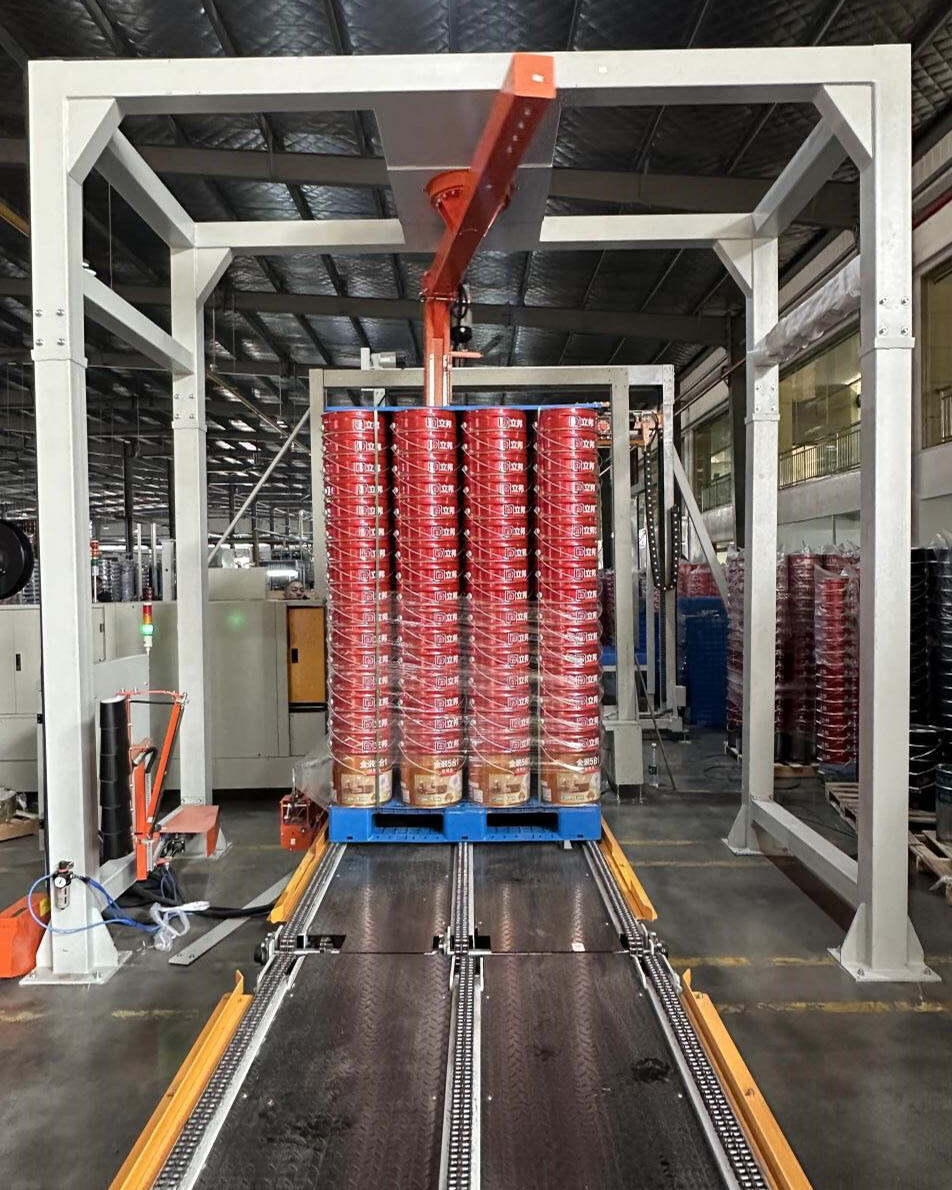
Why Modern Can Factories Need Automation
The global metal packaging industry is becoming increasingly competitive. Manufacturers are under constant pressure to improve productivity, reduce operating costs, maintain product quality, and meet growing customer demand. As a result, can factory automation has become a critical investment for modern can manufacturers.
Traditional production methods that rely heavily on manual labor can no longer keep pace with today's manufacturing requirements. Automation technologies are transforming every stage of can production, from material handling and conveying to palletizing and packaging.
In this article, we explore why modern can factories need automation, the challenges faced by manufacturers, and how advanced automation solutions can help improve efficiency and profitability.
The Growing Challenges Facing Can Manufacturers
As production volumes increase and labor costs continue to rise, many can factories face several operational challenges.
Labor Shortages
Finding and retaining skilled workers has become increasingly difficult in many regions.
Manual tasks such as:
- Empty can handling
- Product transfer
- Palletizing
- Packaging
- Warehouse transportation
often require significant labor resources. High employee turnover can disrupt production and increase training costs.
Rising Labor Costs
Labor expenses continue to increase worldwide. For many manufacturers, labor costs represent a significant portion of operating expenses.
By implementing can factory automation, businesses can reduce dependence on manual operations and improve long-term cost control.
Production Bottlenecks
Many factories invest heavily in high-speed can making equipment but overlook downstream processes.
Manual handling and palletizing often become bottlenecks that limit overall production capacity.
Even if a production line can manufacture thousands of cans per hour, inefficient material handling can significantly reduce actual output.
Product Damage and Quality Issues
Empty cans are lightweight and easily damaged during transportation and stacking.
Common issues include:
- Dented cans
- Scratched surfaces
- Deformed stacks
- Product contamination risks
Automation helps minimize human error and ensures more consistent product handling throughout the manufacturing process.
What Is Can Factory Automation?
Can factory automation refers to the use of intelligent equipment and integrated systems to automate production, transportation, palletizing, packaging, and warehouse operations.
A complete automation system may include:
- Conveyor systems
- Robotic handling equipment
- Empty can palletizers
- Automatic strapping machines
- Stretch wrapping machines
- Intelligent control systems
- Production monitoring systems
The goal is to create a highly efficient production environment that maximizes output while reducing operational costs.
Key Benefits of Can Factory Automation
Improved Production Efficiency
Automation enables continuous operation with minimal interruptions.
Automated systems can:
- Increase throughput
- Reduce downtime
- Improve production consistency
- Eliminate manual bottlenecks
Factories that implement automation often experience significant productivity improvements.
Lower Labor Costs
One of the biggest advantages of automation is reducing reliance on manual labor.
Instead of assigning multiple workers to repetitive tasks, automated equipment performs these operations with greater speed and accuracy.
This allows manufacturers to allocate personnel to higher-value activities such as quality control and equipment management.
Enhanced Product Quality
Automated equipment performs repetitive tasks with consistent precision.
Benefits include:
- Reduced product damage
- Improved stacking quality
- More stable packaging
- Better transportation safety
Consistency is especially important for high-speed can manufacturing operations.
Increased Workplace Safety
Manual handling of large quantities of cans and pallets can create workplace hazards.
Automation reduces employee exposure to:
- Heavy lifting
- Repetitive motion injuries
- Forklift traffic risks
- High-speed production environments
Safer operations often result in fewer accidents and lower insurance costs.
Better Scalability
As market demand grows, automated systems can support increased production without proportional increases in labor costs.
This scalability helps manufacturers expand operations more efficiently.
Automation Solutions for Modern Can Factories
At Hubei Baoli Technology Co., Ltd., we specialize in providing automation equipment and integrated solutions for can manufacturing facilities.
Our products help customers improve efficiency, reduce costs, and solve common production challenges.
Automated Conveyor Systems
Efficient material transportation is the foundation of successful can factory automation.
Our conveyor solutions include:
- Roller conveyor systems
- Magnetic conveyor systems
- Curved conveyor systems
- Customized conveying solutions
Benefits include:
- Smooth can transportation
- Reduced manual handling
- Lower product damage rates
- Improved production flow
Empty Can Palletizers
Palletizing is one of the most labor-intensive stages in can manufacturing.
Our palletizing systems automatically stack empty cans according to customer requirements.
Available solutions include:
- Low-level magnetic palletizers
- High-level magnetic palletizers
- Rotary palletizers
- Robotic palletizers
These systems help customers solve problems such as:
- Labor shortages
- Inconsistent stacking quality
- Production bottlenecks
- High operating costs
Robotic Handling Systems
Industrial robots provide flexible automation for a wide range of applications.
Typical functions include:
- Product transfer
- Layer handling
- Loading and unloading
- End-of-line automation
Robotic solutions improve accuracy while increasing production flexibility.
Automatic Strapping and Wrapping Machines
Once pallets are formed, they must be secured for storage and transportation.
Our automatic packaging systems include:
- Automatic strapping machines
- Fully automatic stretch wrapping machines
Benefits include:
- Improved load stability
- Reduced packaging labor
- Faster shipment preparation
- Lower transportation damage rates
Why Choose Hubei Baoli Technology Co., Ltd.?
Founded in 2011, Hubei Baoli Technology Co., Ltd. specializes in the design, manufacturing, and integration of automation equipment for the can industry.
We provide complete solutions rather than standalone equipment.
Our strengths include:
- Extensive industry experience
- Customized engineering solutions
- Complete line integration capability
- Professional technical support
- Global project implementation experience
- Reliable after-sales service
From conveying systems and robotic handling equipment to palletizers and packaging machinery, we help customers build highly efficient automated production facilities.
Future Trends in Can Factory Automation
Automation technology continues to evolve rapidly.
Future developments include:
- Smart factory integration
- Industrial Internet of Things (IIoT)
- Real-time production monitoring
- Artificial intelligence applications
- Predictive maintenance systems
- Data-driven production optimization
Manufacturers that embrace automation today will be better prepared to compete in the increasingly demanding global packaging market.
Conclusion
The future of metal packaging manufacturing depends on efficiency, consistency, and intelligent production systems. Can factory automation is no longer an option for manufacturers seeking long-term growth. It is a necessity.
By automating conveying, palletizing, packaging, and material handling operations, can factories can reduce labor costs, increase production capacity, improve product quality, and enhance workplace safety.
Hubei Baoli Technology Co., Ltd. provides comprehensive automation solutions designed specifically for can manufacturers. Whether you are upgrading an existing production line or building a new facility, our automation equipment can help you achieve higher productivity, lower operating costs, and greater competitiveness in today's market.