
 EN
EN
 AR
AR
 HR
HR
 DA
DA
 NL
NL
 FI
FI
 FR
FR
 DE
DE
 EL
EL
 HI
HI
 IT
IT
 JA
JA
 KO
KO
 NO
NO
 PL
PL
 PT
PT
 RO
RO
 RU
RU
 ES
ES
 SV
SV
 TL
TL
 IW
IW
 ID
ID
 LT
LT
 SR
SR
 VI
VI
 SQ
SQ
 HU
HU
 TH
TH
 TR
TR
 AF
AF
 MS
MS
 GA
GA
 BN
BN
 HA
HA
 IG
IG
 MR
MR
 NE
NE
 YO
YO
 MY
MY
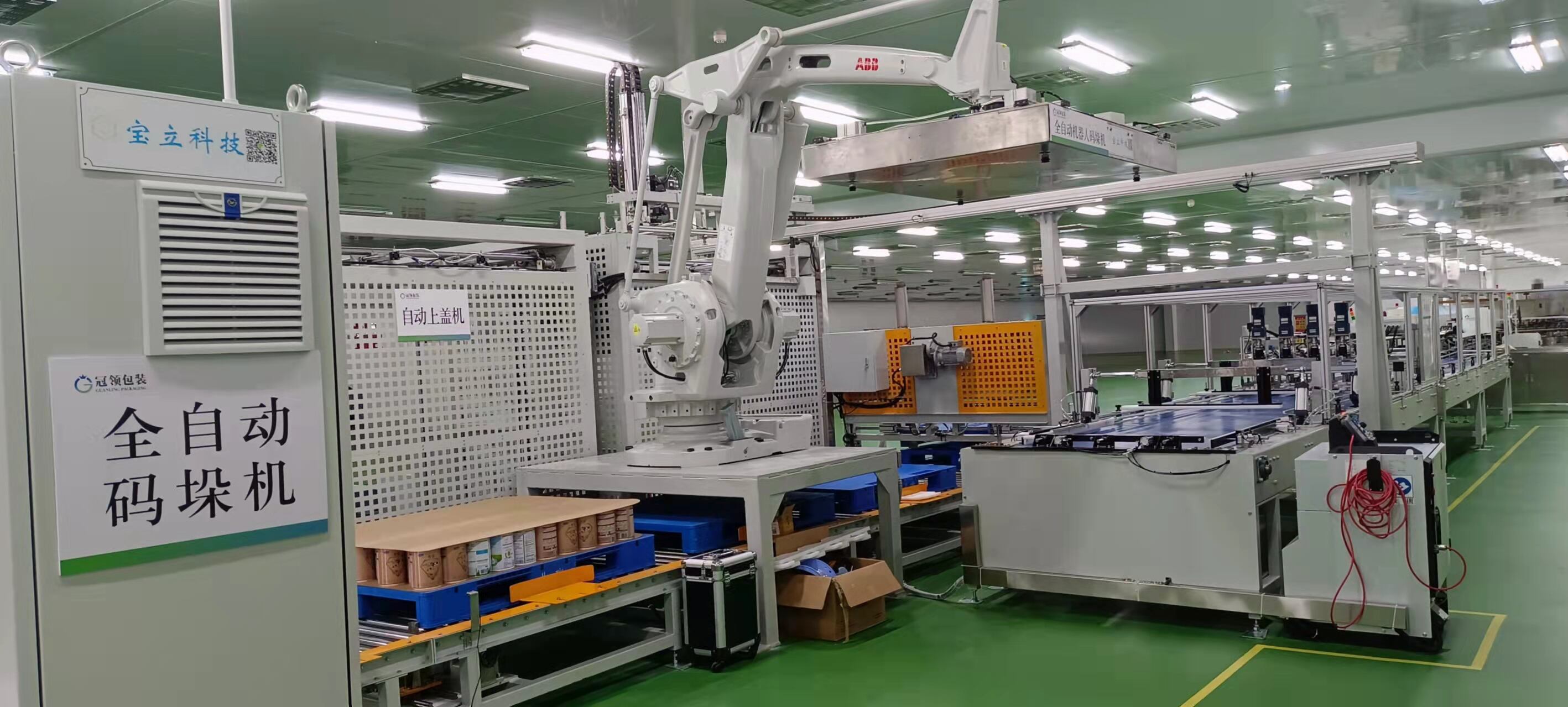
As production speeds continue to increase across the metal packaging industry, many can makers are finding that manual palletizing is becoming one of the weakest points in their production process.
A modern can manufacturing plant may operate high-speed welders, body makers, flangers, seamers, and automated conveyor systems. Yet surprisingly, some factories still rely on workers to manually stack empty cans at the end of the line.
At lower production volumes, this approach may seem acceptable. However, as output increases, manual palletizing often creates bottlenecks that limit productivity, increase labor costs, and lead to product damage.
This is why more manufacturers are investing in a full automatic palletizer for can making line to improve efficiency and support long-term growth.
The Hidden Cost of Manual Palletizing
When factory managers evaluate production costs, they often focus on raw materials, machinery, and labor. However, the true cost of manual palletizing goes far beyond employee wages.
In many can manufacturing facilities, palletizing directly affects:
- Production efficiency
- Product quality
- Workplace safety
- Labor utilization
- Delivery performance
Even a small slowdown at the end of the production line can impact the entire operation.
For manufacturers producing thousands of cans per hour, palletizing should never become the bottleneck.
Problem 1: Labor Costs Continue to Rise
One of the biggest challenges facing today's can makers is labor availability.
Hiring workers for repetitive palletizing tasks is becoming increasingly difficult in many countries. Even when workers are available, labor costs continue to rise year after year.
Manual palletizing often requires multiple operators per shift to keep up with production.
Additional expenses may include:
- Employee training
- Overtime payments
- Staff turnover
- Recruitment costs
- Workplace injury compensation
Over the lifespan of a production line, these expenses can become significant.
A full automatic palletizer for can making line can dramatically reduce labor dependency while maintaining stable production performance.
Problem 2: Inconsistent Pallet Quality
Ask any experienced production manager and they will tell you the same thing.
Manual pallet quality depends heavily on the operator.
Some workers stack pallets perfectly. Others may create uneven layers or unstable loads.
Common problems include:
- Crooked stacking patterns
- Leaning pallets
- Uneven layers
- Poor load stability
- Transportation damage
These issues can create problems during warehousing and shipping.
Automatic palletizers eliminate inconsistency by following pre-programmed stacking patterns for every pallet.
The result is improved load stability and better customer satisfaction.
Problem 3: Empty Can Damage During Handling
Empty tinplate cans are lightweight and sensitive to impact.
Every time a worker handles cans manually, the risk of damage increases.
Common damage includes:
- Scratches
- Dents
- Deformation
- Surface defects
While a damaged can may seem like a minor issue, large production volumes can quickly turn small losses into substantial costs.
A modern empty can palletizer uses controlled movements and specialized handling systems to minimize product contact and reduce damage rates.
This is especially important for food can manufacturers where appearance and quality standards are strict.
Problem 4: Safety Risks in the Workplace
Palletizing is repetitive physical work.
Workers may perform the same lifting and stacking motions thousands of times during a shift.
Over time, this can contribute to:
- Muscle strain
- Back injuries
- Fatigue
- Reduced productivity
- Workplace accidents
According to the Can Manufacturers Institute, continuous investment in manufacturing technology helps improve both productivity and workplace safety across the can making industry.
Reducing manual handling not only protects employees but also helps manufacturers create safer and more efficient production environments.
Problem 5: Limited Production Expansion
Many factories eventually reach a point where manual palletizing cannot support additional production capacity.
Production equipment may be capable of running faster, but the palletizing area cannot keep up.
This creates a frustrating situation where manufacturers invest in new equipment but fail to achieve the expected increase in output.
A full automatic palletizer for can making line allows factories to increase production without proportionally increasing labor requirements.
For growing can makers, automation provides a much more scalable solution.
How a Full Automatic Palletizer for Can Making Line Solves These Challenges
A fully automated palletizing system receives cans directly from the conveyor line and automatically performs:
- Product alignment
- Layer formation
- Pallet stacking
- Slip sheet placement
- Finished pallet discharge
The system operates continuously and maintains consistent performance throughout the production process.
Major benefits include:
Increased Production Efficiency
Automation eliminates bottlenecks and helps maximize line capacity.
Lower Operating Costs
Reduced labor requirements contribute to long-term cost savings.
Improved Product Protection
Automated handling minimizes dents, scratches, and deformation.
Better Workplace Safety
Employees are no longer required to perform repetitive palletizing tasks.
Consistent Pallet Quality
Every pallet meets the same quality standards regardless of shift or operator experience.
Hubei Baoli's Automation Solutions for Can Makers
Hubei Baoli Technology Co., Ltd. specializes in automation equipment designed specifically for the tinplate can manufacturing industry.
Over the years, we have helped can makers improve production efficiency through customized automation solutions.
Our product range includes:
- Low-level magnetic palletizers
- High-level magnetic palletizers
- Rotary palletizers
- Robotic palletizers
- Automated conveyor systems
- Automatic strapping machines
- Fully automatic stretch wrapping machines
These solutions can be integrated into existing production lines or incorporated into new can manufacturing facilities.
The Future of Can Manufacturing Is Automated
The global can industry is becoming more competitive every year.
Manufacturers are expected to deliver higher output, maintain consistent quality, and control operating costs at the same time.
Industry organizations such as PMMI continue to report increasing adoption of automated packaging and palletizing technologies throughout manufacturing sectors.
For modern can makers, automation is no longer simply an upgrade. It is becoming an essential part of remaining competitive.
Conclusion
Manual palletizing may appear cost-effective in the short term, but it often creates hidden costs related to labor, product damage, safety, and production efficiency.
A full automatic palletizer for can making line helps can makers overcome these challenges by improving productivity, reducing operating costs, and ensuring consistent pallet quality.
At Hubei Baoli Technology Co., Ltd., we provide complete automation solutions for can manufacturing plants worldwide. From conveying systems and palletizers to strapping and wrapping equipment, our goal is to help customers build smarter, safer, and more efficient production lines.
Table of Contents
- The Hidden Cost of Manual Palletizing
- Problem 1: Labor Costs Continue to Rise
- Problem 2: Inconsistent Pallet Quality
- Problem 3: Empty Can Damage During Handling
- Problem 4: Safety Risks in the Workplace
- Problem 5: Limited Production Expansion
- How a Full Automatic Palletizer for Can Making Line Solves These Challenges
- Hubei Baoli's Automation Solutions for Can Makers
- The Future of Can Manufacturing Is Automated
- Conclusion