
 EN
EN
 AR
AR
 HR
HR
 DA
DA
 NL
NL
 FI
FI
 FR
FR
 DE
DE
 EL
EL
 HI
HI
 IT
IT
 JA
JA
 KO
KO
 NO
NO
 PL
PL
 PT
PT
 RO
RO
 RU
RU
 ES
ES
 SV
SV
 TL
TL
 IW
IW
 ID
ID
 LT
LT
 SR
SR
 VI
VI
 SQ
SQ
 HU
HU
 TH
TH
 TR
TR
 AF
AF
 MS
MS
 GA
GA
 BN
BN
 HA
HA
 IG
IG
 MR
MR
 NE
NE
 YO
YO
 MY
MY
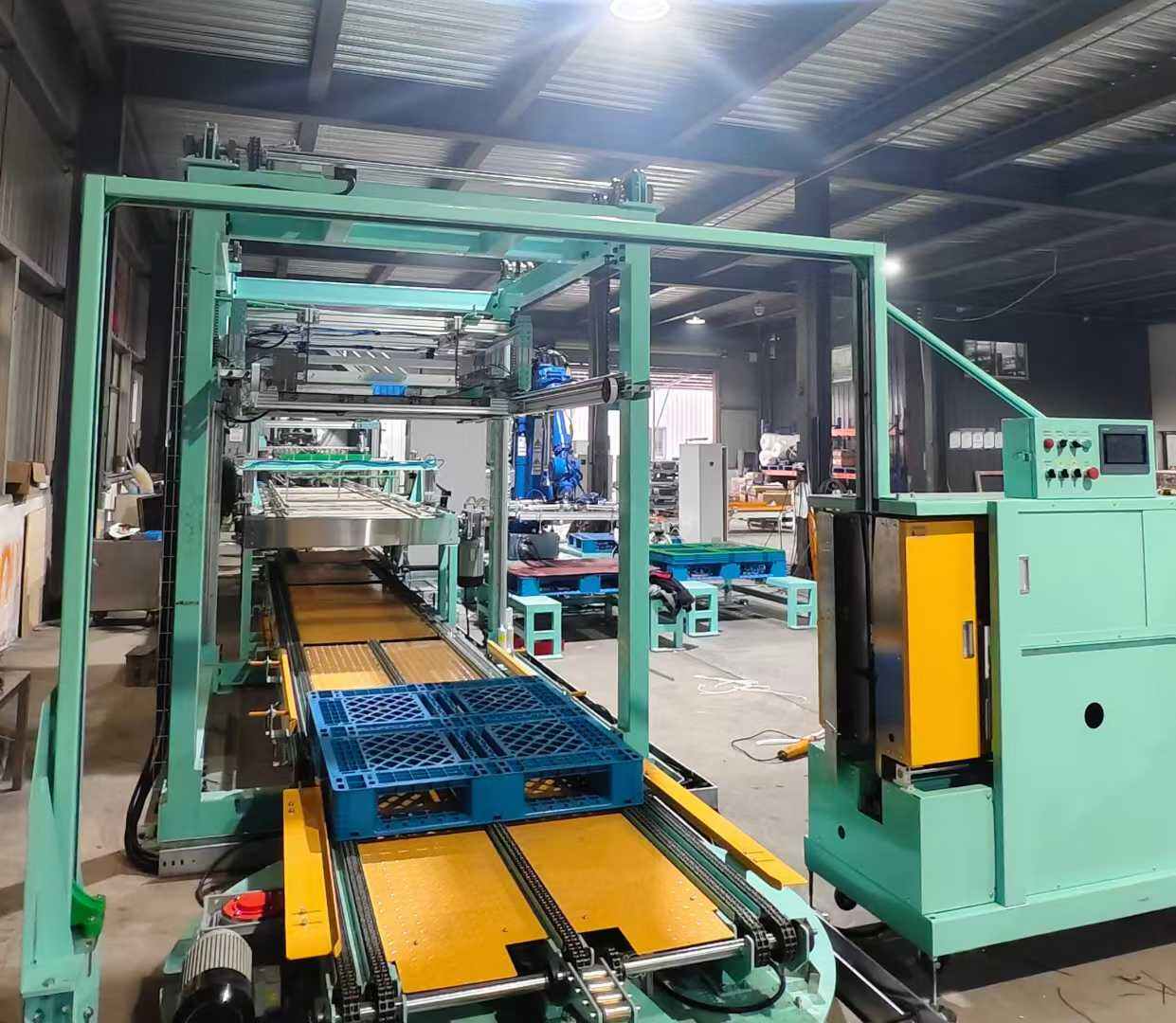
Low Level Palletizer for Can Production Lines
In today's competitive can manufacturing industry, efficiency is everything.
Can makers are constantly looking for ways to increase production output, reduce labor costs, and maintain consistent product quality. While much attention is often placed on can body makers, welders, and decorating systems, palletizing remains one of the most important stages in the production process.
A reliable low level palletizer can help manufacturers streamline operations, improve pallet quality, and reduce dependence on manual labor.
As more factories move toward automation, low level palletizers have become a popular choice for empty can handling and end-of-line packaging.
What Is a Low Level Palletizer?
A low level palletizer is an automated palletizing system that stacks products onto pallets at a lower operating height compared with traditional high-level palletizers.
Products enter the machine directly from the conveyor system, where they are arranged into layers and transferred onto pallets according to a pre-programmed stacking pattern.
Because the operating height is relatively low, these systems are easier to install, easier to maintain, and often require less factory space.
For empty can applications, this design provides smooth product handling while minimizing the risk of can deformation.
Why Automation Is Becoming Essential
Labor shortages and rising operating costs are affecting manufacturers worldwide.
According to industry reports published by The Canmaker, many can producers are increasing investments in factory automation to improve efficiency and maintain competitiveness in an increasingly demanding market.
As production speeds continue to increase, manual palletizing simply cannot keep up with modern manufacturing requirements.
Automated palletizing helps factories maintain continuous production while reducing labor dependency and improving consistency.
This is one of the main reasons why more can manufacturers are investing in a low level palletizer as part of their automation strategy.
Key Benefits of a Low Level Palletizer
Reduce Labor Costs
Traditional palletizing operations often require multiple operators per shift.
A low level palletizer automatically performs the stacking process, significantly reducing labor requirements and helping manufacturers control operating expenses.
Improve Production Efficiency
Modern can production lines operate at increasingly higher speeds.
Automated palletizing ensures that palletizing capacity matches production output, preventing bottlenecks that can slow down the entire line.
Consistent Pallet Quality
Manual stacking can result in uneven loads and unstable pallets.
A low level palletizer follows precise stacking patterns every time, creating uniform pallets that are safer for transportation and warehouse storage.
Minimize Product Damage
Empty cans are lightweight and susceptible to deformation.
A properly designed palletizing system provides gentle handling and accurate layer formation, helping protect product quality throughout the palletizing process.
Ideal for Empty Can Production Lines
Unlike many standard palletizing applications, empty cans require specialized handling.
Their lightweight structure makes them vulnerable to dents and deformation during transport and stacking.
For this reason, a low level palletizer designed specifically for the can industry offers significant advantages over general-purpose palletizing equipment.
At Hubei Baoli Technology Co., Ltd., our low level palletizers are engineered specifically for empty can applications, helping customers achieve stable operation while maintaining product integrity.
Integration With Can Conveyor Systems
A palletizer does not operate independently.
To achieve maximum efficiency, it should be integrated with a reliable can conveyor system that ensures smooth product flow throughout the factory.
Automated conveying systems transport cans safely between production processes while minimizing manual handling.
For manufacturers planning a complete automation upgrade, our article on Automatic Conveyor Systems for Can Manufacturing Plants explains how conveying technology can further improve factory efficiency.
Many customers also integrate palletizers with automatic strapping machines and stretch wrapping equipment to create a fully automated packaging line.
Low Level Palletizer vs High Level Palletizer
When evaluating automation solutions, customers often compare low level palletizers with high level palletizers.
Both systems offer excellent performance, but low level palletizers provide several advantages:
- Easier installation
- Lower operating height
- Simplified maintenance
- Reduced installation costs
- Flexible factory layout integration
For many can manufacturing facilities, these advantages make the low level palletizer the preferred choice.
You can learn more in our article Low Level vs High Level Palletizer: Which Is Better?
Industry Trends Supporting Automation
The global packaging industry continues to embrace automation technologies.
The Can Manufacturers Institute (CMI) regularly highlights the importance of innovation, productivity, and sustainability within the metal packaging industry. As manufacturers focus on operational efficiency, automated material handling and palletizing systems are becoming increasingly important.
Similarly, PMMI, one of the world's leading packaging and processing associations, reports continued growth in demand for automated packaging and end-of-line solutions across manufacturing industries.
These trends clearly indicate that automation is no longer optional for many factories. It is becoming a critical factor in maintaining competitiveness and supporting long-term growth.
Why Choose Hubei Baoli Technology
Hubei Baoli Technology Co., Ltd. specializes in automation equipment for the can manufacturing industry.
Our solutions include:
- Low-Level Magnetic Palletizers
- High-Level Magnetic Palletizers
- Rotary Palletizers
- Robotic Palletizers
- Can Conveyor Systems
- Robotic Handling Systems
- Automatic Strapping Machines
- Fully Automatic Stretch Wrapping Machines
By focusing specifically on can manufacturing applications, we help customers reduce labor requirements, improve production efficiency, and achieve higher levels of automation.
Whether you are upgrading an existing facility or building a new can production line, our team can provide customized solutions based on your production requirements.
Conclusion
A low level palletizer is one of the most effective automation investments for modern can production lines.
By reducing labor costs, improving pallet quality, minimizing product damage, and supporting high-speed production, it helps can manufacturers achieve greater efficiency and operational stability.
As automation continues to transform the can manufacturing industry, more factories are choosing low level palletizers as a key component of their long-term growth strategy.
At Hubei Baoli Technology Co., Ltd., we are committed to providing reliable palletizing solutions that help can makers build smarter, more efficient production facilities.
Table of Contents
- What Is a Low Level Palletizer?
- Why Automation Is Becoming Essential
- Key Benefits of a Low Level Palletizer
- Ideal for Empty Can Production Lines
- Integration With Can Conveyor Systems
- Low Level Palletizer vs High Level Palletizer
- Industry Trends Supporting Automation
- Why Choose Hubei Baoli Technology
- Conclusion