
 EN
EN
 AR
AR
 HR
HR
 DA
DA
 NL
NL
 FI
FI
 FR
FR
 DE
DE
 EL
EL
 HI
HI
 IT
IT
 JA
JA
 KO
KO
 NO
NO
 PL
PL
 PT
PT
 RO
RO
 RU
RU
 ES
ES
 SV
SV
 TL
TL
 IW
IW
 ID
ID
 LT
LT
 SR
SR
 VI
VI
 SQ
SQ
 HU
HU
 TH
TH
 TR
TR
 AF
AF
 MS
MS
 GA
GA
 BN
BN
 HA
HA
 IG
IG
 MR
MR
 NE
NE
 YO
YO
 MY
MY
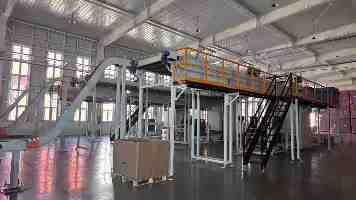
How to Choose the Right Can Palletizer for Your Factory
Choosing the right automation equipment is an important decision for every can manufacturer.
When a factory plans to buy a palletizer, the goal is not simply to purchase a machine. The real goal is to find a reliable solution that can improve production efficiency, reduce labor costs, protect product quality, and support future growth.
For metal can manufacturers, especially three-piece can production lines, palletizing is one of the most important processes at the end of production.
A suitable can palletizer can help the entire production line run smoothly. However, choosing the wrong system may create new problems, including production bottlenecks, unstable pallets, and unnecessary maintenance costs.
At Hubei Baoli Technology Co., Ltd., we specialize in automation equipment for three-piece can production lines. From sheet handling, ovens, and can conveying to palletizing and end-of-line packaging, we focus on connecting every key process and helping every empty can move efficiently through the factory.
Why Choosing the Right Can Palletizer Matters
In a modern can factory, upstream production equipment usually operates at high speed.
Can making machines, welding systems, coating equipment, and conveying systems work continuously. If the palletizing system cannot match production output, it becomes a bottleneck that affects the entire factory.
Many manufacturers face similar challenges:
Manual palletizing requires too much labor
Production speed continues to increase
Pallet quality is inconsistent
Empty cans are easily damaged
Factory space is limited
Future production upgrades are difficult
A properly selected can palletizer can solve these problems and create a more efficient end-of-line automation system.
Step 1: Understand Your Production Requirements
Before you buy a palletizer, the first step is understanding your own production conditions.
Every can factory is different.
Important factors include:
Production Speed
How many cans are produced per hour?
A low-speed production line may require a different solution compared with a high-speed beverage can or food can production line.
The palletizer capacity should always match the production line output.
Can Type and Size
Different cans have different dimensions and handling requirements.
For example, empty tinplate cans are lightweight and can be easily deformed.
A palletizing system designed specifically for the can industry can provide better product protection than a general industrial palletizer.
Factory Layout
Available space is another important consideration.
Some factories have limited installation areas and need compact solutions.
The palletizer design should fit naturally into the existing production line layout.
Step 2: Choose the Right Type of Can Palletizer
There are several types of palletizers available for can manufacturing.
The best choice depends on production requirements.
Low Level Palletizer
A low level palletizer works close to ground level and is often chosen for flexibility and easy maintenance.
Advantages include:
Lower installation height
Easier maintenance
Flexible factory integration
Suitable for many can production lines
You can learn more in our article Low Level Palletizer for Can Production Lines.
High Level Palletizer
A high level palletizer is designed for high-speed production environments.
It is commonly used when factories require:
Higher production capacity
Continuous operation
Stable pallet formation
Maximum automation efficiency
For high-speed can manufacturing plants, this solution can significantly improve productivity.
Read more about this topic in our article High Level Palletizer for High-Speed Can Manufacturing.
Rotary Palletizer
A rotary palletizer uses a rotating mechanism to arrange products into pallet layers.
It provides:
Efficient pallet formation
Compact layout
Stable operation
Good integration with automatic production lines
For factories looking for flexible automation solutions, rotary palletizers can be an excellent option.
Learn more in our article Rotary Palletizer for Metal Can Production.
Robotic Palletizer
A robotic palletizer provides high flexibility and can handle different product patterns.
It is suitable for manufacturers who need:
Flexible production
Multiple pallet patterns
Easy product changeover
Intelligent automation
You can also read Why More Can Factories Choose Robotic Palletizers.
Step 3: Check Integration Capability
A palletizer should not work as an isolated machine.
Modern can factories need connected automation systems.
A professional supplier should understand how the palletizer integrates with:
Can conveyor systems
Robotic handling systems
Automatic strapping machines
Stretch wrapping machines
Pallet handling systems
A complete automation system improves production flow and reduces manual intervention.
For example, a reliable can conveyor system ensures empty cans arrive at the palletizing area smoothly and continuously.
You can read more about this in our article Automatic Conveyor Systems for Can Manufacturing Plants.
Step 4: Consider Reliability and After-Sales Support
When you buy a palletizer, you are making a long-term investment.
Price is important, but reliability is even more important.
Before choosing a supplier, consider:
Does the manufacturer understand the can industry?
Does the equipment match your production requirements?
Can the supplier provide installation support?
Is technical service available after delivery?
Does the supplier have export experience?
A professional manufacturer should provide not only equipment but also engineering support throughout the project.
Why More Can Makers Choose Automation
The global packaging industry is moving toward higher levels of automation.
According to The Canmaker, metal packaging manufacturers continue to invest in automation technologies to improve productivity and respond to changing labor requirements.
The Can Manufacturers Institute (CMI) highlights the importance of innovation and efficiency improvements within the metal packaging industry.
Meanwhile, PMMI reports increasing adoption of automated material handling and end-of-line packaging solutions across manufacturing industries.
These trends show that automation is becoming an essential part of modern can production.
Why Choose Hubei Baoli Technology?
Hubei Baoli Technology Co., Ltd. focuses on automation equipment for three-piece can production lines.
We understand that every can manufacturer has different production requirements.
Instead of offering a standard machine for every customer, we provide customized automation solutions based on:
Production speed
Can specifications
Factory layout
Automation goals
Future expansion plans
Our equipment includes:
Can Palletizers
High-Level Magnetic Palletizers
Low-Level Magnetic Palletizers
Rotary Palletizers
Robotic Palletizers
Can Conveyor Systems
Sheet Handling Equipment
Automatic Strapping Machines
Stretch Wrapping Machines
Our mission is to make every production process connect more smoothly and help every empty can move efficiently through the factory.
Conclusion
Choosing the right can palletizer is an important step toward building a more efficient and competitive can factory.
Before you buy a palletizer, consider your production speed, can type, factory layout, automation requirements, and long-term development plans.
The right palletizing solution can reduce labor costs, improve production stability, and help your factory achieve higher efficiency.
At Hubei Baoli Technology Co., Ltd., we provide customized palletizing and automation solutions designed specifically for the metal can industry, helping can manufacturers worldwide build smarter production lines.
Table of Contents
- Why Choosing the Right Can Palletizer Matters
- Step 1: Understand Your Production Requirements
- Step 2: Choose the Right Type of Can Palletizer
- Low Level Palletizer
- High Level Palletizer
- Rotary Palletizer
- Robotic Palletizer
- Step 3: Check Integration Capability
- Step 4: Consider Reliability and After-Sales Support
- Why More Can Makers Choose Automation
- Why Choose Hubei Baoli Technology?
- Conclusion