
 EN
EN
 AR
AR
 HR
HR
 DA
DA
 NL
NL
 FI
FI
 FR
FR
 DE
DE
 EL
EL
 HI
HI
 IT
IT
 JA
JA
 KO
KO
 NO
NO
 PL
PL
 PT
PT
 RO
RO
 RU
RU
 ES
ES
 SV
SV
 TL
TL
 IW
IW
 ID
ID
 LT
LT
 SR
SR
 VI
VI
 SQ
SQ
 HU
HU
 TH
TH
 TR
TR
 AF
AF
 MS
MS
 GA
GA
 BN
BN
 HA
HA
 IG
IG
 MR
MR
 NE
NE
 YO
YO
 MY
MY
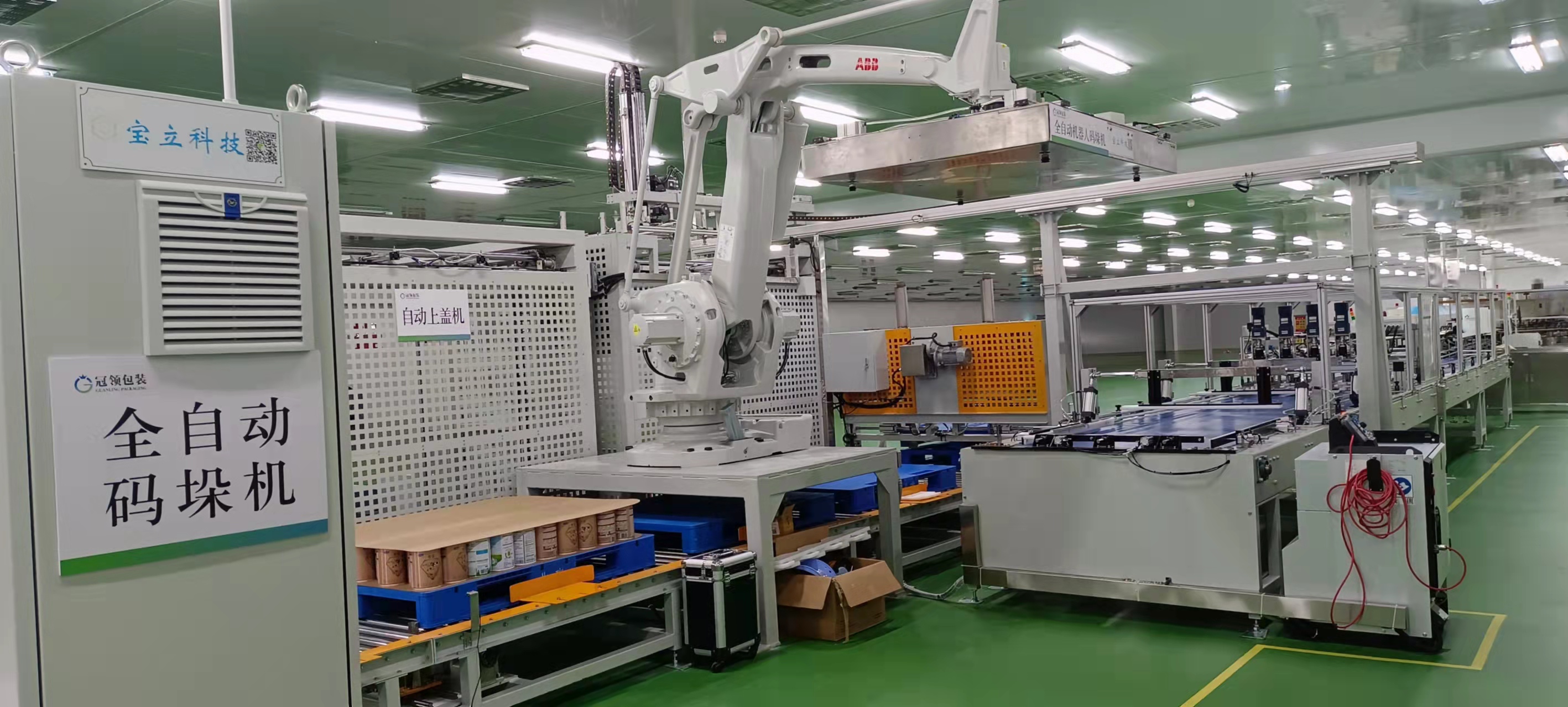
Why More Can Factories Choose Robotic Palletizers
https://youtube.com/shorts/cIYVAdFgEYE?is=wCBXNfIcPo3rEaTA
The can manufacturing industry is becoming more automated every year. Modern production lines can produce thousands of empty cans every hour, but many factories still struggle with one critical process—palletizing.
When palletizing cannot keep up with production, the entire line slows down. Operators become overloaded, labor costs increase, and production efficiency drops.
This is why more manufacturers are investing in a robotic palletizer.
At Hubei Baoli Technology Co., Ltd., we specialize in automation equipment for three-piece can production lines. From sheet handling, ovens, and can conveying to palletizing and end-of-line packaging, our solutions help connect every production process, ensuring every empty can moves smoothly, safely, and efficiently.
Common Palletizing Challenges in Can Factories
Many can factories have upgraded their production equipment over the years, but palletizing is often still completed using traditional equipment or manual labor.
This creates several common problems.
Manual Palletizing Cannot Keep Up
Modern can production lines operate at high speeds.
When workers cannot stack cans quickly enough, products begin to accumulate at the end of the line, creating production bottlenecks and reducing overall efficiency.
Rising Labor Costs
Manual palletizing requires multiple operators working in shifts.
As labor costs continue to rise around the world, this repetitive work becomes increasingly expensive.
Many manufacturers are looking for automation solutions that reduce dependence on manual labor while maintaining stable production.
Product Damage During Handling
Empty tinplate cans are lightweight and easily deformed.
Improper handling during palletizing can lead to dents, unstable pallet loads, and product damage during transportation.
This not only increases waste but can also affect customer satisfaction.
Limited Production Flexibility
Many factories produce cans in different sizes and specifications.
Traditional palletizing equipment often requires lengthy adjustments when changing products, reducing production flexibility.
How a Robotic Palletizer Solves These Problems
A robotic palletizer combines industrial robot technology with intelligent control systems to automate the entire palletizing process.
Instead of relying on manual stacking, the robot automatically picks up products, arranges them according to the required pallet pattern, and stacks them accurately.
The result is a faster, safer, and more consistent palletizing process.
Increase Productivity
One of the biggest advantages of a robotic palletizer is its ability to operate continuously.
It keeps pace with high-speed can production lines without slowing down production.
By eliminating end-of-line bottlenecks, manufacturers can maximize the performance of their entire production system.
Reduce Labor Costs
A robotic palletizer significantly reduces the number of operators required for palletizing.
Instead of assigning several workers to repetitive lifting tasks, factories can reallocate employees to higher-value production activities.
Over time, this helps reduce operating costs while improving overall efficiency.
Improve Pallet Quality
Consistency is essential for safe transportation and warehouse storage.
A robotic palletizer follows programmed pallet patterns with high precision.
Every pallet is stacked consistently, reducing the risk of collapsed loads and damaged products during shipping.
Protect Empty Cans
Unlike heavy industrial products, empty cans require gentle handling.
Our robotic palletizing solutions are specifically designed for the tinplate can industry.
The robot moves smoothly and accurately, helping reduce impact forces that may damage lightweight cans.
This improves product quality while reducing waste.
Flexible for Different Production Requirements
Many can manufacturers produce multiple can sizes on the same production line.
Our robotic palletizer can quickly switch between different pallet patterns and product specifications through the control system.
This flexibility allows manufacturers to respond faster to changing customer requirements without lengthy mechanical adjustments.
Easy Integration With Automation Equipment
At Hubei Baoli Technology, we believe palletizing should be part of a complete automation solution.
Our robotic palletizer can be integrated with:
- Can Conveyor Systems
- Sheet Handling Systems
- Ovens for Can Production
- Automatic Strapping Machines
- Stretch Wrapping Machines
- Automatic Pallet Dispensing Systems
This creates a smooth and continuous production flow from sheet handling to finished pallet packaging.
To learn more about conveying automation, you can also read our article Automatic Conveyor Systems for Can Manufacturing Plants.
If you are comparing different palletizing technologies, our article Low Level vs High Level Palletizer: Which Is Better? may also help you choose the right solution.
Automation Is Driving the Future of Can Manufacturing
Automation has become one of the biggest trends in the metal packaging industry.
According to https://www.canmaker.com" target="_blank" rel="noopener"The Canmaker, manufacturers around the world continue to invest in robotic automation to improve productivity and address labor shortages.
The https://www.cancentral.com" target="_blank" rel="noopener"Can Manufacturers Institute (CMI) also highlights continuous investment in advanced manufacturing technologies that improve production efficiency and sustainability.
Meanwhile, https://www.pmmi.org" target="_blank" rel="noopener"PMMI reports growing demand for robotic material handling and automated end-of-line packaging systems across global manufacturing industries.
These industry developments clearly show that robotic palletizing is becoming a standard solution for modern can factories.
Why Choose Hubei Baoli Technology?
Hubei Baoli Technology Co., Ltd. focuses on automation equipment for three-piece can production lines.
Rather than supplying standalone machines, we help customers build connected automation systems that improve production efficiency from the beginning of the line to the end.
Our product portfolio includes:
- Robotic Palletizers
- High-Level Magnetic Palletizers
- Low-Level Magnetic Palletizers
- Rotary Palletizers
- Can Conveyor Systems
- Sheet Handling Systems
- Automatic Strapping Machines
- Stretch Wrapping Machines
Every project is customized according to production capacity, can specifications, factory layout, and customer requirements.
Our mission is simple: connect every production process more efficiently and keep every empty can flowing smoothly throughout the entire production line.
Conclusion
A robotic palletizer is no longer just an advanced piece of equipment—it has become an essential part of modern can manufacturing.
By solving common challenges such as labor shortages, production bottlenecks, inconsistent pallet quality, and product damage, robotic palletizers help manufacturers improve productivity while reducing long-term operating costs.
At Hubei Baoli Technology Co., Ltd., we are committed to providing reliable automation solutions that help can manufacturers build smarter, more efficient, and more competitive production facilities.
Table of Contents
- Common Palletizing Challenges in Can Factories
- How a Robotic Palletizer Solves These Problems
- Increase Productivity
- Reduce Labor Costs
- Improve Pallet Quality
- Protect Empty Cans
- Flexible for Different Production Requirements
- Easy Integration With Automation Equipment
- Automation Is Driving the Future of Can Manufacturing
- Why Choose Hubei Baoli Technology?
- Conclusion