
 EN
EN
 AR
AR
 HR
HR
 DA
DA
 NL
NL
 FI
FI
 FR
FR
 DE
DE
 EL
EL
 HI
HI
 IT
IT
 JA
JA
 KO
KO
 NO
NO
 PL
PL
 PT
PT
 RO
RO
 RU
RU
 ES
ES
 SV
SV
 TL
TL
 IW
IW
 ID
ID
 LT
LT
 SR
SR
 VI
VI
 SQ
SQ
 HU
HU
 TH
TH
 TR
TR
 AF
AF
 MS
MS
 GA
GA
 BN
BN
 HA
HA
 IG
IG
 MR
MR
 NE
NE
 YO
YO
 MY
MY
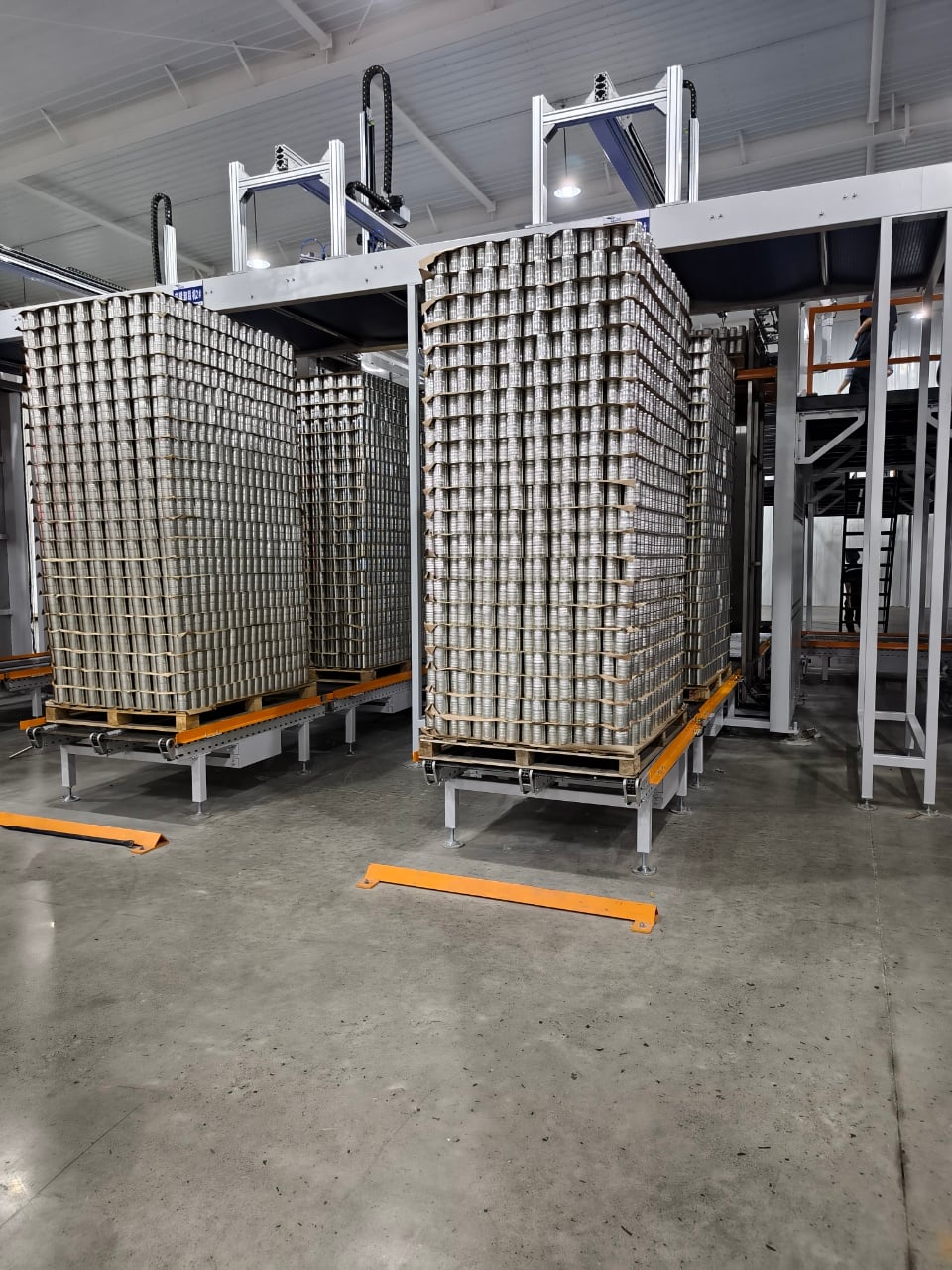
How Does a Can Depalletizer Work? A Complete Guide to Choosing the Right Empty Can Depalletizing Machine
In modern food and beverage production lines, empty cans usually arrive at the factory stacked on pallets. Before filling, washing, or processing, these cans need to be automatically unloaded and transferred into the production line.
A reliable can depalletizer is an essential part of an automated can production system. It improves production efficiency, reduces manual labor, and ensures a stable supply of empty cans for the filling line.
However, different cans and production requirements require different depalletizing solutions.
For example:
- Magnetic can depalletizers are mainly designed for tinplate cans.
- Push-type can depalletizers can handle both tinplate cans and aluminum cans.
Choosing the right automatic can depalletizer depends on factors such as can material, production speed, pallet size, and factory requirements.
As a professional automation equipment manufacturer, Hubei Baoli Technology provides customized empty can depalletizing solutions for food, beverage, and metal packaging industries.
What Is a Can Depalletizer?
A can depalletizer is an automatic machine used to remove empty cans from pallets and feed them into a production line.
It is commonly used in:
- Beverage filling lines
- Food canning production lines
- Dairy product packaging lines
- Metal packaging factories
The basic working process includes:
- Receiving pallets loaded with empty cans
- Removing cans layer by layer
- Separating cans from each other
- Transferring cans to the conveyor system
- Supplying cans continuously to the filling or processing line
Compared with manual unloading, an automatic can depalletizer provides:
- Higher production efficiency
- Lower labor cost
- More stable production flow
- Reduced risk of can damage
Different Types of Can Depalletizers and Their Working Principles
Different can materials and production speeds require different unloading methods.
Currently, the most common solutions include magnetic depalletizers and push-type depalletizers.
Magnetic Can Depalletizer: Best Choice for Tinplate Cans
A magnetic can depalletizer uses powerful permanent magnets to pick up empty cans from the pallet layer by layer.
The working principle is:
- The pallet enters the depalletizing position.
- The magnetic lifting system moves above the can layer.
- Magnets attract the tinplate cans.
- The lifting system moves the cans to the conveyor.
- The magnets release the cans onto the production line.
Because tinplate cans contain iron materials, they can be attracted by magnets.
Advantages of magnetic can depalletizers:
- High unloading speed
- Simple structure
- Stable operation
- Low maintenance requirements
- Suitable for high-volume tin can production
However, magnetic depalletizers have a limitation:
They cannot handle aluminum cans because aluminum is non-magnetic.
Therefore, this solution is mainly suitable for:
- Tinplate food cans
- Tinplate beverage cans
- Metal cans with magnetic properties
Push-Type Can Depalletizer: Flexible Solution for Tinplate and Aluminum Cans
A push-type can depalletizer uses mechanical pushing devices instead of magnetic attraction.
The working principle is:
- The pallet enters the machine.
- The lifting platform positions the can layer.
- A pushing mechanism moves the cans horizontally.
- The cans are transferred onto the conveyor.
- The next layer is automatically positioned for unloading.
Because it does not rely on magnetic force, it can handle different materials.
Suitable cans include:
- Tinplate cans
- Aluminum cans
- Other non-magnetic metal containers
Advantages of push-type can depalletizers:
- Suitable for multiple can materials
- Flexible application
- No magnetic limitations
- Better adaptability for mixed production lines
For beverage factories producing aluminum cans, a push-type solution is usually the preferred choice.
How to Choose the Right Empty Can Depalletizer?
Choosing the correct empty can depalletizer requires evaluating several important factors.
1. Can Material
The first consideration is the material of the can.
Tinplate cans
Suitable options:
- Magnetic depalletizer
- Push-type depalletizer
Aluminum cans
Recommended option:
- Push-type depalletizer
Because aluminum cannot be attracted by magnets, magnetic unloading systems cannot be used.
2. Production Speed Requirement
Different factories have different output requirements.
High-speed beverage production lines usually require:
- Automatic high-speed depalletizing
- Continuous can supply
- Stable conveyor connection
Small and medium production lines may choose more compact solutions according to their production capacity.
3. Factory Layout and Space
The installation space also affects equipment selection.
A customized depalletizing system should consider:
- Pallet storage area
- Conveyor direction
- Production line layout
- Operator working area
A professional supplier can design the equipment according to the actual factory environment.
4. Can Size and Pallet Specifications
Different cans may have different:
- Diameter
- Height
- Pallet arrangement
- Layer quantity
The depalletizer needs to match the customer's can specifications to ensure smooth operation.
Common Problems in Can Depalletizing and How Baoli Solves Them
Although automatic depalletizers improve production efficiency, many factories still face challenges during operation.
Problem 1: Can Damage During Unloading
During depalletizing, excessive force or unstable transfer may cause:
- Can deformation
- Surface scratches
- Production waste
Baoli's solution:
We optimize the mechanical structure, transfer speed, and positioning system to achieve smoother can handling and reduce damage during unloading.
Problem 2: Unstable Can Supply to Filling Line
If the depalletizing process is unstable, the filling line may experience:
- Empty can shortage
- Production interruption
- Lower efficiency
Baoli's solution:
We integrate the depalletizer with automatic conveyor systems to ensure continuous and stable empty can supply.
Problem 3: Different Can Materials Require Different Solutions
Many factories produce different products and may need to handle both tinplate and aluminum cans.
Using an unsuitable depalletizing method can reduce efficiency.
Baoli's solution:
Before designing equipment, we analyze:
- Can material
- Production speed
- Factory layout
- Automation requirements
Then we recommend the most suitable solution, whether magnetic or push-type depalletizing.
Problem 4: Limited Factory Space
Some factories have limited installation areas but still need automatic unloading.
Baoli's solution:
We provide customized equipment designs according to customer space conditions, optimizing machine structure and conveyor arrangement.
Why Choose Hubei Baoli for Automatic Can Depalletizing Solutions?
Hubei Baoli Technology specializes in automation equipment for can production and packaging lines.
Our solutions include:
- Automatic can depalletizers
- Empty can conveying systems
- Can palletizing systems
- End-of-line packaging automation
We understand that every factory has different production requirements.
Instead of offering standard machines only, Baoli focuses on providing customized automation solutions based on:
- Can type
- Production capacity
- Factory layout
- Customer automation goals
From equipment design and manufacturing to installation guidance and after-sales support, Baoli helps global customers improve production efficiency.
Conclusion: Choose the Right Can Depalletizer for Your Production Line
A suitable automatic can depalletizer plays an important role in improving the efficiency of food and beverage production lines.
Magnetic depalletizers are an efficient solution for tinplate cans, while push-type depalletizers provide greater flexibility for both tinplate and aluminum cans.
Before selecting equipment, manufacturers should consider:
- Can material
- Production speed
- Factory layout
- Automation requirements
With professional engineering experience and customized solutions, Hubei Baoli Technology helps customers select the right empty can depalletizing machine and build more efficient automatic production lines.
Contact Baoli today to discuss your can depalletizing requirements and find the best automation solution for your factory.
Table of Contents
- What Is a Can Depalletizer?
- Different Types of Can Depalletizers and Their Working Principles
- Magnetic Can Depalletizer: Best Choice for Tinplate Cans
- Push-Type Can Depalletizer: Flexible Solution for Tinplate and Aluminum Cans
- How to Choose the Right Empty Can Depalletizer?
- 1. Can Material
- 2. Production Speed Requirement
- 3. Factory Layout and Space
- 4. Can Size and Pallet Specifications
- Common Problems in Can Depalletizing and How Baoli Solves Them
- Problem 1: Can Damage During Unloading
- Problem 2: Unstable Can Supply to Filling Line
- Problem 3: Different Can Materials Require Different Solutions
- Problem 4: Limited Factory Space
- Why Choose Hubei Baoli for Automatic Can Depalletizing Solutions?
- Conclusion: Choose the Right Can Depalletizer for Your Production Line