
 EN
EN
 AR
AR
 HR
HR
 DA
DA
 NL
NL
 FI
FI
 FR
FR
 DE
DE
 EL
EL
 HI
HI
 IT
IT
 JA
JA
 KO
KO
 NO
NO
 PL
PL
 PT
PT
 RO
RO
 RU
RU
 ES
ES
 SV
SV
 TL
TL
 IW
IW
 ID
ID
 LT
LT
 SR
SR
 VI
VI
 SQ
SQ
 HU
HU
 TH
TH
 TR
TR
 AF
AF
 MS
MS
 GA
GA
 BN
BN
 HA
HA
 IG
IG
 MR
MR
 NE
NE
 YO
YO
 MY
MY
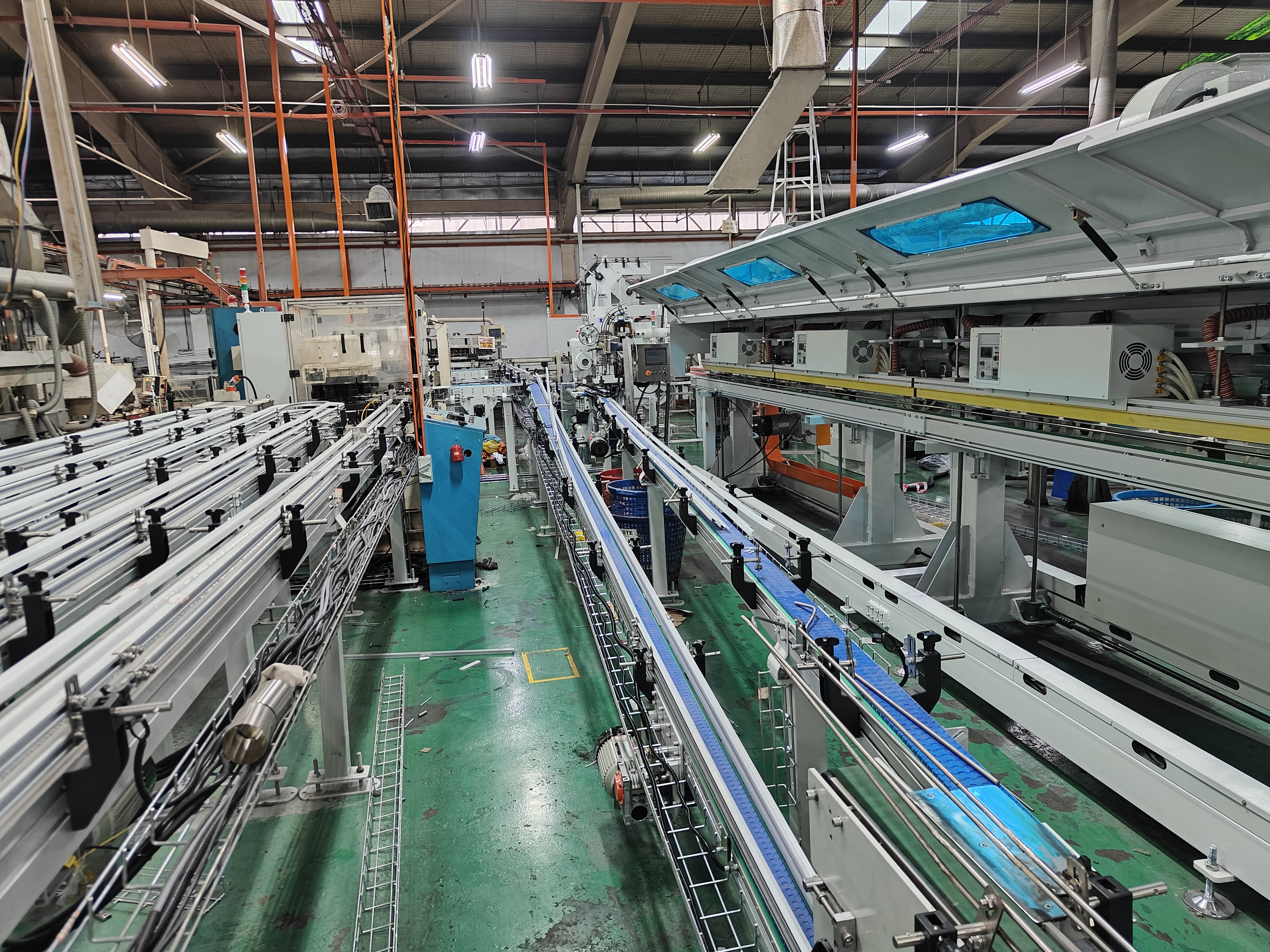
How to Choose a three piece Can making Machine Supplier
Most inquiries we get aren't "what does this machine cost" — they're "can you fix what I already have" or "can you design something that fits our specific can size." A few things worth checking before you commit to a supplier:
- Custom engineering, not catalog machines. Can specs, plant layouts, and tinplate gauges vary. A supplier building to a fixed catalog will make you adapt your process to their machine, not the other way around.
- Whole-line experience, not single-station expertise. A company that's only built welders will struggle to tell you why your oven and your flanger aren't syncing.
- On-site installation and production guidance. Equipment that arrives without commissioning support usually costs more in downtime than it saved on the invoice.
- Responsive after-sales service. Ask how fast they can get a technician or spare part to your plant, not just what's covered under warranty.
- Track record with the same industry. Beverage and food can lines have different hygiene and coating requirements than industrial tin containers — make sure the supplier's experience actually matches your product.
We've been building this equipment since founding Baoli in 2011, with our founder in the can-making industry since 2003 — long enough to have seen most of the ways a line can go wrong before it's even installed.
What Is a Three Piece Can and Why It Still Matters
A three piece can is exactly what it sounds like: a cylindrical body formed from a flat sheet, with a top and bottom end seamed on separately. Compare that to a two piece can, which is drawn and formed from a single blank.
Two piece lines dominate carbonated soft drink cans, but three piece construction is still the standard for food cans, aerosol cans, and many general tin containers — anywhere you need thicker gauge tinplate, taller can profiles, or lower tooling investment per SKU. For manufacturers running mixed can sizes, three piece lines are often the more economical choice long-term, even though the process has more stations.
The Full Line, Station by Station
A complete three piece can line is a chain of machines, and each one has to match the throughput of the others — a fast welder feeding a slow curing oven just creates a bottleneck.
Tinplate Feeding & Sheet Conveying Sheets are fed from the tinplate stack into the line, aligned, and moved through pre-treatment. Getting this stage wrong — misaligned feed, inconsistent sheet spacing — causes downstream defects that don't show up until the can is already formed.
Body Forming & Welding The sheet is rolled into a cylinder and side-seam welded. This is where dimensional accuracy matters most; a body that's even slightly out of round will cause problems at the flanging and seaming stages later.
Curing Oven After welding, the can body passes through a curing oven to set the interior/exterior coating over the weld seam. Oven temperature consistency and dwell time directly affect corrosion resistance, so this station is worth more attention than buyers usually give it during evaluation.
Flanging and Necking The can body edges are flanged outward so the ends can be seamed on. For shaped cans, necking happens here too.
Lid Feeding System Ends are fed in, oriented, and staged for seaming onto the can body. On high-speed lines, this station needs to keep pace without misfeeds — a common failure point on lower-quality equipment.
Inter-Station Conveying Often overlooked, but this is the system that actually determines your real line speed. A line with excellent individual machines and a poorly designed conveying system between them will still underperform.
Palletizing, Strapping & Wrapping Finished cans are stacked, strapped, and film-wrapped for shipping. For plants running multiple SKUs, palletizer flexibility (switching pallet patterns without a long changeover) is worth checking before you buy.
Common Mistakes When Upgrading a Can Making Line
Buying stations individually without line-matching. A great welder paired with an undersized oven or a mismatched conveyor just moves the bottleneck somewhere else.
Ignoring energy consumption at the design stage. Oven and drying systems are usually the highest energy draw on the line — this is far easier to address in the equipment design phase than to retrofit later.
Underestimating changeover time. If your plant runs multiple can sizes, ask specifically how long a size changeover takes on each station, not just the line as a whole.
Last spring, one of our clients in Southeast Asia called with a familiar problem: their existing tinplate line could handle body forming just fine, but the flanging station kept jamming every few thousand cans. They didn't need a new factory — they needed one station rebuilt to talk to the rest of the line properly. That's the reality of buying three piece can making equipment: it's rarely about one machine. It's about how every station on the line works together.
If you're evaluating a 3 piece can making equipment upgrade — or trying to figure out what "3 pcs canmaking machinery" actually includes before you request a quote — this guide walks through the full line, what to look for, and where most buyers go wrong.
FAQ
What's the difference between 3 piece and 2 piece can making equipment? Three piece lines form the body from a flat sheet and weld a seam, then attach both ends separately. Two piece lines draw the body and one end from a single blank, which suits thinner-gauge, high-speed beverage can production.
How long does it take to install a full 3 piece can production line? It depends on line speed and plant readiness, but a full line — from foundation prep to production trial — typically takes several weeks to a few months, including commissioning and operator training.
Can an existing tinplate can line be upgraded instead of fully replaced? Often, yes. Many plants only need specific stations rebuilt or synced — like the flanging unit or inter-station conveying — rather than a full line replacement.
If you're planning a new line or troubleshooting an existing one, we're happy to look at your current setup and tell you honestly whether you need new equipment or just better integration. Reach out with your can specs and current line details, and we'll walk you through the options.
View more video from our Youtube channel:https://youtu.be/rXestkT3yl4?is=ovgINQQ5dQzyiXYE