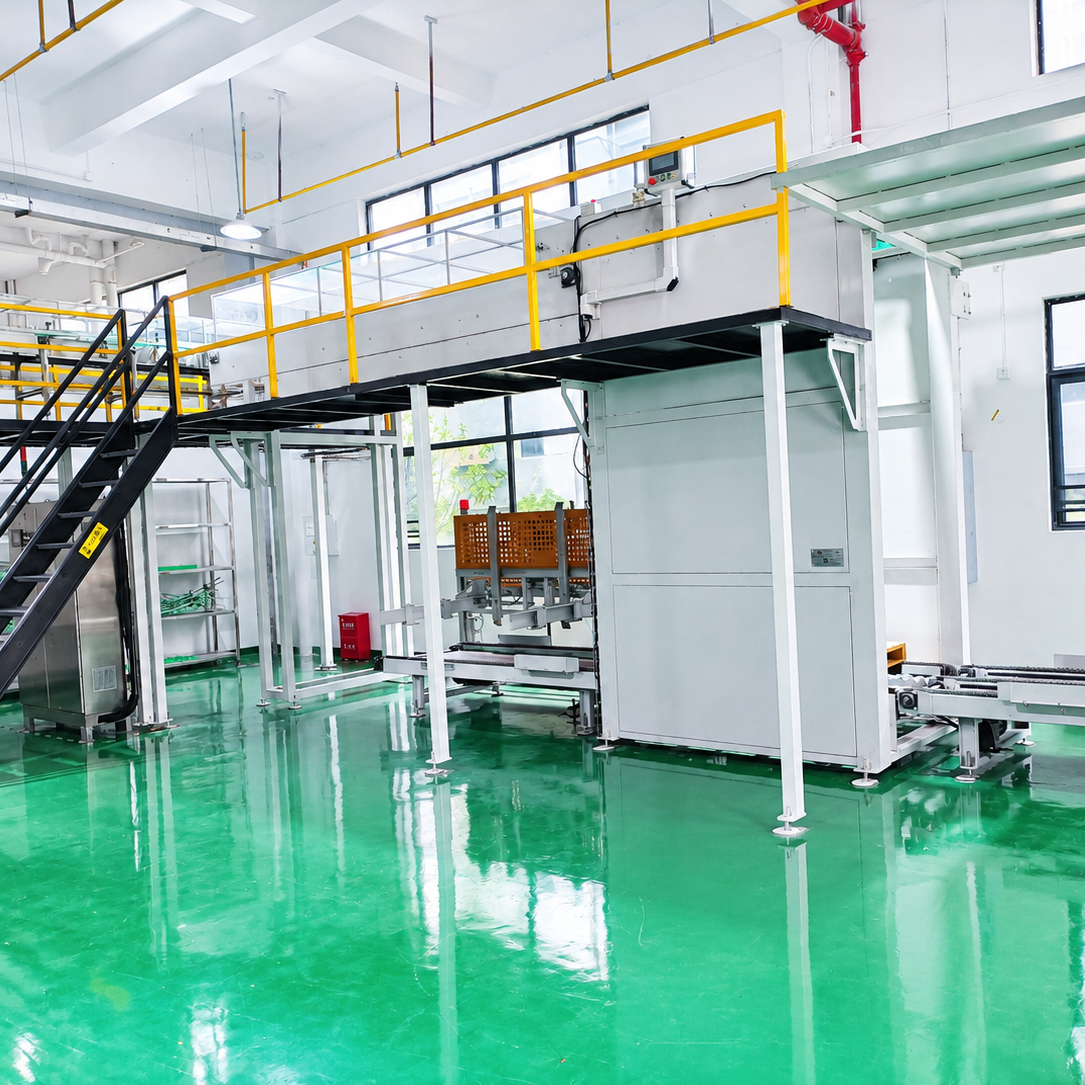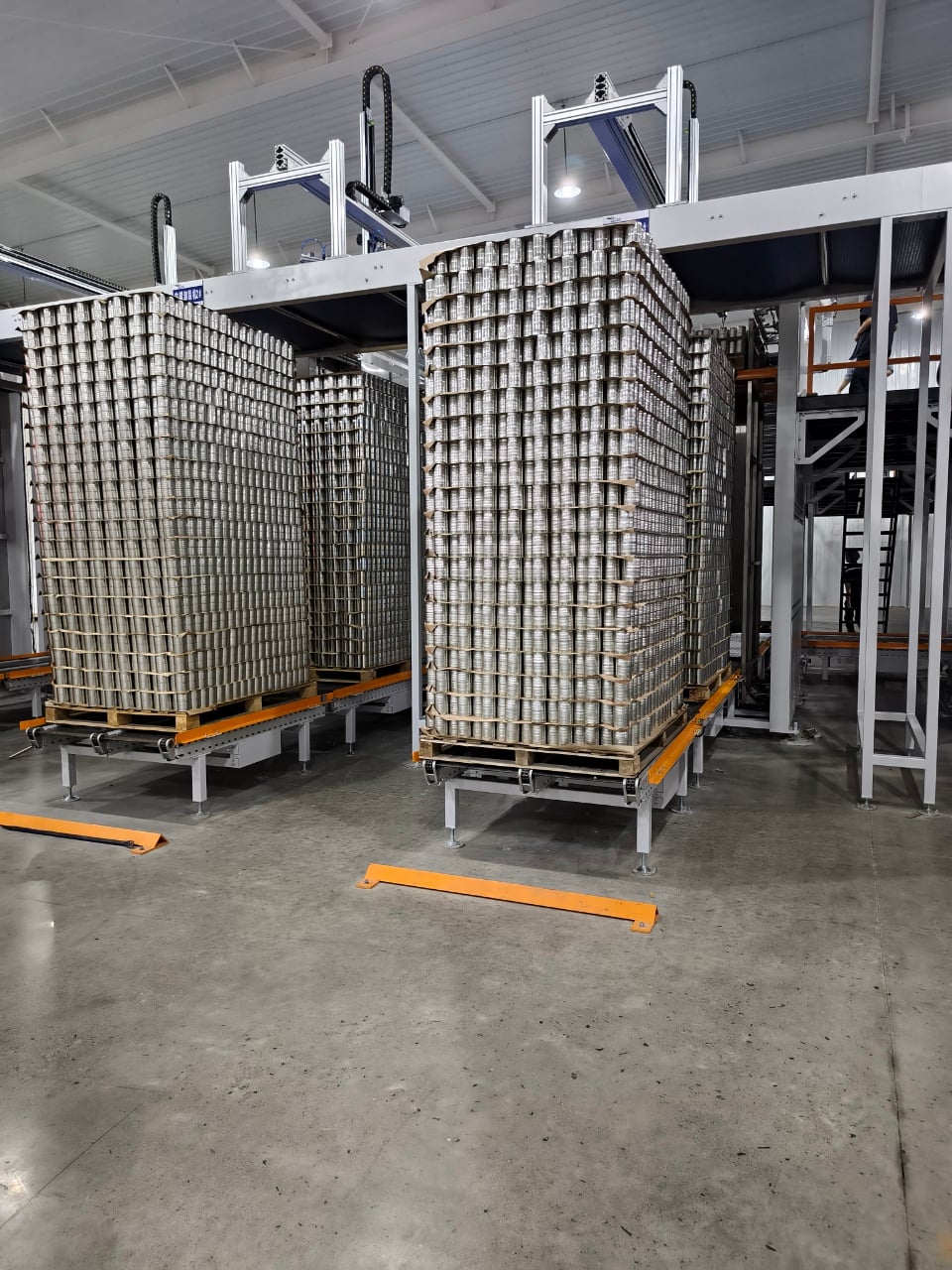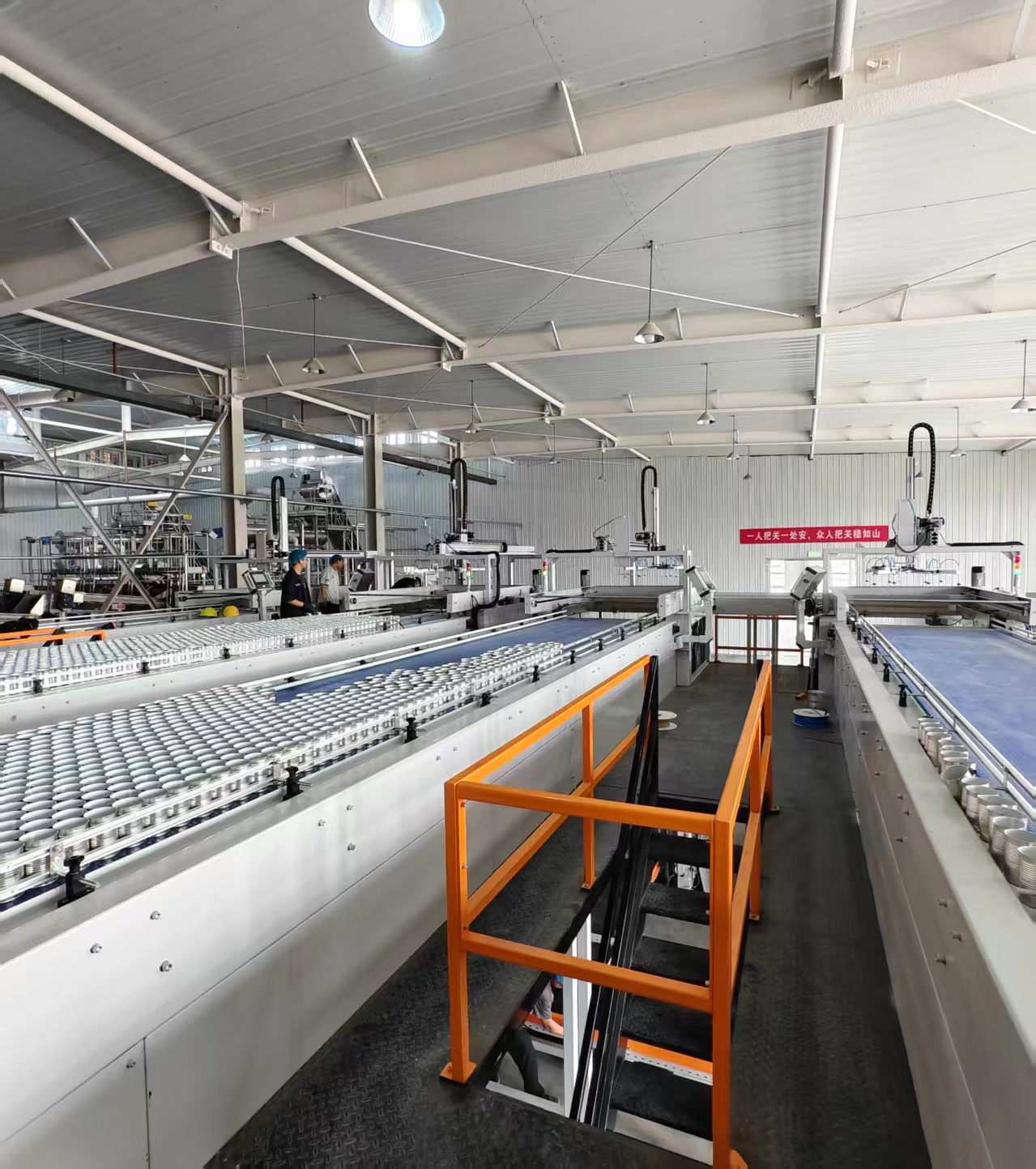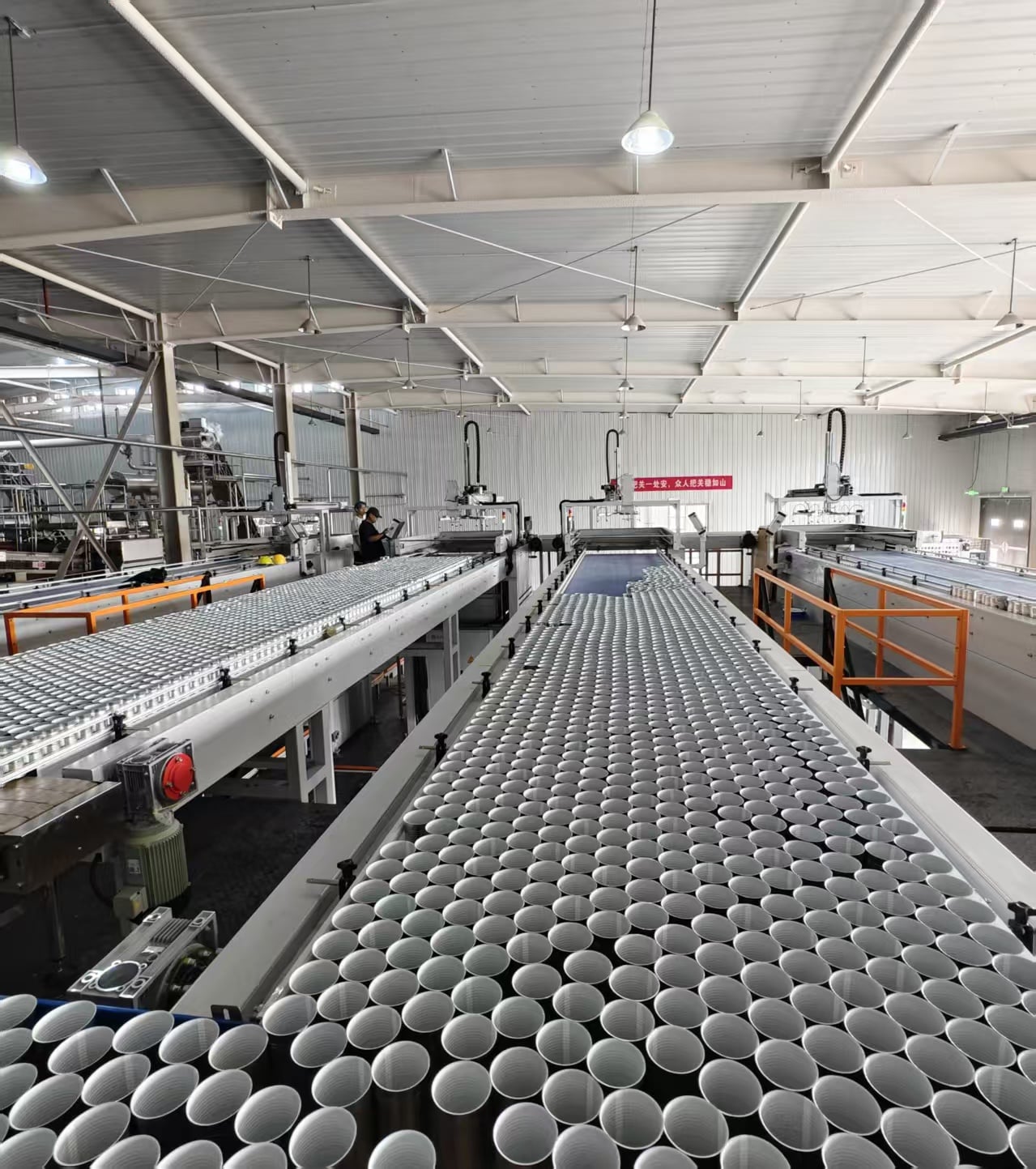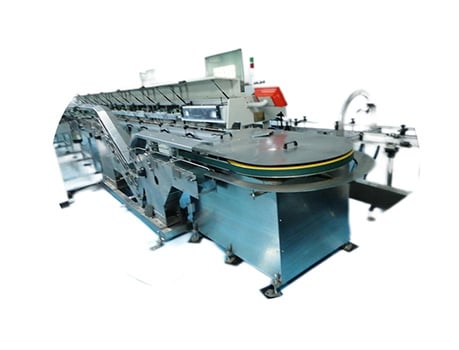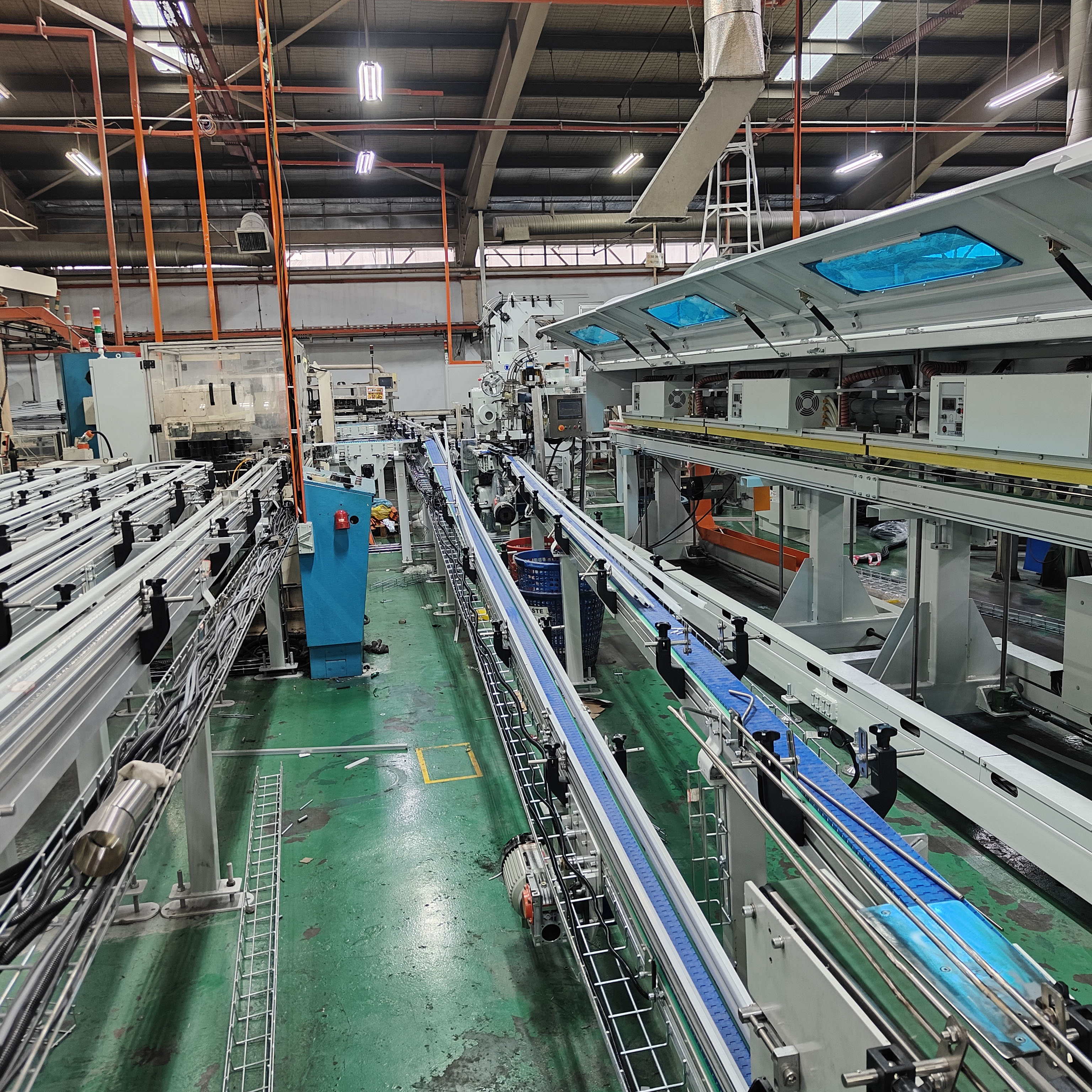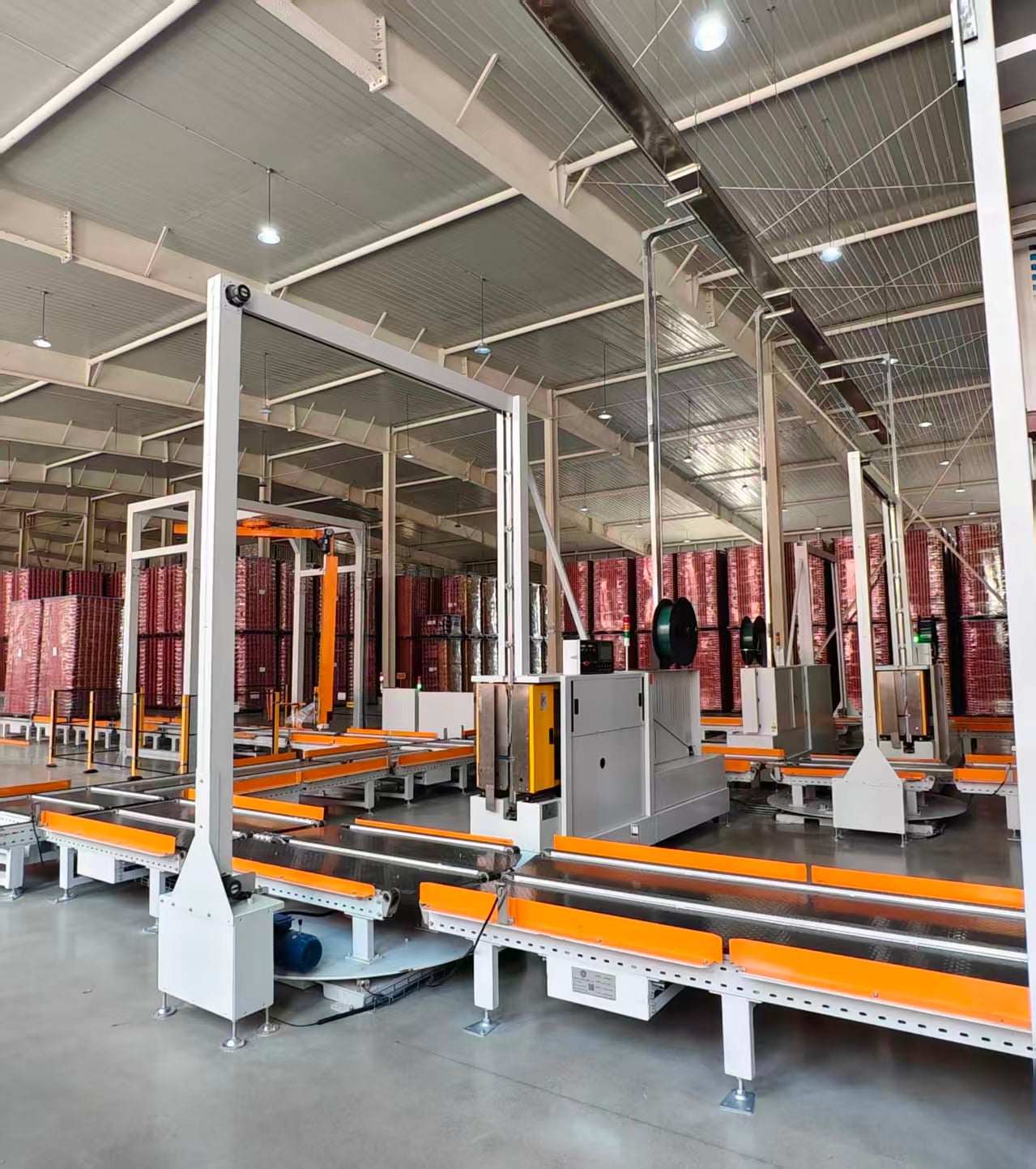
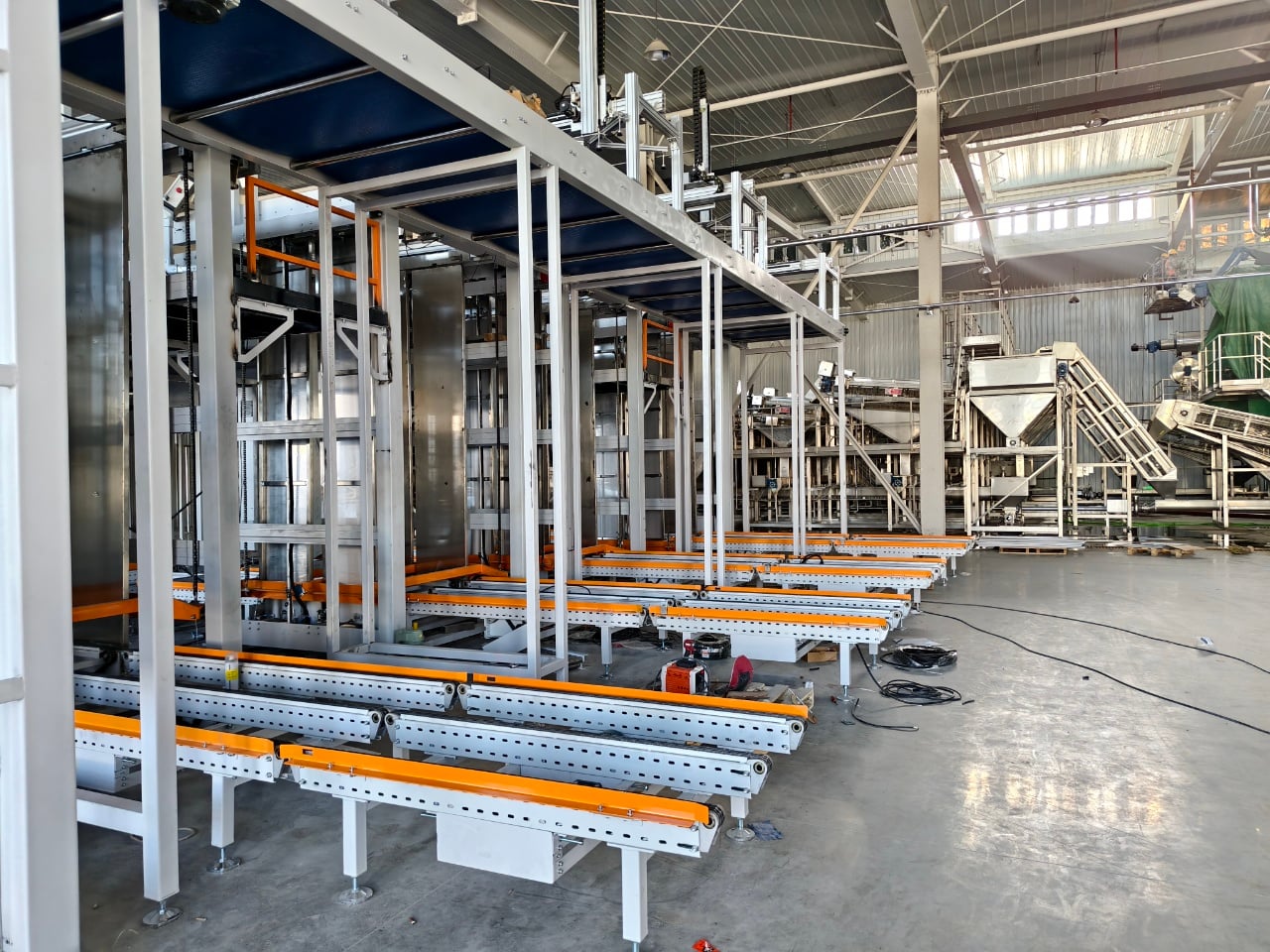
An empty can depalletizer is a machine that unloads a pallet of empty cans layer by layer onto a conveyor, which carries the cans to the next stage of your can filling line. It replaces the manual work of unstacking cans at the front of the line. Hubei Baoli Technology Co., Ltd. ("Baoli") builds two types: the push-type can depalletizer and the magnetic can depalletizer.
Quick facts
An empty can depalletizer is automatic equipment that takes palletized empty cans and transfers them to a conveyor without an operator lifting or sliding cans by hand. Cans usually arrive at the plant stacked in layers on a pallet. Somebody has to get those cans onto the line, and doing that by hand is slow, repetitive work. A can depalletizing machine does it automatically and continuously.
You may also see it called a can depalletizing system, can unloading machine or layer depalletizer. They all describe the same job: pallet in, loose cans on a conveyor out.
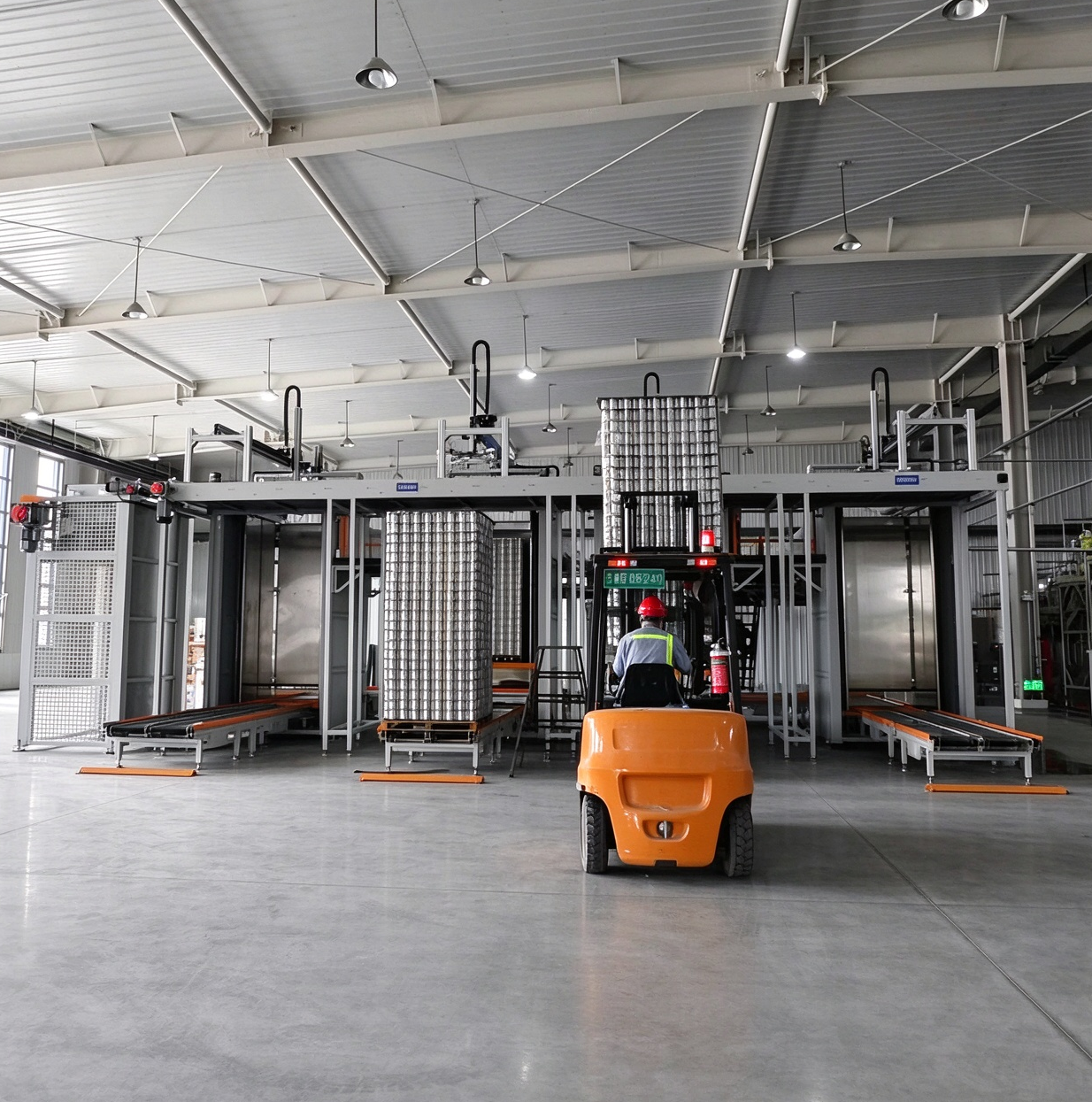
The process has three steps, and it is the same idea for both machine types.
The difference between the two Baoli models is step 2: how the layer of cans is moved off the pallet.
View the depalletizer working video from our Youtube channel:
https://youtu.be/KEnGYJ3RnLo?is=QM1HFpefvVCqXYnd
The push-type depalletizer pushes each layer of cans from the pallet onto the conveyor, while the magnetic depalletizer lifts each layer with magnets and places it onto the conveyor.
| Push-Type Can Depalletizer | Magnetic Can Depalletizer | |
|---|---|---|
| How a layer is moved | Pushed from the pallet onto the conveyor | Lifted by a magnetic head and placed on the conveyor |
| Suited to | Cans that should not be lifted, or where a pushing action fits your pallet pattern | Cans made of magnetic material, such as tinplate cans |
| Typical reason to choose it | Simple, gentle sliding motion | Clean lifting of whole layers |
Which one is right depends on your can material, can size and how your pallets are packed. If you are not sure, send us your can sample and pallet details and we will tell you which type fits.
Ask any plant manager about the start of the line and the same complaints come up. Here are the ones we hear most.
Manual unstacking is heavy and never-ending. Someone has to keep unloading pallets, shift after shift. It takes several workers, and the work is tiring.
The line starves when the workers can't keep up. If cans reach the conveyor unevenly, the machines behind it wait. Every pause costs output.
Cans get dented or scratched. Hand-moving thin empty cans means bumps, drops and scuffs. Damaged cans become scrap or cause jams later on.
Output depends on who is on shift. Speed and care change from person to person, and it is hard to keep the front end steady.
It's a safety and hygiene concern. Repetitive lifting causes strain injuries, and more hands on empty cans means more contamination risk before filling.
Recruiting and labor cost keep rising. Filling front-end positions is harder every year, and you can't always find people who want this job.
We designed the machine around those exact complaints.
| Problem | How the Baoli depalletizer handles it | What you get |
|---|---|---|
| Heavy manual unstacking | Unloads whole layers automatically onto the conveyor | Fewer operators needed at the front end |
| Line starvation | Continuous layer-by-layer unloading with conveyor discharge | A steadier supply of cans to the filling line |
| Damaged cans | Layer-based handling instead of moving cans one by one by hand | Less denting and scuffing during unloading |
| Output varies by shift | Same motion, every layer, every pallet | More consistent front-end performance |
| Safety and hygiene | Operators no longer lift and unstack cans | Less physical strain and less hand contact with empty cans |
| Rising labor cost | Automation replaces repetitive manual unstacking | Lower long-term labor dependence |
Two models, so you don't have to compromise. Some plants run tinplate cans and can use the magnetic type. Others need the push-type. Because Baoli offers both, we recommend based on your cans, not on what we happen to have in stock.
Built to connect with the rest of your line. The depalletizer discharges onto a conveyor, so it links to your existing can conveying and filling equipment. On the sealing side, Baoli's automatic can lid feeding machine uses the same line-integration approach, so the front end and the lid supply can be planned together.
Once the depalletizer is running, most plants notice the following changes:
The goal: a front end that runs continuously and automatically, from full pallet to loose cans on the conveyor, with less labor, higher efficiency and a consistent supply of cans to the whole filling line.
| Your Situation | Suggested Type |
|---|---|
| Tinplate or other magnetic cans, want clean layer lifting | Magnetic can depalletizer |
| Cans better suited to a pushing action, or a pallet pattern that fits it | Push-type can depalletizer |
| Not sure about material or pallet pattern | Send us samples and pallet details for a recommendation |
To size the machine and choose between push-type and magnetic, please send us:
Hubei Baoli Technology Co., Ltd. focuses on automation equipment for can production and packaging. We can supply a depalletizer, conveyor and lid feeding equipment for the same project, so you don't have to coordinate several suppliers. For related equipment, see our can conveyor systems and can lid feeding machine, or read our guide on how to choose an automatic can lid feeding machine.
What is an empty can depalletizer?
It is a machine that unloads pallets of empty cans layer by layer onto a conveyor, replacing manual unstacking at the start of a filling line.
What types of can depalletizer does Baoli offer?
Two types: push-type and magnetic.
What is the difference between push-type and magnetic depalletizers?
The push-type pushes each layer of cans onto the conveyor. The magnetic type lifts each layer with magnets. The right choice depends on your can material and pallet pattern.
Can a magnetic depalletizer handle aluminum cans?
Magnets only work on magnetic materials such as tinplate. For non-magnetic cans, the push-type is normally the option to consider. Send us your can sample and we will confirm.
How much labor can a depalletizer save?
It removes the manual unstacking step, so you need fewer operators at the front end. The exact number depends on your line speed and layout.
Can the depalletizer connect to my existing line?
Yes. It discharges onto a conveyor, and Baoli can plan the connection to your existing conveying and filling equipment.
Can Baoli supply lid feeding equipment too?
Yes. Baoli also supplies an automatic can lid feeding machine for the sealing side of the line.
Send us your can size, pallet pattern, line speed and factory layout. Hubei Baoli Technology will recommend the right depalletizer type and configuration. Request a Depalletizer Solution
Copyright © Hubei Baoli Technology Co., Ltd. All Rights Reserved - Blog - Privacy Policy
 EN
 AR
 HR
 DA
 NL
 FI
 FR
 DE
 EL
 HI
 IT
 JA
 KO
 NO
 PL
 PT
 RO
 RU
 ES
 SV
 TL
 IW
 ID
 LT
 SR
 VI
 SQ
 HU
 TH
 TR
 AF
 MS
 GA
 BN
 HA
 IG
 MR
 NE
 YO
 MY