
 EN
EN
 AR
AR
 HR
HR
 DA
DA
 NL
NL
 FI
FI
 FR
FR
 DE
DE
 EL
EL
 HI
HI
 IT
IT
 JA
JA
 KO
KO
 NO
NO
 PL
PL
 PT
PT
 RO
RO
 RU
RU
 ES
ES
 SV
SV
 TL
TL
 IW
IW
 ID
ID
 LT
LT
 SR
SR
 VI
VI
 SQ
SQ
 HU
HU
 TH
TH
 TR
TR
 AF
AF
 MS
MS
 GA
GA
 BN
BN
 HA
HA
 IG
IG
 MR
MR
 NE
NE
 YO
YO
 MY
MY
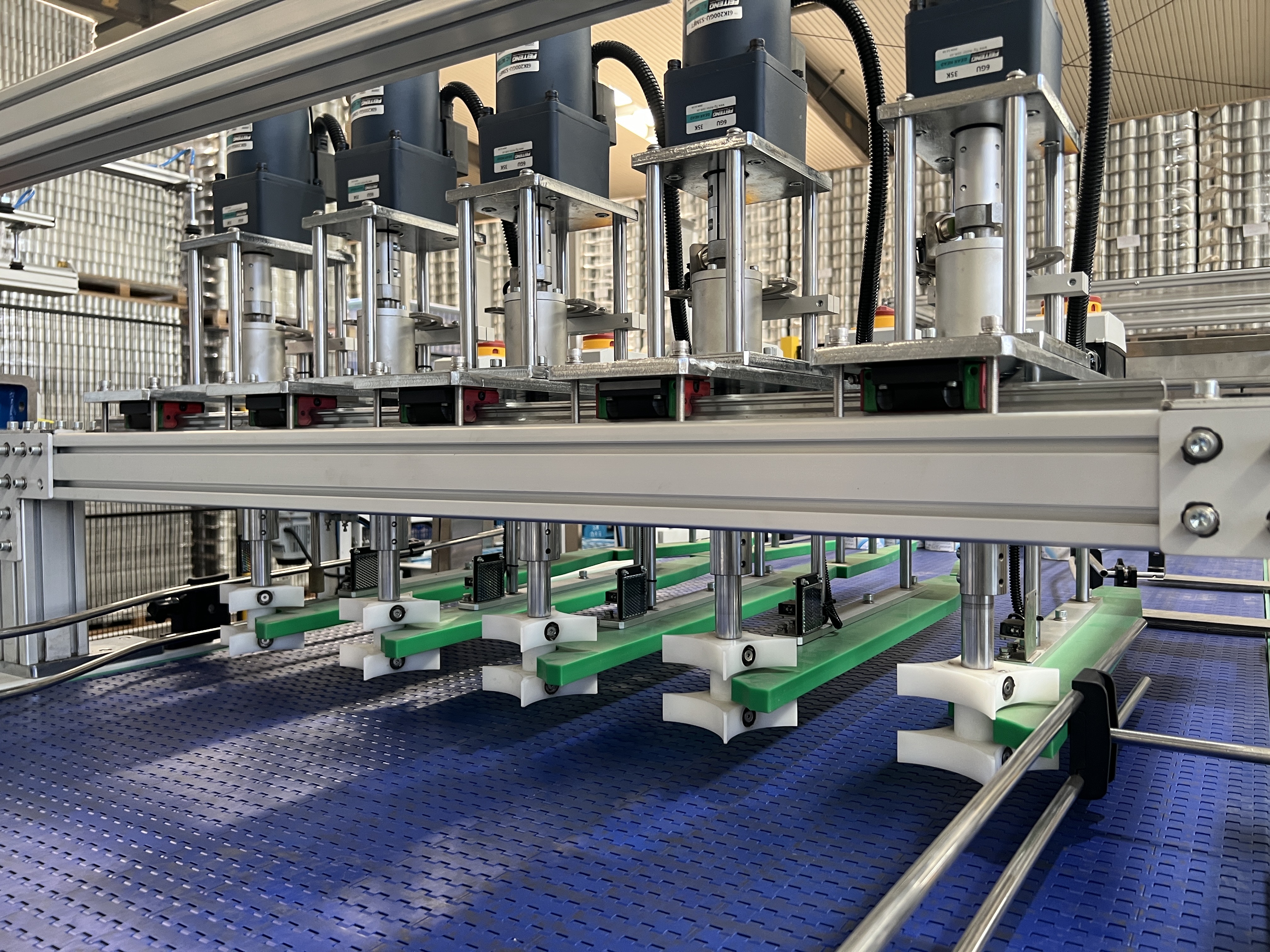
What is a Can Palletizer? Complete Guide to Automatic Palletizing Systems for Can Production Lines
In today’s highly competitive packaging industry, automation has become an essential part of modern manufacturing. For metal can factories, improving production efficiency while reducing labor costs is one of the most important goals. As production speeds continue to increase, manual handling methods are no longer able to meet the requirements of modern can production lines.
This is where the can palletizer becomes a critical part of factory automation.
A can palletizer is an automatic palletizing machine used to stack finished cans onto pallets quickly, accurately, and safely. In modern can manufacturing plants, palletizing systems help improve efficiency, reduce labor intensity, minimize product damage, and optimize warehouse transportation.
Whether in food can manufacturing, beverage can production, or industrial packaging industries, automatic palletizers are now widely used in high-speed production environments.
In this article, we will explain what a can palletizer is, how it works, the main types of palletizing systems, and why automatic palletizing solutions are becoming increasingly important for modern factories.
What Is a Can Palletizer?
A can palletizer is a type of industrial palletizer designed specifically for stacking metal cans, tin cans, aluminum cans, or packaged can products onto pallets for storage and transportation.
The machine automatically arranges products into organized layers and stacks them according to preset pallet patterns. Compared with manual stacking, an automatic can palletizing machine provides much higher efficiency, consistency, and operational stability.
A typical can palletizer is installed at the end of a can production line after processes such as:
- Can body welding
- Flanging
- Seaming
- Leak testing
- Packaging
- Wrapping
- Strapping
After cans are transported through the conveyor system, the palletizing system automatically organizes and stacks the products onto pallets for warehouse handling or shipment.
In modern factories, automatic palletizing systems are considered a key component of intelligent manufacturing and end-of-line packaging automation.
Why Are Can Palletizers Important?
As labor costs continue to rise worldwide, more factories are replacing manual palletizing operations with automatic palletizers.
There are several important reasons why can palletizers are essential in modern production environments.
Improve Production Efficiency
Modern can production lines often operate at high speeds and produce large quantities of products every hour. Manual palletizing cannot maintain the same efficiency and stability as automated systems.
An automatic palletizer can continuously stack products without interruption, helping factories achieve stable high-speed production.
This significantly improves overall production efficiency.
Reduce Labor Costs
Traditional palletizing operations require multiple workers per shift. This not only increases labor expenses but also creates management challenges.
An automatic can palletizer can replace repetitive manual labor and reduce the number of workers required at the end of the line.
For many factories, automation provides substantial long-term cost savings.
Reduce Product Damage
Metal cans can easily become scratched, dented, or unstable during manual handling.
A professional palletizing system ensures that products are stacked carefully and consistently, reducing the risk of:
- Surface damage
- Product deformation
- Unstable pallets
- Transportation accidents
This helps improve overall product quality and customer satisfaction.
Improve Workplace Safety
Manual palletizing is physically demanding work. Workers may suffer from fatigue, lifting injuries, or repetitive strain during continuous operations.
Industrial palletizers help improve workplace safety by reducing manual handling tasks and minimizing human exposure to heavy lifting operations.
Support Smart Factory Automation
Modern manufacturing is moving toward Industry 4.0 and intelligent factory systems.
Automatic palletizing machines can integrate with:
- Conveyor systems
- Wrapping machines
- Strapping machines
- Industrial robots
- Warehouse automation systems
- PLC control systems
This creates a complete automatic palletizing solution for can production lines.
How Does a Can Palletizer Work?
Although different palletizing systems may use different technologies, the basic palletizing process is generally similar.
Step 1: Product Conveying
Finished cans are transported from the production line through conveyor systems toward the palletizer.
The conveying system ensures smooth and stable product movement.
Step 2: Product Arrangement
The products are automatically aligned and organized into specific patterns according to palletizing requirements.
This stage is extremely important for ensuring stable pallet stacking.
Step 3: Layer Formation
The machine groups products into complete layers before stacking them onto pallets.
Different products may require different stacking configurations.
Step 4: Pallet Stacking
The palletizer transfers each product layer onto the pallet using lifting systems, pushing devices, robotic arms, or rotating mechanisms.
The products are stacked layer by layer until the pallet is completed.
Step 5: Finished Pallet Output
The completed pallet is transported automatically to the warehouse area or packaging section for wrapping and shipment.
This entire process operates continuously and automatically.
Main Types of Can Palletizers
Different factories require different palletizing systems depending on production speed, product type, factory layout, and automation level.
Low Level Palletizer
A low level palletizer operates at a lower working height and is widely used in medium-speed can production lines.
Advantages include:
- Easy maintenance
- Compact design
- Lower installation cost
- Stable operation
Low level palletizers are commonly used in food can factories and general industrial packaging lines.
High Level Palletizer
A high level palletizer is designed for high-speed production environments.
Products are elevated to a higher stacking level before palletizing.
Advantages include:
- Higher production capacity
- Faster palletizing speed
- Continuous operation
- Excellent efficiency
High level palletizers are often used in large beverage can manufacturing plants.
Rotary Palletizer
A rotary palletizer uses rotating mechanisms to organize and stack products efficiently.
This type of automatic palletizer is especially suitable for lightweight metal cans and round containers.
Advantages include:
- Smooth product handling
- Stable stacking
- Reduced product impact
- Space-saving structure
Robotic Palletizer
A robotic palletizer uses industrial robot arms for flexible palletizing operations.
Robotic systems are becoming increasingly popular in smart factories because they provide:
- Flexible pallet patterns
- Intelligent programming
- Easy product changeover
- Multi-product compatibility
Robotic palletizers are ideal for factories pursuing advanced automation and intelligent manufacturing.
Industries That Use Can Palletizers
Can palletizers are widely used across many industries.
These include:
- Food can manufacturing
- Beverage can production
- Chemical packaging
- Aerosol can production
- Industrial container manufacturing
- Metal packaging industries
Any factory with continuous can production can benefit from an automatic palletizing system.
How to Choose the Right Can Palletizer
Selecting the correct can palletizer depends on several important factors.
Production Speed
Factories with high-speed production lines require high-capacity palletizing systems.
Low-speed and medium-speed factories may choose more economical solutions.
Product Type
The size, shape, and weight of the cans affect palletizing requirements.
Different products require different stacking methods.
Factory Layout
Available floor space and building height are important considerations.
Some palletizers require more installation space than others.
Automation Requirements
Factories pursuing Industry 4.0 automation may prefer robotic palletizers integrated with intelligent control systems.
Budget and Future Expansion
Factories should consider long-term expansion plans when selecting automation equipment.
A scalable palletizing system helps reduce future upgrade costs.
Advantages of Automatic Palletizing Systems for Can Production Lines
Investing in an automatic can palletizing machine provides many long-term benefits.
These include:
- Higher production efficiency
- Reduced labor costs
- Improved product protection
- Stable pallet quality
- Reduced downtime
- Better factory management
- Improved workplace safety
- Smart factory integration
As global manufacturing continues moving toward intelligent automation, palletizing systems are becoming increasingly important for maintaining competitiveness.
Why More Can Factories Choose Chinese Palletizer Manufacturers
China has become one of the world’s leading manufacturing centers for industrial automation equipment.
Professional Chinese palletizer manufacturers now provide:
- Advanced engineering solutions
- Competitive pricing
- Customized automation systems
- Export experience
- Technical support
- Fast delivery
For overseas can factories, choosing an experienced can palletizer manufacturer in China can provide excellent value and reliable automation performance.
About Hubei Baoli Technology Co., Ltd.
Hubei Baoli Technology Co., Ltd. specializes in automation equipment for metal can production lines.
Established in 2011, the company focuses on:
- Automatic palletizers
- Conveyor systems
- Packaging machinery
- Industrial robot integration
- Non-standard automation equipment
With more than 20 years of industry experience, Baoli provides complete automatic palletizing solutions for can factories worldwide.
The company offers:
as well as complete end-of-line packaging automation systems.
Conclusion
A can palletizer is one of the most important automation systems in modern can manufacturing plants.
By using an automatic palletizer, factories can improve efficiency, reduce labor costs, minimize product damage, and achieve intelligent manufacturing goals.
Whether using a low level palletizer, high level palletizer, rotary palletizer, or robotic palletizer, selecting the right palletizing system is essential for long-term production success.
As the global packaging industry continues evolving toward smart factory automation, automatic palletizing systems will play an increasingly important role in modern can production lines.