
 EN
EN
 AR
AR
 HR
HR
 DA
DA
 NL
NL
 FI
FI
 FR
FR
 DE
DE
 EL
EL
 HI
HI
 IT
IT
 JA
JA
 KO
KO
 NO
NO
 PL
PL
 PT
PT
 RO
RO
 RU
RU
 ES
ES
 SV
SV
 TL
TL
 IW
IW
 ID
ID
 LT
LT
 SR
SR
 VI
VI
 SQ
SQ
 HU
HU
 TH
TH
 TR
TR
 AF
AF
 MS
MS
 GA
GA
 BN
BN
 HA
HA
 IG
IG
 MR
MR
 NE
NE
 YO
YO
 MY
MY
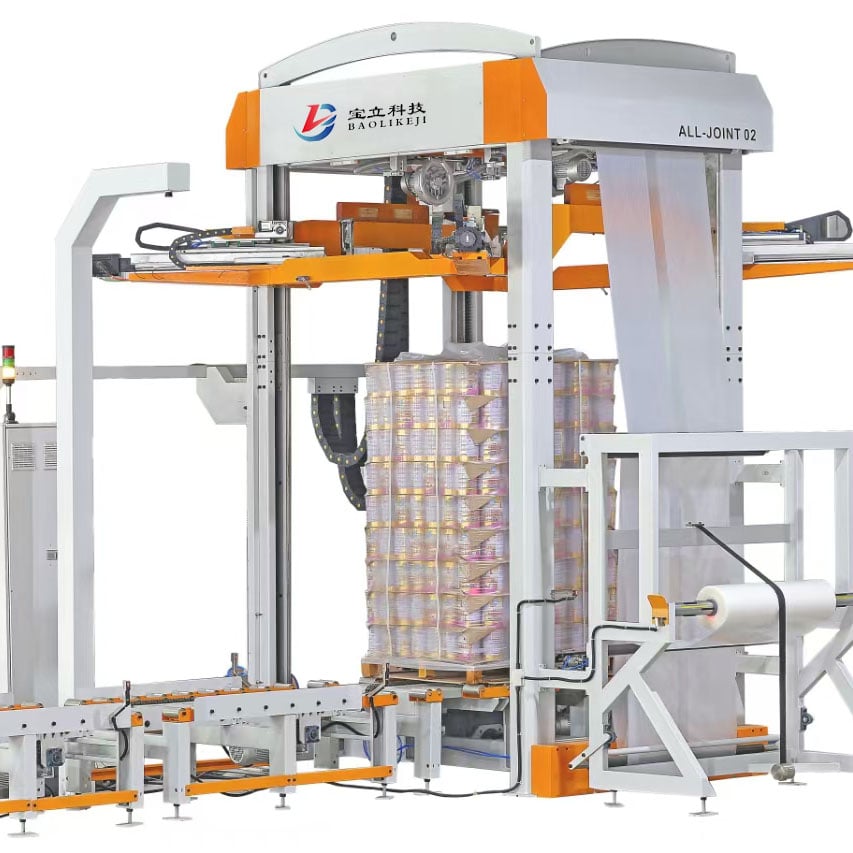
Stretch Hood Machine: Complete Guide to Automatic Pallet Packaging
When pallets need to be protected during storage and transportation, choosing the right packaging method is essential. A stretch hood machine provides an efficient solution for automatically covering palletized products with a stretch film hood.
Unlike traditional wrapping methods, a stretch hood packaging system stretches a tubular film over the entire pallet load, creating a tight and protective package. This makes the technology suitable for industries that require high packaging speed, stable load protection, and reduced film consumption.
For manufacturers handling large numbers of pallets every day, an automatic stretch hood machine can become an important part of an automated end-of-line packaging system.
What Is a Stretch Hood Machine?
A stretch hood machine is an automated packaging machine designed to cover palletized products with stretch film.
The machine typically works with a preformed tubular stretch film. The film is opened and stretched before being pulled down over the pallet and its load. Once the film is positioned around the load, it creates tension and holds the products securely together.
The basic process includes:
Palletized products enter the packaging area.
The machine feeds the stretch film from a roll.
The film is cut to the required length.
The film is opened and stretched.
The stretched film hood is pulled down over the pallet.
The film contracts around the load.
The packaged pallet exits the machine.
The result is a compact and stable pallet package with protection against dust, moisture, and handling damage.
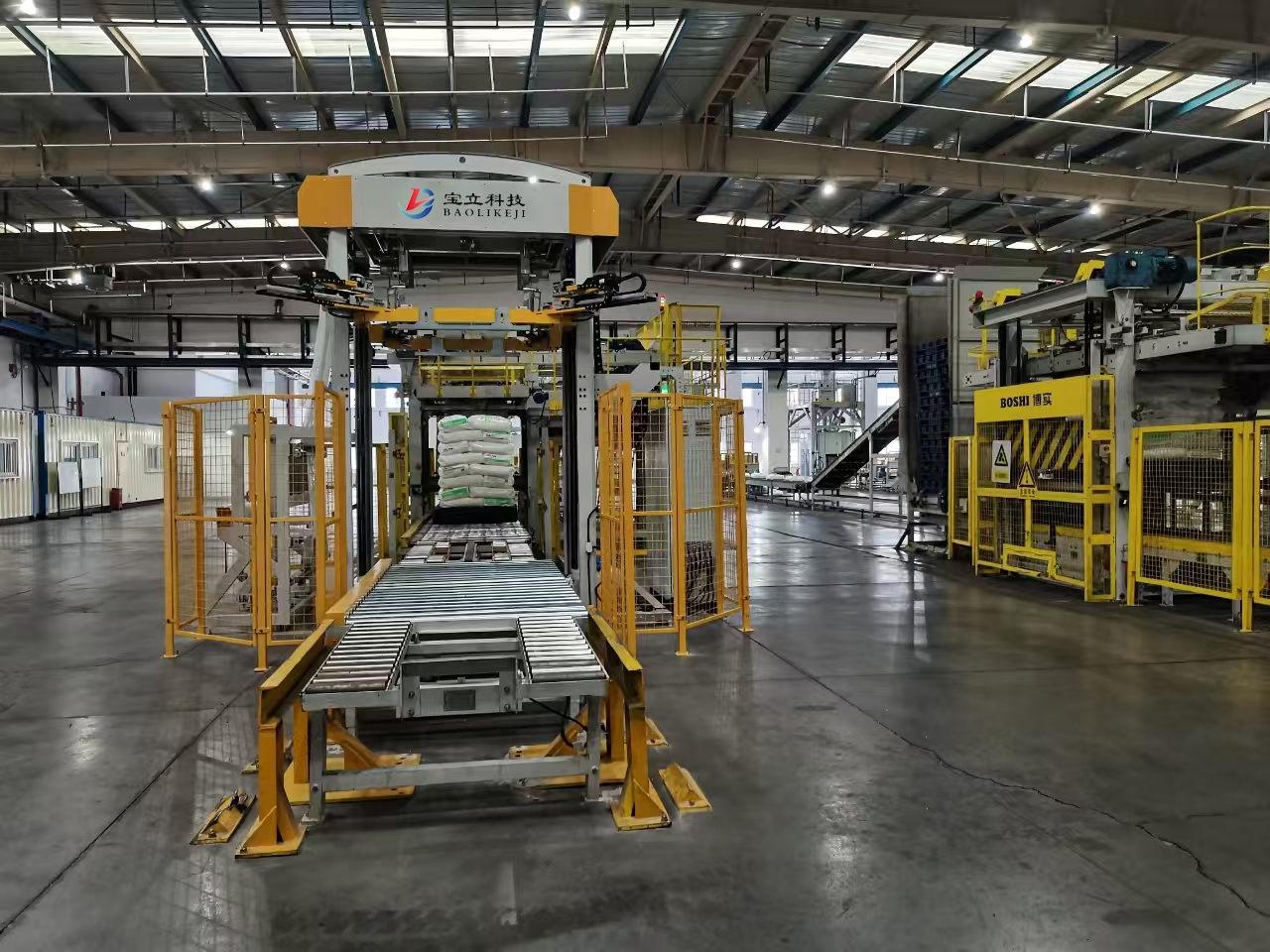
How Does a Stretch Hood Machine Work?
The operating principle of a stretch hood packaging machine is based on the elasticity of stretch film.
First, the pallet arrives at the packaging station after palletizing. Depending on the production line, the pallet may arrive from a pallet conveyor, roller conveyor, chain conveyor, or other material handling equipment.
The machine then prepares the tubular stretch film.
1. Film Feeding
The stretch film is continuously supplied from a film roll. The feeding mechanism controls the film according to the size and height of the pallet load.
Different products may require different film dimensions, so film width and length should be selected according to the actual pallet specifications.
2. Film Cutting
After the required amount of film has been fed, the machine cuts the film to create an individual hood.
Accurate cutting is important because excessive film increases packaging costs, while insufficient film may result in poor load coverage.
3. Film Opening and Stretching
The film hood is opened and stretched horizontally.
This creates enough opening for the film to pass over the palletized load.
The amount of stretching depends on the characteristics of the film and the requirements of the application.
4. Hood Application
The stretched film hood is pulled downward over the pallet.
The film covers the top and sides of the load. As the stretch film attempts to return to its original dimensions, it generates tension around the pallet.
This tension helps stabilize the products during transportation and storage.
5. Pallet Discharge
After the hood has been applied, the packaged pallet moves to the next stage of the production line.
For a fully automated packaging line, this stage can be connected directly with conveyors, palletizers, strapping machines, stretch wrapping equipment, and other end-of-line machinery.
https://youtu.be/b5jrkXLJUJA?is=vPjMIklWoZdlcgZV
Stretch Hood Machine vs. Stretch Wrapping Machine
Stretch hood packaging and traditional stretch wrapping are two different pallet packaging technologies.
A stretch wrapping machine wraps stretch film around a pallet by rotating the pallet or moving a film carriage around the load.
A stretch hood machine, on the other hand, uses a tubular film hood that is stretched and pulled over the load.
The difference can be summarized as follows:
| Feature | Stretch Hood Machine | Stretch Wrapping Machine |
|---|---|---|
| Packaging method | Stretch film hood | Film wrapped around load |
| Film structure | Tubular film | Stretch film roll |
| Top coverage | Normally covered | Depends on configuration |
| Packaging speed | High | High |
| Load appearance | Tight hooded package | Wrapped layers |
| Moisture protection | Strong when suitable film is used | Depends on wrapping pattern |
| Film consumption | Can be optimized for load size | Depends on wrapping program |
| Automation | Suitable for automated lines | Suitable for automated lines |
Neither technology is suitable for every application.
The best solution depends on product dimensions, pallet configuration, required protection, production capacity, film characteristics, and the existing packaging line.
Why Use an Automatic Stretch Hood Machine?
The main advantage of an automatic stretch hood machine is automation.
In a manual packaging operation, workers may need to move, position, stretch, and secure packaging material around every pallet. This can become inefficient when production volume increases.
An automatic system can reduce manual intervention and provide more consistent packaging results.
High Packaging Efficiency
For high-volume factories, packaging speed is an important consideration.
A properly configured stretch hood packaging system can package pallets continuously as they move through the production line.
This makes the technology suitable for manufacturers with high daily pallet output.
Consistent Packaging Quality
Manual packaging can vary depending on the operator.
An automated machine controls important packaging parameters, helping maintain consistent film application from pallet to pallet.
Consistent packaging is particularly important when products are transported over long distances.
Improved Load Stability
Stretch film creates tension around the pallet load.
When correctly selected and applied, the film helps keep products together and reduces movement during handling and transportation.
This can be particularly useful for products that need to remain stable during warehouse operations, truck transportation, and international shipping.
Protection Against Dust and Moisture
A stretch hood can cover the top and sides of a palletized load.
Depending on the film material and application, this can provide protection against dust, dirt, and moisture during storage and transportation.
For export-oriented manufacturers, packaging protection can be especially important because goods may experience multiple stages of handling before reaching the final customer.
What Industries Use Stretch Hood Machines?
Stretch hood packaging machines are used across many industries where palletized products require automated packaging.
Typical applications include:
Food and Beverage
Food and beverage manufacturers often need reliable pallet protection during warehouse storage and distribution.
Products may include packaged beverages, canned products, bottled products, and other palletized goods.
Building Materials
Products such as bricks, tiles, panels, boards, and other construction materials can be packaged with stretch film hoods.
Chemical Products
Bagged or boxed chemical products can require stable pallet packaging to simplify transportation and storage.
Agricultural Products
Fertilizer, animal feed, seeds, and other agricultural products can be packaged on pallets before distribution.
Paper and Packaging Products
Paper products and packaging materials are frequently handled as palletized loads and may benefit from automated hood packaging.
The appropriate stretch hood machine configuration depends heavily on the product and pallet dimensions.
How to Choose the Right Stretch Hood Machine
Selecting a stretch hood machine should start with the actual requirements of the production line rather than simply comparing machine prices.
1. Pallet Dimensions
Measure the length and width of the pallet.
You should also consider the maximum and minimum load dimensions because different products may use different pallet configurations.
2. Load Height
The maximum pallet load height is one of the most important parameters.
The machine needs to accommodate the complete height of the palletized product.
If your factory handles multiple product sizes, provide the supplier with the complete range of pallet heights.
3. Production Capacity
Determine how many pallets need to be packaged per hour.
For example, a factory producing several hundred pallets per day may have very different requirements from a high-speed production line operating continuously.
The machine capacity should match the upstream palletizing system and downstream material handling equipment.
4. Film Specifications
Film selection directly affects packaging performance.
Important parameters include:
Film width
Film thickness
Film type
Stretch ratio
Film strength
Film elasticity
Film transparency
Required packaging temperature and environmental conditions
The film should be tested with the actual product whenever possible.
5. Integration With the Existing Line
A stretch hood machine rarely operates completely independently in a modern factory.
It may need to connect with:
Palletizer
Roller conveyor
Chain conveyor
Pallet dispenser
Strapping machine
Stretch wrapping machine
Labeling machine
Pallet storage system
Automatic warehouse system
For this reason, the complete material flow should be considered before selecting the machine.
Stretch Hood Packaging System for Automated Production Lines
A major advantage of stretch hood technology is that it can be integrated into a complete end-of-line packaging system.
A typical automated process may look like:
Production Line → Conveying System → Palletizing → Strapping → Stretch Hood Packaging → Labeling → Warehouse
For example, after products are palletized, the pallet can automatically enter the packaging section through a conveyor.
The palletizer completes the stacking operation, while the stretch hood machine provides the final protective packaging.
This reduces manual handling between different stages of production.
For factories planning automation, it is therefore better to evaluate the stretch hood packaging system as part of the complete production workflow rather than as an isolated machine.
Stretch Hood Machine and Palletizer Integration
The connection between palletizing and final packaging is particularly important.
A palletizer may stack products at high speed, but if operators still need to manually move every pallet to the packaging area, the overall production line remains partially dependent on manual labor.
An integrated system can automatically transfer completed pallets from the palletizer to the packaging equipment.
A typical sequence can be:
Product Conveying → Palletizing → Pallet Transfer → Stretch Hood Packaging → Finished Pallet Conveying
Sensors and PLC controls can coordinate the movement between machines.
This allows each machine to operate as part of a single automated system.
Common Questions About Stretch Hood Machines
Is a stretch hood machine fully automatic?
Yes, automatic models can perform film feeding, cutting, stretching, hood application, and pallet discharge with limited operator intervention.
However, the actual level of automation depends on the machine configuration and how it is integrated with the rest of the production line.
What products can be packaged with a stretch hood machine?
Many palletized products can be packaged using stretch hood technology, including food and beverage products, building materials, chemical products, agricultural products, and packaging materials.
The product shape, pallet size, load height, and stability should be evaluated before selecting the equipment.
Is stretch hood packaging better than stretch wrapping?
Not necessarily in every application.
Stretch hood packaging offers advantages such as full hood coverage and fast automated packaging, while stretch wrapping can provide greater flexibility for certain pallet shapes and wrapping requirements.
The correct choice depends on the application.
Can a stretch hood machine be connected to a palletizer?
Yes. A stretch hood machine can be integrated with palletizers and pallet conveying systems to create an automated end-of-line packaging process.
How much does a stretch hood machine cost?
The price depends on machine configuration, packaging capacity, pallet dimensions, film specifications, automation level, and optional equipment.
For an accurate quotation, manufacturers normally need information such as pallet size, maximum load height, product type, required capacity, and film specifications.
What Information Should You Send to a Stretch Hood Machine Supplier?
Before requesting a quotation, prepare the following information:
Product information
Product type
Product dimensions
Product weight
Product packaging
Pallet information
Pallet length
Pallet width
Maximum pallet height
Minimum pallet height
Maximum pallet weight
Production information
Pallets per hour
Working hours per day
Existing palletizer
Existing conveyor system
Required automation level
Film information
Film material
Film thickness
Film width
Preferred film supplier, if applicable
The more complete the information, the easier it is for the supplier to recommend the correct machine configuration.
Conclusion
A stretch hood machine is an effective solution for manufacturers looking to automate pallet packaging while improving packaging consistency and load protection.
Compared with conventional manual packaging, an automatic stretch hood packaging system can reduce manual intervention and provide a more consistent packaging process. It can also be integrated with palletizers, conveyors, strapping machines, and other end-of-line equipment.
For high-volume production environments, the key is not simply choosing the fastest machine. The entire packaging process should be designed around the product, pallet dimensions, production capacity, film characteristics, and material flow.
If you are planning to add a stretch hood packaging machine to an existing production line, start by evaluating the complete process from palletizing to finished pallet handling. A properly integrated system can provide a more efficient and reliable end-of-line packaging solution.
Stretch Hood Machine Supplier and Automated Packaging Solutions
When selecting a stretch hood machine supplier, manufacturers should consider more than the machine itself. Engineering capability, production experience, line integration, installation support, and after-sales service can all affect the long-term performance of an automated packaging system.
For factories looking for an integrated solution, equipment such as conveyors, palletizers, strapping systems, and stretch hood packaging machines can be coordinated into a complete automated end-of-line system.
Contact Baoli-an experienced packaging equipment manufacturer to discuss your pallet dimensions, production capacity, and automation requirements before selecting the final machine configuration.
Read more article about packaging machine here:https://www.baoli-hubei.com/blog/how-does-an-empty-tin-can-palletizer-work
Table of Contents
- What Is a Stretch Hood Machine?
- How Does a Stretch Hood Machine Work?
- Stretch Hood Machine vs. Stretch Wrapping Machine
- Why Use an Automatic Stretch Hood Machine?
- What Industries Use Stretch Hood Machines?
- How to Choose the Right Stretch Hood Machine
- Stretch Hood Packaging System for Automated Production Lines
- Stretch Hood Machine and Palletizer Integration
- Common Questions About Stretch Hood Machines
- What Information Should You Send to a Stretch Hood Machine Supplier?
- Conclusion
- Stretch Hood Machine Supplier and Automated Packaging Solutions