
 EN
EN
 AR
AR
 HR
HR
 DA
DA
 NL
NL
 FI
FI
 FR
FR
 DE
DE
 EL
EL
 HI
HI
 IT
IT
 JA
JA
 KO
KO
 NO
NO
 PL
PL
 PT
PT
 RO
RO
 RU
RU
 ES
ES
 SV
SV
 TL
TL
 IW
IW
 ID
ID
 LT
LT
 SR
SR
 VI
VI
 SQ
SQ
 HU
HU
 TH
TH
 TR
TR
 AF
AF
 MS
MS
 GA
GA
 BN
BN
 HA
HA
 IG
IG
 MR
MR
 NE
NE
 YO
YO
 MY
MY
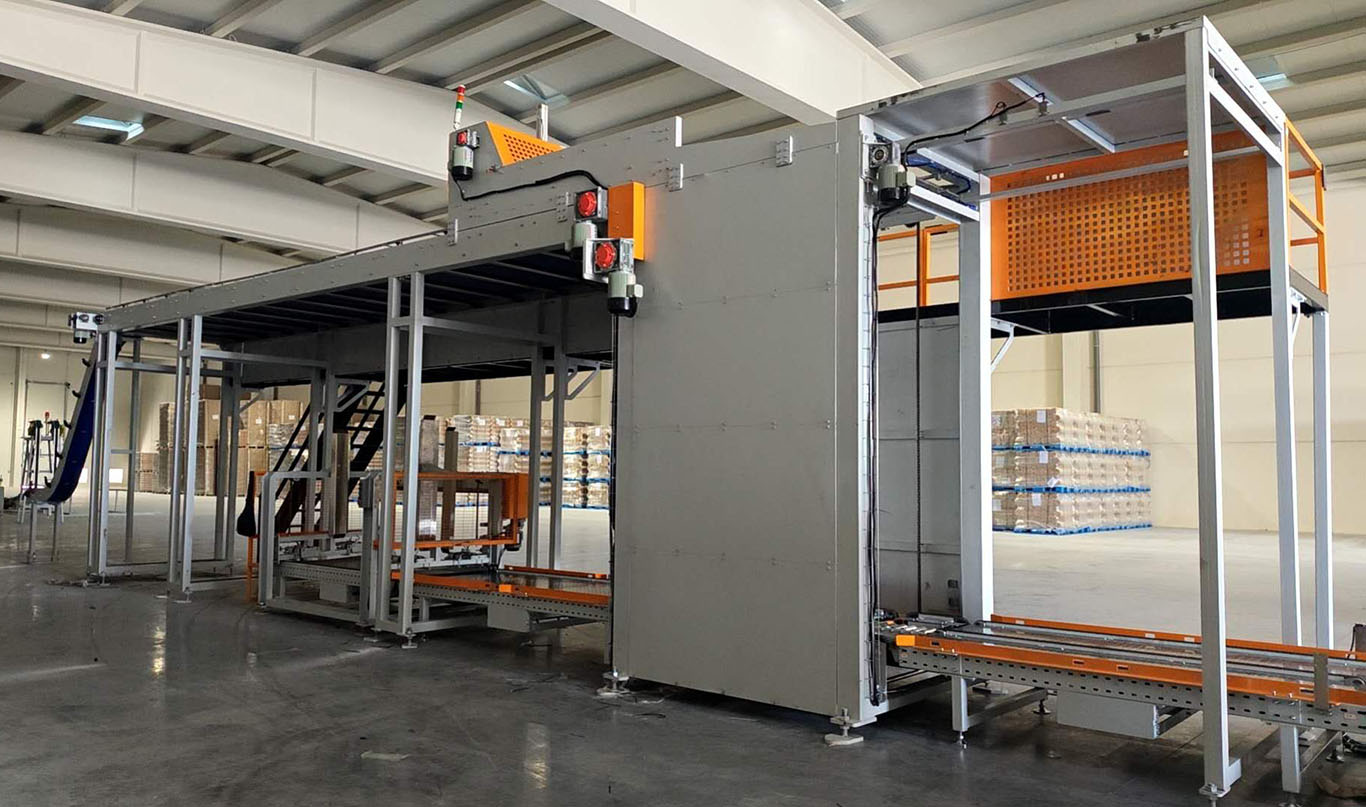
How to Reduce Labor Costs with Automatic Palletizers in Can Manufacturing
In recent years, labor costs and workforce challenges have become major concerns for manufacturers around the world. For companies operating high-volume production lines, reducing dependence on manual labor while maintaining stable production efficiency has become an important business goal.
The can manufacturing industry is no exception. As beverage cans, food cans, and other metal containers are produced at higher speeds, traditional manual palletizing methods are becoming increasingly difficult to manage.
An automatic palletizer provides an effective solution by automating the final stage of production, helping factories reduce labor costs, improve production efficiency, and achieve more stable palletizing quality.
For can manufacturers, palletizing is not simply a stacking process. It is an important connection between production, packaging, storage, and transportation.
Hubei Baoli Technology specializes in automation equipment connecting every key process of the 3-piece can production line—from sheet handling and can conveying to palletizing and end-of-line packaging.
With years of experience in China’s can manufacturing automation industry, Hubei Baoli Technology has built strong market recognition among can manufacturers. The company’s specialized automation equipment has achieved approximately 80% market share in China’s can-making industry. In recent years, through direct export and cooperation with international trading companies, Hubei Baoli Technology’s equipment has been delivered to more than 20 countries and has gained positive feedback from customers worldwide.
Why Are Can Factories Facing Increasing Labor Cost Pressure?
Labor has always been an important part of manufacturing operations. However, many factories today are facing several challenges:
• Increasing labor costs
• Difficulty recruiting workers
• High employee turnover
• Rising training expenses
• Reduced efficiency in repetitive operations
Palletizing is one of the production processes most affected by these challenges.
Traditional manual palletizing requires workers to repeatedly lift, arrange, and stack products. For factories running multiple shifts, this creates continuous labor expenses.
In addition, manual palletizing may result in:
• Inconsistent stacking patterns
• Lower production speed
• Higher risk of workplace injuries
• Difficulty matching high-speed production lines
By introducing an automatic palletizer, manufacturers can automate repetitive palletizing operations and create a more efficient production environment.
What Is an Automatic Palletizer?
An automatic palletizer is an industrial automation machine designed to automatically arrange products onto pallets according to programmed stacking patterns.
Compared with manual palletizing, an automatic palletizer can complete continuous operations with higher accuracy and consistency.
A typical automatic palletizing system includes:
• Product conveying system
• Pallet positioning unit
• Product arrangement mechanism
• Palletizing device
• Control system
• Safety protection system
For can production lines, the palletizer must be designed according to specific product characteristics, especially for lightweight metal cans that require smooth and stable handling.
Learn more about our equipment:
[Automatic Can Palletizer → /products/automatic-palletizer]
How Can Automatic Palletizers Reduce Labor Costs?
1. Reduce Manual Palletizing Workers
The most direct benefit of an automatic palletizer is reducing the number of workers required for repetitive palletizing tasks.
In traditional operations, several workers may be needed to continuously arrange products and build pallets.
With automation, one operator can monitor the palletizing system instead of manually handling every pallet.
This allows manufacturers to:
• Reduce direct labor expenses
• Optimize workforce allocation
• Improve production efficiency
For factories with high production volumes, the investment in automation can create significant long-term savings.
2. Improve Production Efficiency Without Increasing Labor
When production capacity increases, many factories face a common problem: higher output requires more workers.
However, hiring additional workers does not always solve efficiency challenges.
An automatic palletizer can operate continuously and maintain stable performance even during long production periods.
This means manufacturers can increase production capacity without increasing labor costs at the same rate.
For example:
A factory expanding from one production line to multiple production lines may not need to double its palletizing workforce if automated systems are installed.
3. Reduce Workplace Injuries and Physical Work
Palletizing often involves repetitive lifting and movement.
Long-term manual handling may increase physical workload and create safety concerns.
Automatic palletizers reduce the need for workers to perform heavy repetitive tasks, creating a safer working environment.
A modern factory should not only focus on production speed but also consider employee safety and sustainable operation.
4. Improve Labor Utilization
Automation does not simply replace workers. It allows companies to use employees more efficiently.
Instead of spending time on repetitive stacking operations, employees can focus on:
• Equipment monitoring
• Quality control
• Production management
• Maintenance support
This helps factories improve overall productivity.
Automatic Palletizers for 3-Piece Can Production Lines
The 3-piece can manufacturing process requires smooth cooperation between different production stages.
A typical production flow includes:
Sheet handling
↓
Can forming and welding
↓
Coating and curing
↓
Inspection
↓
Can conveying
↓
Packaging
↓
Palletizing
↓
Storage and transportation
At the end of this process, the automatic palletizer plays an important role in ensuring efficient product handling.
Hubei Baoli Technology focuses on automation solutions for 3-piece can production lines, providing equipment that connects different production processes.
Our solutions include:
• Automatic palletizers
• Magnetic palletizing systems
• Can conveying equipment
• Robotic handling systems
• End-of-line packaging solutions
Related solution:
Different Types of Automatic Palletizers for Can Factories
Different production environments require different palletizing technologies.
Magnetic Automatic Palletizer
Magnetic palletizers are widely used in metal can production because they can efficiently handle empty cans.
Advantages include:
• High-speed operation
• Stable can transfer
• Suitable for metal containers
• Reduced product damage
For large-scale can manufacturers, magnetic palletizing technology provides an efficient solution for continuous production.
High-Level Automatic Palletizer
High-level palletizers are designed for high-speed production lines.
They are suitable for factories requiring:
• Higher palletizing capacity
• Continuous operation
• Efficient production flow
A high-level automatic palletizer can help prevent bottlenecks at the end of a fast production line.
Related product:
[High-Speed Can Palletizer → /products/high-speed-palletizer]
Robotic Automatic Palletizer
Robotic palletizers provide flexibility for factories handling different products or pallet patterns.
Advantages include:
• Flexible programming
• Multiple applications
• Easy adjustment
According to the International Federation of Robotics, industrial robots are increasingly used in manufacturing because they improve efficiency, flexibility, and automation levels.
How Much Can an Automatic Palletizer Save?
The actual savings depend on factors such as:
• Production speed
• Number of shifts
• Current labor costs
• Equipment configuration
• Factory operation model
However, manufacturers usually evaluate automation investment through several areas:
Direct Labor Savings
Reducing manual palletizing positions lowers monthly labor expenses.
Higher Production Output
Automation allows factories to increase production without adding the same amount of labor.
Lower Product Damage
Stable palletizing reduces losses caused by improper stacking.
Long-Term Operational Benefits
Automation equipment can provide value over many years, making it a long-term production investment.
How to Choose the Right Automatic Palletizer Supplier?
Selecting the right supplier is essential because palletizing equipment needs to operate reliably for many years.
Manufacturers should consider:
Industry Experience
A supplier familiar with your industry can better understand production requirements.
For can manufacturers, experience with:
• Empty can handling
• Can conveying systems
• Production line integration
• End-of-line automation
is very important.
Customization Capability
Every factory has different conditions.
A professional supplier should provide solutions based on:
• Production speed
• Can specifications
• Factory layout
• Future expansion plans
Technical Support
For international customers, reliable technical support is essential.
Important services include:
• Installation guidance
• Remote troubleshooting
• Spare parts support
• Production optimization
Why Choose Hubei Baoli Technology as Your Automatic Palletizer Supplier?
Hubei Baoli Technology specializes in automation equipment connecting every key process of the 3-piece can production line—from sheet handling and can conveying to palletizing and end-of-line packaging.
Unlike general automation companies, Hubei Baoli Technology focuses on the specific requirements of can manufacturers.
Our capabilities include:
• Automatic palletizing systems
• Magnetic palletizers
• Can conveying solutions
• Robotic automation equipment
• Complete end-of-line packaging systems
With strong experience in China’s can manufacturing industry, the company has developed long-term cooperation with domestic customers and expanded its solutions into international markets.
Through direct exports and cooperation with trading partners, Hubei Baoli Technology’s equipment has been supplied to customers in more than 20 countries.
Learn more about our company:
[About Hubei Baoli Technology → /about-us]
The Future of Automatic Palletizing in Manufacturing
As global manufacturing continues to develop, automation will become increasingly important.
Future factories will focus on:
• Higher efficiency
• Lower labor dependency
• Smarter production management
• Better equipment integration
An automatic palletizer is not only a machine for stacking products. It is an important part of a complete smart manufacturing system.
For can factories, investing in automation can help reduce operating costs, improve production stability, and strengthen long-term competitiveness.
Conclusion
Labor costs are one of the biggest challenges facing modern manufacturers. For can production companies, an automatic palletizer provides an effective way to reduce repetitive manual work while improving production efficiency.
The right palletizing solution should match the factory’s production speed, product characteristics, and future development plans.
With extensive experience in 3-piece can production line automation, Hubei Baoli Technology provides reliable palletizing and end-of-line automation solutions for customers worldwide.
From sheet handling and can conveying to palletizing and packaging, Hubei Baoli Technology helps manufacturers build more efficient and intelligent production lines.
Table of Contents
- Why Are Can Factories Facing Increasing Labor Cost Pressure?
- What Is an Automatic Palletizer?
- How Can Automatic Palletizers Reduce Labor Costs?
- 1. Reduce Manual Palletizing Workers
- 2. Improve Production Efficiency Without Increasing Labor
- 3. Reduce Workplace Injuries and Physical Work
- 4. Improve Labor Utilization
- Automatic Palletizers for 3-Piece Can Production Lines
- Different Types of Automatic Palletizers for Can Factories
- Magnetic Automatic Palletizer
- High-Level Automatic Palletizer
- Robotic Automatic Palletizer
- How Much Can an Automatic Palletizer Save?
- How to Choose the Right Automatic Palletizer Supplier?
- Industry Experience
- Customization Capability
- Technical Support
- Why Choose Hubei Baoli Technology as Your Automatic Palletizer Supplier?
- The Future of Automatic Palletizing in Manufacturing
- Conclusion