
 EN
EN
 AR
AR
 HR
HR
 DA
DA
 NL
NL
 FI
FI
 FR
FR
 DE
DE
 EL
EL
 HI
HI
 IT
IT
 JA
JA
 KO
KO
 NO
NO
 PL
PL
 PT
PT
 RO
RO
 RU
RU
 ES
ES
 SV
SV
 TL
TL
 IW
IW
 ID
ID
 LT
LT
 SR
SR
 VI
VI
 SQ
SQ
 HU
HU
 TH
TH
 TR
TR
 AF
AF
 MS
MS
 GA
GA
 BN
BN
 HA
HA
 IG
IG
 MR
MR
 NE
NE
 YO
YO
 MY
MY
North America's Top Automated Palletizer Systems for Luncheon Meat Cans: A Comprehensive Guide
Choosing a palletizer for canned meat is not just an end-of-line decision, because it sets the pace for your whole plant. A well-matched automated palletizer keeps up with upstream equipment, stacks heavy cases the same way every shift, and frees your crew from repetitive lifting. Hubei Baoli Technology Co., Ltd. has built palletizing and packaging equipment for tinplate can lines since 2011, and our founder has worked in this industry since 2003. This guide walks through the main palletizer types and how to choose one for luncheon meat cans.
What Is an Automated Palletizer?
An automated palletizer stacks cases, trays or bundles onto pallets in a programmed pattern without manual lifting. Most systems are either an automatic palletizer (conventional or layer-based) or a robotic palletizer, also called a robot palletizer. Both cut labor costs, improve pallet stability and reduce product damage in transit.
Why Luncheon Meat Cans Are Demanding
Luncheon meat is typically packed in tinplate three-piece cans. Filled cases are heavy and dense, and the cans are often rectangular or tapered. That creates four challenges:
- Weight: heavy cases strain grippers and pallet loads.
- Stability: cans can shift if layers aren't interlocked or wrapped properly.
- Speed: canning lines run fast, and the palletizer must keep pace.
- Hygiene: food plants need equipment that is easy to clean and maintain.
Any palletizing system for the food industry should address all four.
Main Types of Palletizer Systems
| System | Best For | Key Strengths |
|---|---|---|
| Robotic palletizer | Mixed SKUs, frequent changeovers | Flexible, compact, easy to reprogram |
| Layer (high-level) palletizer | High-speed lines | High throughput, handles heavy loads |
| Conventional low-level palletizer | Steady, single-format runs | Simple, reliable, cost-effective |
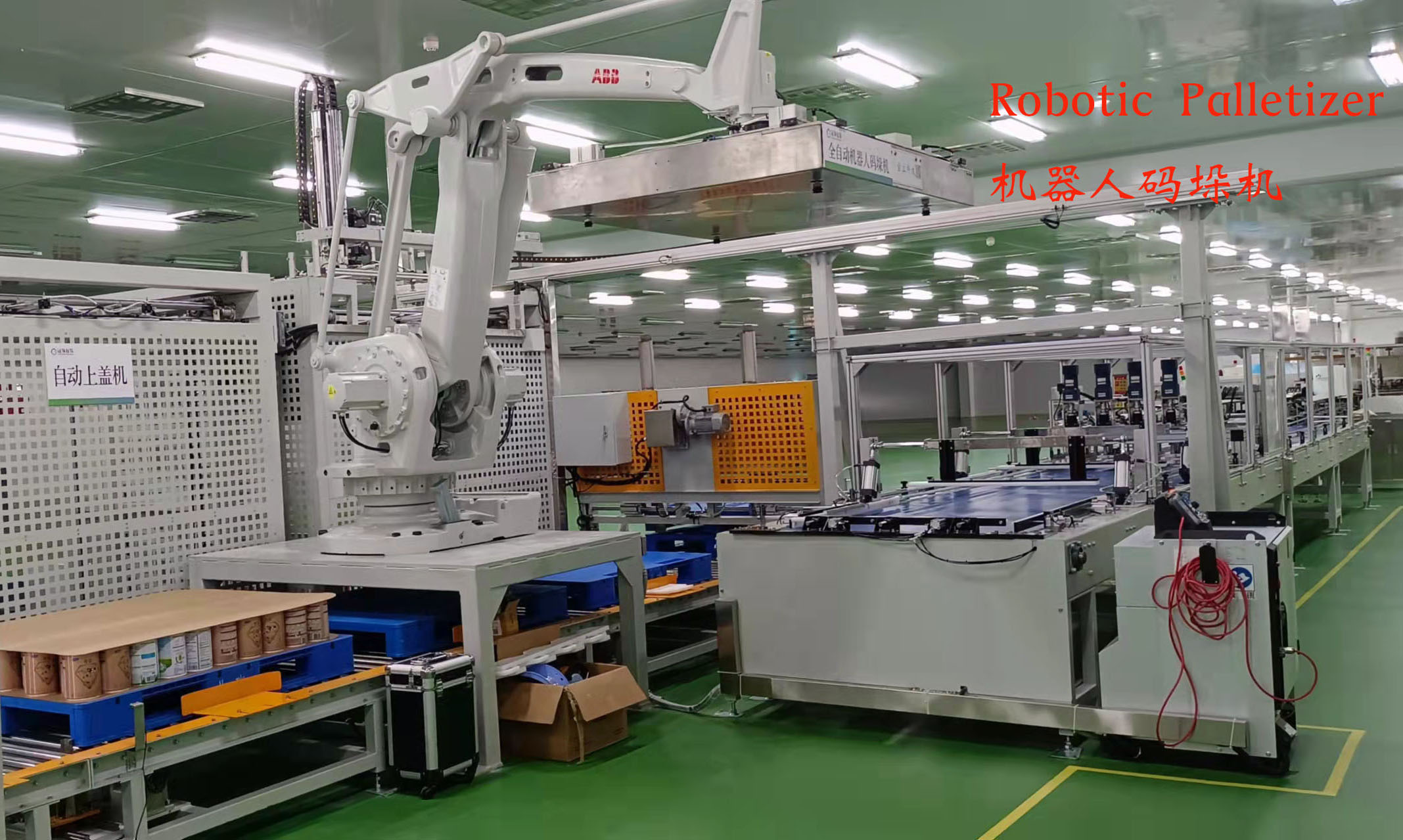
Robot palletizers use an articulated arm and a custom gripper to build nearly any pallet pattern. Changing patterns is usually a recipe selection on the touchscreen, which suits plants running several can sizes.
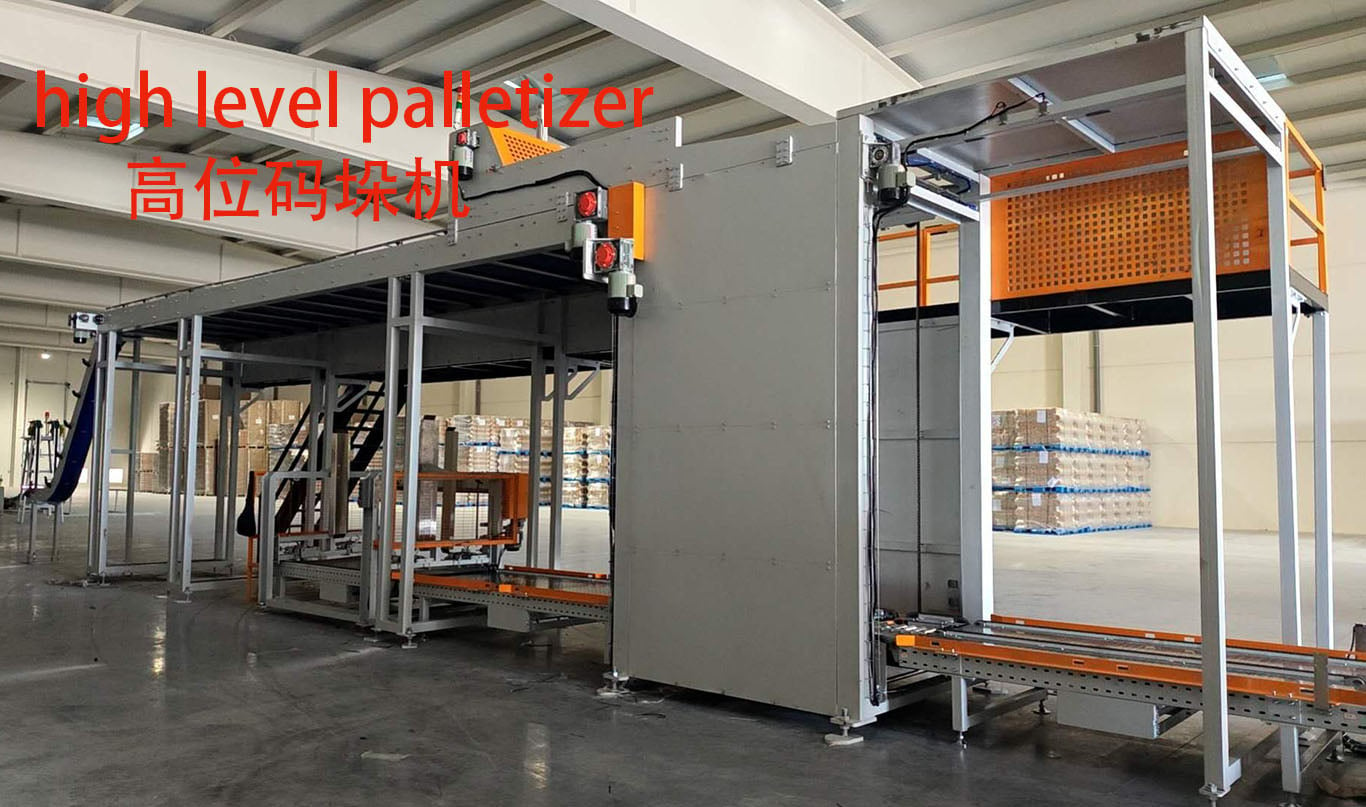
Layer palletizers move a full layer of cases at once, so they suit high-volume lines where a single robot arm may become the bottleneck.
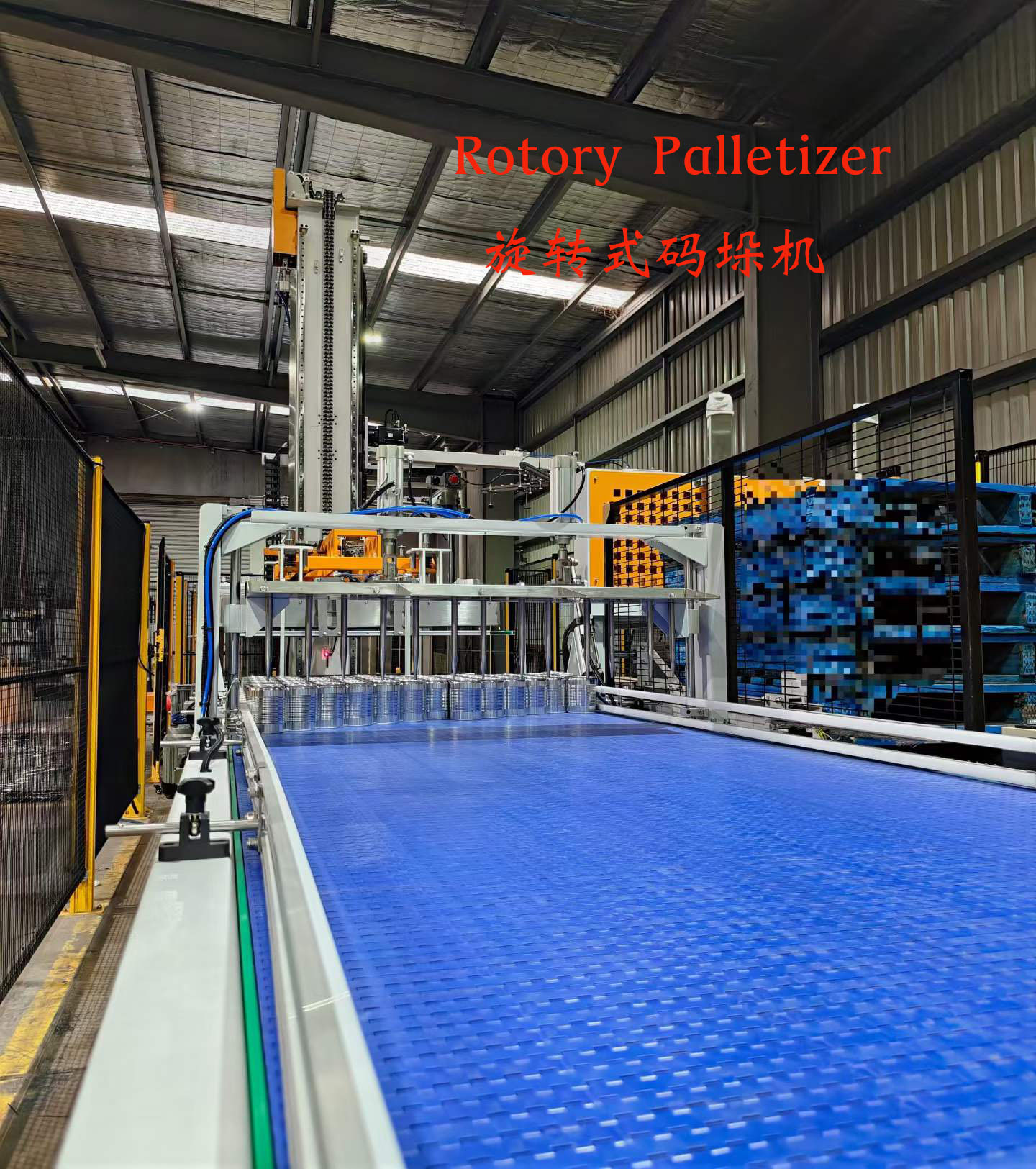
Conventional palletizers are dependable workhorses for plants that run one or two case formats all day.
Match the Palletizer to Your Line Speed
Line speed is the first number to nail down. Our can production lines reach up to 600 cans per minute (cpm). As a simple example, at 600 cpm with 24 cans per case, the end of the line must handle about 25 cases per minute before you add safety margin. Your can count per case will differ, so run this calculation with your own numbers.
Then check whether one robot cell can sustain that rate or whether a layer palletizer or dual-cell design is the safer choice. Sizing for peak output, not average output, avoids a bottleneck later.
How to Choose the Right System
- Line speed: peak cases per minute, not average.
- SKU variety: one can size or many?
- Case weight and pattern: heavier loads may need reinforced grippers or layer handling.
- Floor space: robotic cells are compact, while layer systems need more room.
- Sanitation: food-grade materials and easy-to-clean access.
- Integration: compatibility with your case packer, conveyors, strapping machine and stretch wrapper.
- Energy use: efficient drives and motion control lower running costs.
- Growth: planning extra capacity now is cheaper than retrofitting later.
Automated Palletizing for Food and Beverage
The same principles apply across automated palletizing for food and beverage plants. Buyers usually prioritize reliability and uptime, safety (guarding and light curtains), simple operator controls, and responsive service and spare parts. A stopped palletizer stops the whole line, so support matters as much as the machine.
About Hubei Baoli Technology Co., Ltd.
Our founder entered this industry in 2003 and established Baoli in 2011. With more than twenty years of accumulated experience, we understand every stage of a tinplate can line: production, palletizing, strapping and stretch wrapping, and conveying. Each machine is built for the can industry rather than adapted from general-purpose equipment.
We design and manufacture:
- Automatic conveying equipment
- Packaging machinery
- Palletizing equipment
- Industrial robot system integration
- Non-standard automation equipment
We also provide complete line design, R&D and smart manufacturing, so the solution fits your plant from the start. Our focus is the food and beverage industry, especially tinplate three-piece can production lines, where we help customers upgrade to more efficient, energy-saving production.
Our service is truly one-stop: design proposal, manufacturing, installation, production guidance and after-sales support, all from one team. We keep refining our technology to match each customer's requirements as closely as possible.
Frequently Asked Questions
What is the difference between a palletizer and a robotic palletizer?
"Palletizer" is the general term for any machine that stacks products onto pallets. A robotic palletizer uses a robot arm, making it more flexible for varied products and patterns.
Is an automated palletizer worth it for a smaller canning plant?
Often, yes. Compact robotic cells fit limited floor space and reduce manual-handling injuries, labor dependence and inconsistent pallet quality.
Can one palletizer handle different luncheon meat can sizes?
A robot palletizer with adjustable grippers and stored pallet recipes can typically handle multiple case formats with minimal changeover.
Can Baoli supply the full line, not just the palletizer?
Yes. We provide conveying, packaging, palletizing and line integration, from design through after-sales service.
Final Thoughts
The best automated palletizer for luncheon meat cans depends on your line speed, product mix and plant layout. Compare robotic, layer and conventional options carefully, and include sanitation and integration in your decision. To discuss your line, contact Hubei Baoli Technology Co., Ltd. for a tailored palletizing recommendation.
View more video from our youtube channel:https://youtu.be/rXestkT3yl4?is=ovgINQQ5dQzyiXYE