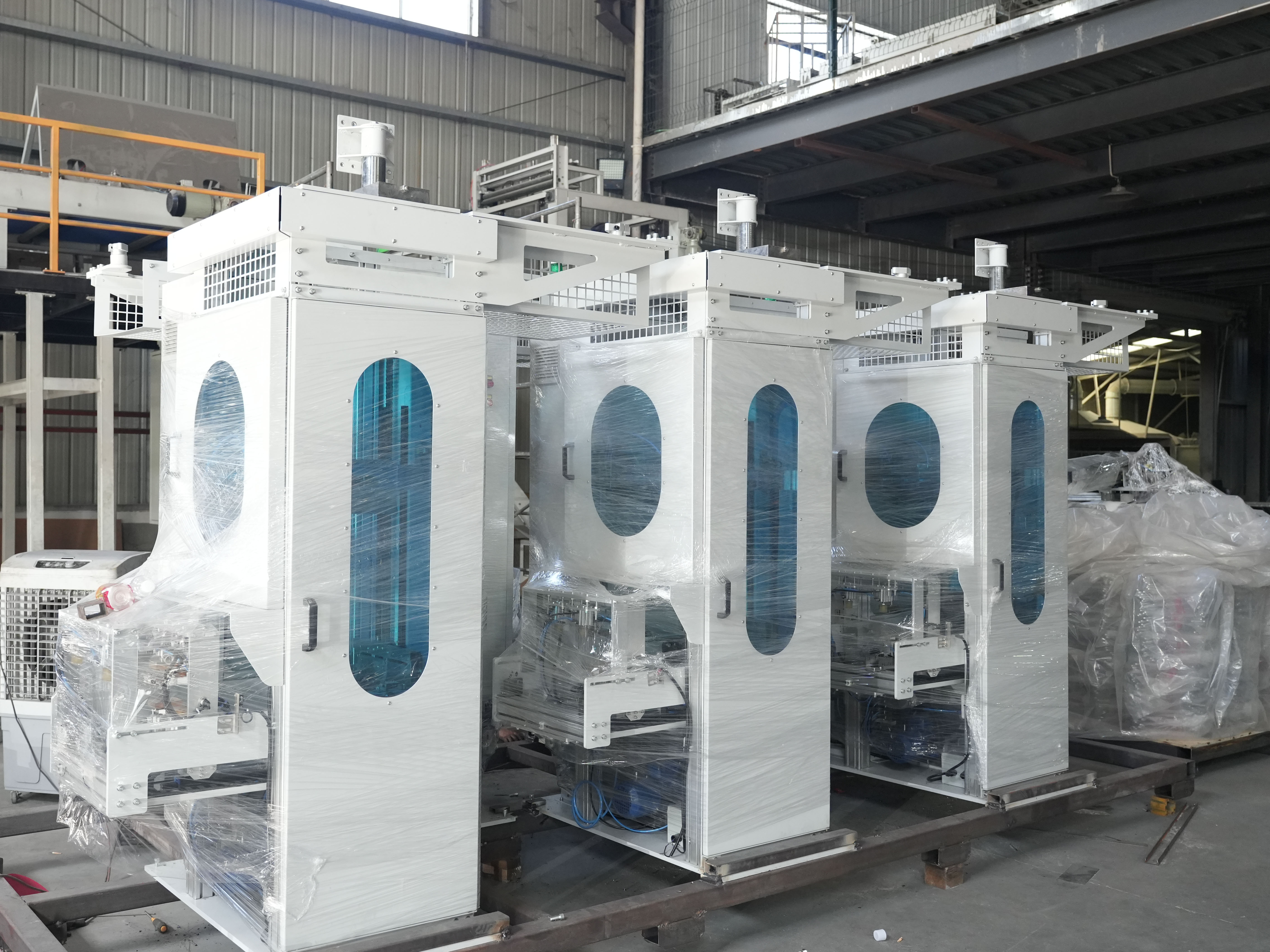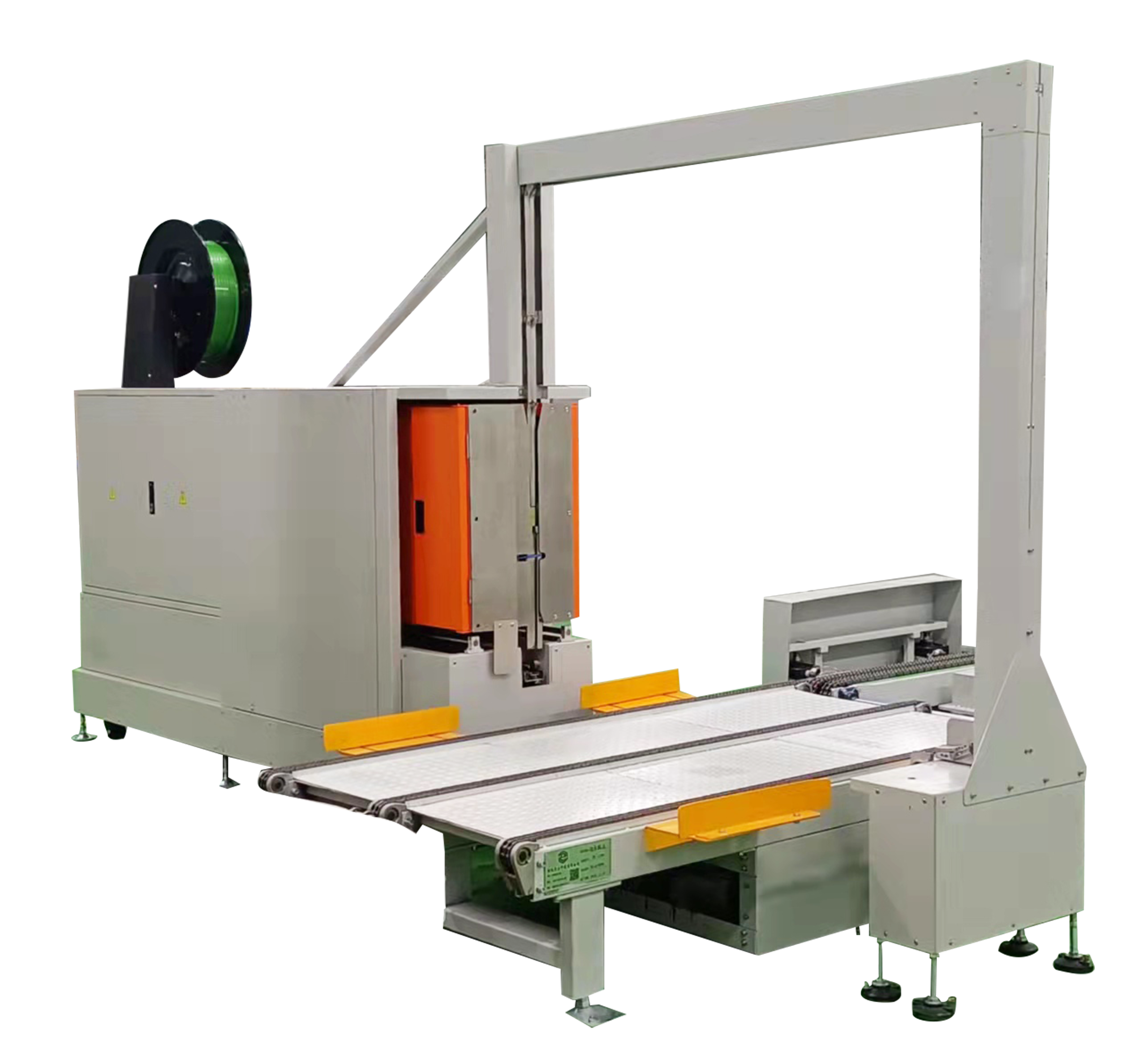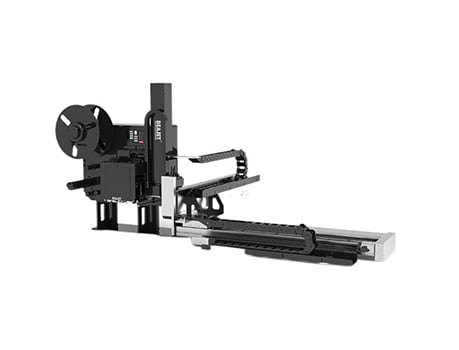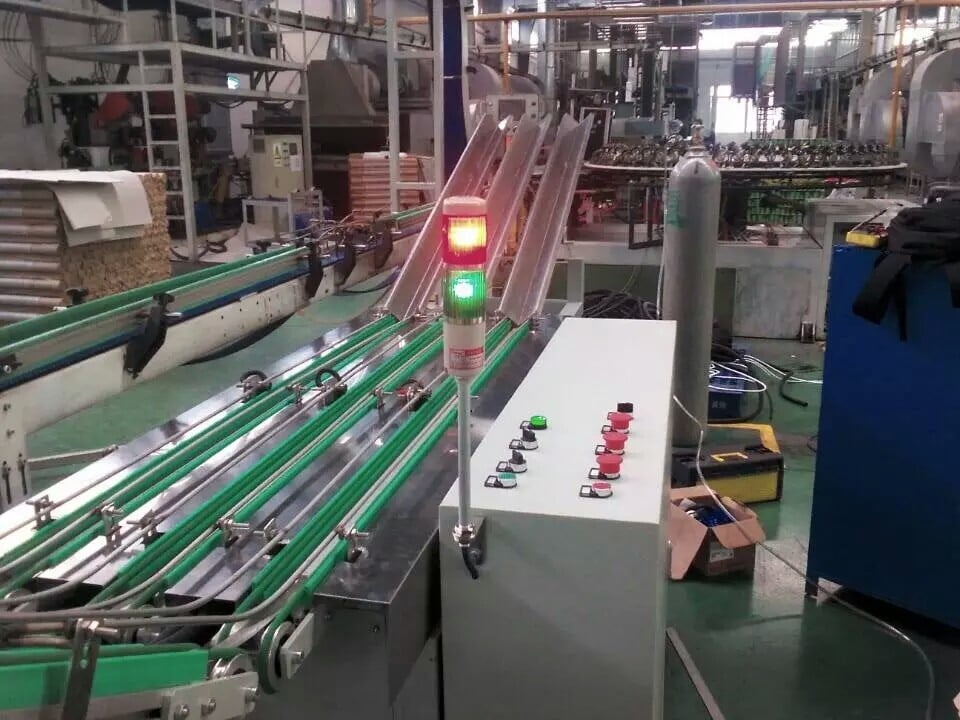
In a modern 3-piece can production line, production efficiency begins long before the can body is welded. The way tinplate sheets are collected, transferred and fed into the can body welder directly affects line speed, product quality and labor efficiency.
Traditional manual sheet handling is becoming increasingly difficult to meet the demands of high-speed can manufacturing. Operators must continuously collect sheets from the slitter, transport them to the next process and accurately feed them into the welding machine. This repetitive work not only increases labor costs but also creates production bottlenecks, safety risks and inconsistent feeding accuracy.
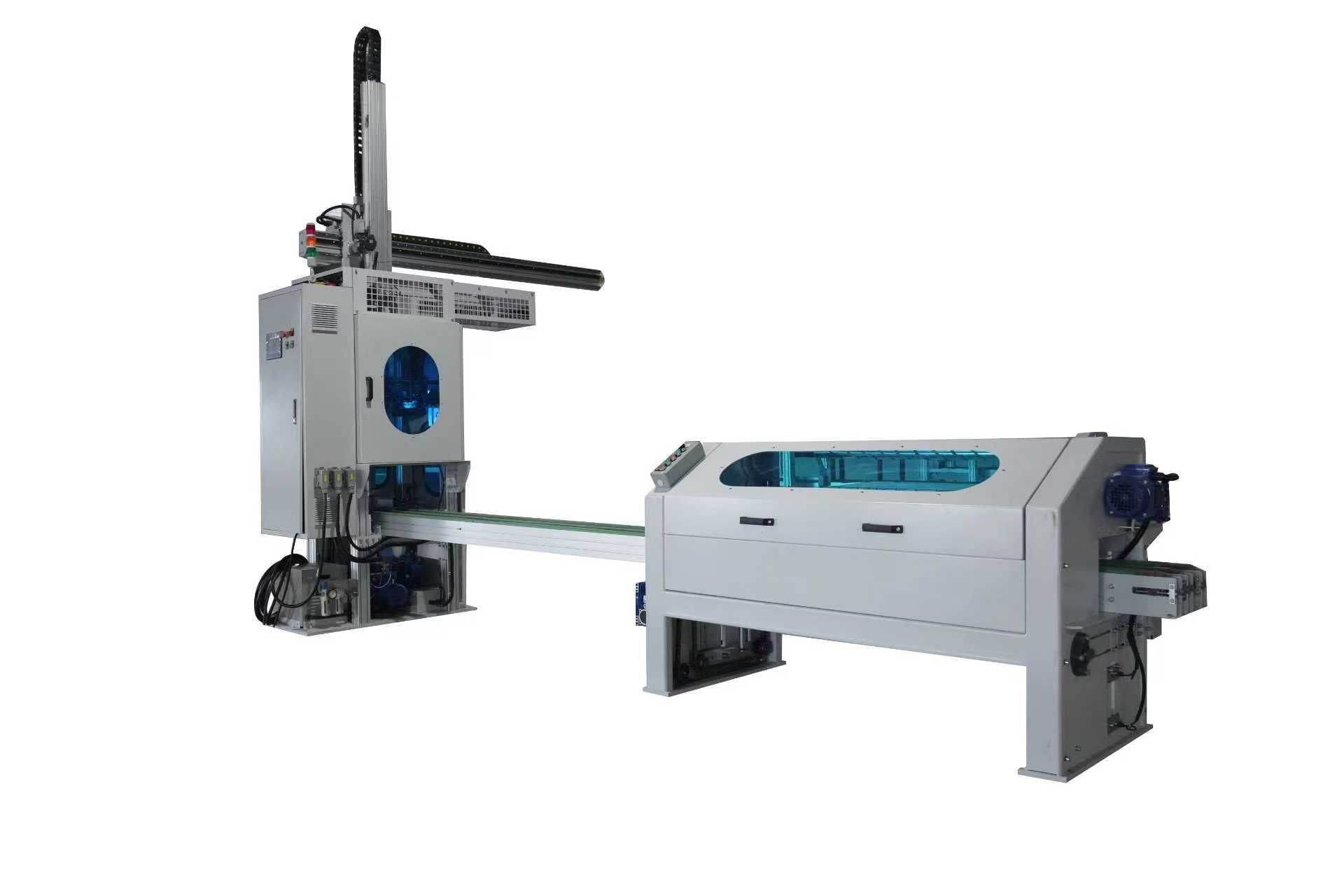
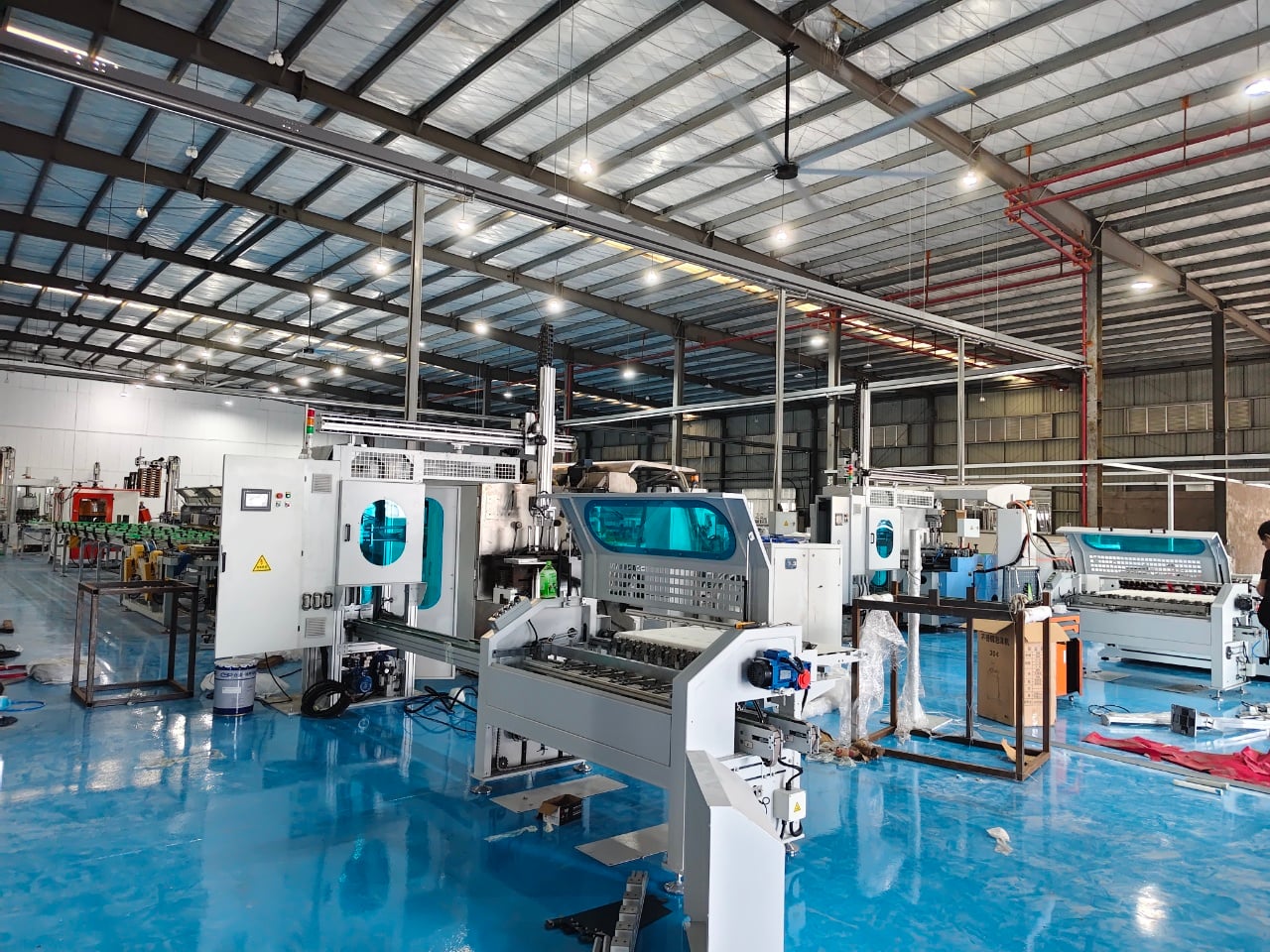
Hubei Baoli Technology has developed a complete Automatic Sheet Feeding System specifically for the metal can manufacturing industry. Instead of focusing on a single robot or conveyor, our solution automates the entire sheet handling process—from automatic sheet collection after the slitting machine to intelligent sheet transfer and precise feeding into the can body welder.
Our system is designed as a complete automation solution that combines Automatic Sheet Collection, Conveyor Feeding, and Robotic Sheet Feeding, allowing manufacturers to choose the configuration that best matches their production speed, factory layout and investment plan.
Whether you are building a new production line or upgrading an existing factory, Hubei Baoli provides customized solutions that improve production efficiency, reduce manual handling and ensure stable operation throughout the manufacturing process.
An Automatic Sheet Feeding System is an integrated automation solution that transfers individual tinplate sheets from the slitting machine to the can body welder without manual intervention.
Rather than relying on operators to repeatedly move and feed metal sheets, the system automatically completes each stage of material handling, creating a continuous and efficient production flow.
A complete Hubei Baoli system consists of three major sections:
After tinplate sheets are cut by the slitting machine, they are automatically collected, aligned and prepared for transfer. This eliminates the need for operators to manually organize or stack sheets, reducing labor intensity and improving production consistency.
For many production lines, collected sheets are transferred to the welding section through a specially designed conveying system. The conveyor maintains smooth and stable transportation while ensuring every sheet reaches the feeding position accurately.
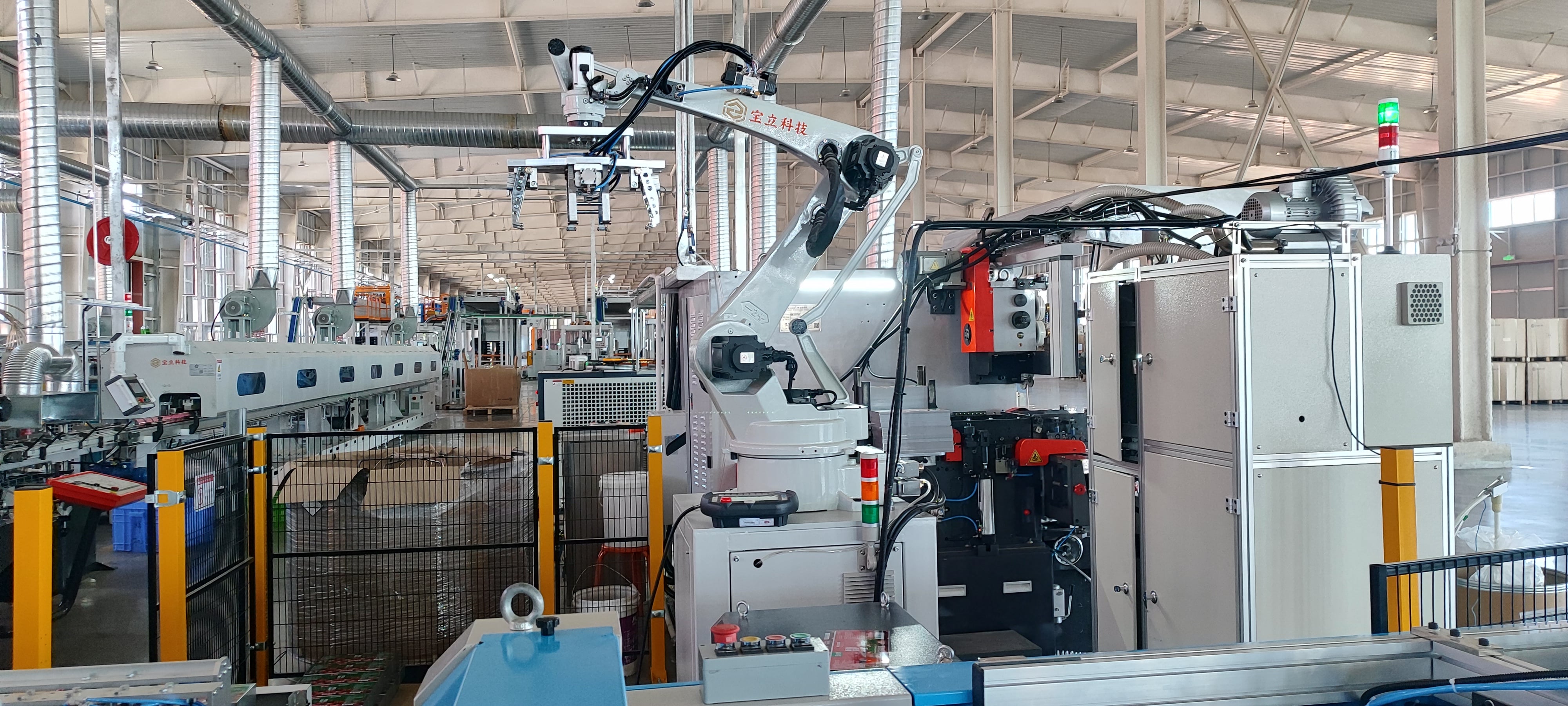
For higher automation levels and high-speed production lines, an industrial robot equipped with a customized gripper automatically picks each sheet and feeds it directly into the can body welder with high precision.
By combining these three modules, manufacturers can build a fully automated sheet handling process that supports continuous production and minimizes manual operation.
As production capacity increases, manual sheet handling becomes one of the least efficient stages in the manufacturing process.
Many factories still depend on operators to collect sheets from the slitting machine and transport them to the welder. Although this method may be suitable for low-capacity production, it becomes increasingly difficult to maintain efficiency as production speeds increase.
Common challenges include:
High labor costs caused by repetitive manual work.
Feeding speed that cannot keep pace with modern welding machines.
Inconsistent sheet positioning resulting in unstable production.
Increased risk of scratches or sheet damage during handling.
Operator fatigue during long production shifts.
Workplace safety risks associated with continuous manual lifting.
Production interruptions caused by delayed material supply.
By introducing an Automatic Sheet Feeding System, manufacturers can significantly improve production stability while reducing dependence on manual labor.
Key benefits include:
Continuous automatic operation.
Stable and accurate sheet feeding.
Reduced labor requirements.
Improved production efficiency.
Better consistency between production processes.
Reduced product damage.
Enhanced workplace safety.
Easier production management.
Automation not only increases productivity but also creates a more reliable manufacturing environment capable of supporting future production expansion.
Unlike general sheet handling equipment, Hubei Baoli's Automatic Sheet Feeding System is designed specifically for tinplate processing in 3-piece can production lines.
Our engineering team understands the unique requirements of can manufacturers, including:
Thin tinplate sheets that require careful handling.
Continuous high-speed production.
Accurate positioning before welding.
Reliable synchronization between different machines.
Flexible integration with existing production lines.
Every project is engineered according to the customer's actual production conditions, ensuring reliable performance and smooth equipment integration.
The complete automation process is designed to minimize manual intervention while maintaining continuous production.
The typical workflow is as follows:
Tinplate Coil
↓
Slitting Machine
↓
Automatic Sheet Collection System
↓
Sheet Alignment
↓
Conveyor Feeding System or Robotic Sheet Feeding System
↓
Can Body Welder
↓
↓
Next Production Process
By integrating sheet collection, transfer and feeding into one automated solution, manufacturers can achieve smoother material flow and improve the overall efficiency of the production line.
Different factories require different automation levels. Hubei Baoli offers flexible configurations to meet various production needs.
Suitable for manufacturers who want to reduce manual collection while maintaining existing feeding methods.
The system automatically receives sheets from the slitting machine, aligns them and prepares them for the next production stage.
This configuration combines automatic collection with a conveyor transfer system.
It is an ideal solution for medium- and high-speed production lines where stable sheet transportation and continuous feeding are required.
The conveyor system is carefully synchronized with downstream equipment to ensure smooth and reliable operation.
https://youtube.com/shorts/FSGzfkd0z9E?is=zOAvP7ZNuwRmvipg
For manufacturers seeking the highest level of automation, the robotic feeding configuration provides fully automatic sheet transfer from the collection station directly to the can body welder.
Using an industrial robot with a customized end-of-arm gripper, individual sheets are picked, positioned and fed into the welder with excellent accuracy and repeatability.
This solution minimizes manual handling while maximizing production efficiency and feeding precision.
https://youtube.com/shorts/Qw3IiIfMweU?is=DYhy9mvKz_UOYo7_
Hubei Baoli Technology has focused on automation equipment for the metal can industry for more than 20 years.
Instead of supplying standalone machines, we provide integrated automation solutions that connect every stage of the production process.
Our engineering team works closely with customers to develop customized equipment based on production capacity, factory layout and automation goals.
From sheet handling to conveying, palletizing and end-of-line packaging, Hubei Baoli delivers reliable solutions that help manufacturers improve productivity, reduce operating costs and build more efficient production lines.
To learn how sheet feeding integrates with downstream transportation, please visit our Can Conveyor System product page.
For a complete overview of equipment used throughout the manufacturing process, explore our 3-Piece Can Production Line Solution.
Every can manufacturer has different production capacities, factory layouts and automation requirements. Some factories are looking to reduce labor costs while keeping their existing production equipment, while others are building fully automated high-speed production lines.
To meet these different needs, Hubei Baoli has developed three flexible modules that can operate independently or be integrated into one complete Automatic Sheet Feeding System.
Customers can select the configuration that best matches their production requirements today while leaving room for future automation upgrades.
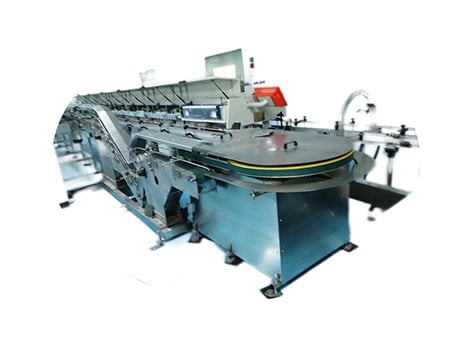
The Automatic Sheet Collection System is the first step in automated sheet handling.
After the slitting machine cuts the tinplate into individual sheets, they must be collected accurately before entering the next production process. Manual collection is often repetitive, time-consuming and physically demanding. It also increases the risk of sheet misalignment, scratches and production delays.
Hubei Baoli's collection system automatically receives sheets directly from the slitting machine and organizes them in a stable, orderly manner.
Key functions include:
Automatic receiving of tinplate sheets
Accurate sheet alignment
Continuous collection without interrupting production
Stable stacking for the next process
Reduced manual handling
Improved workplace safety
By automating sheet collection, manufacturers can significantly reduce labor intensity while ensuring every sheet is positioned consistently for downstream feeding.
This module is especially suitable for factories that want to improve productivity without replacing their existing production line.
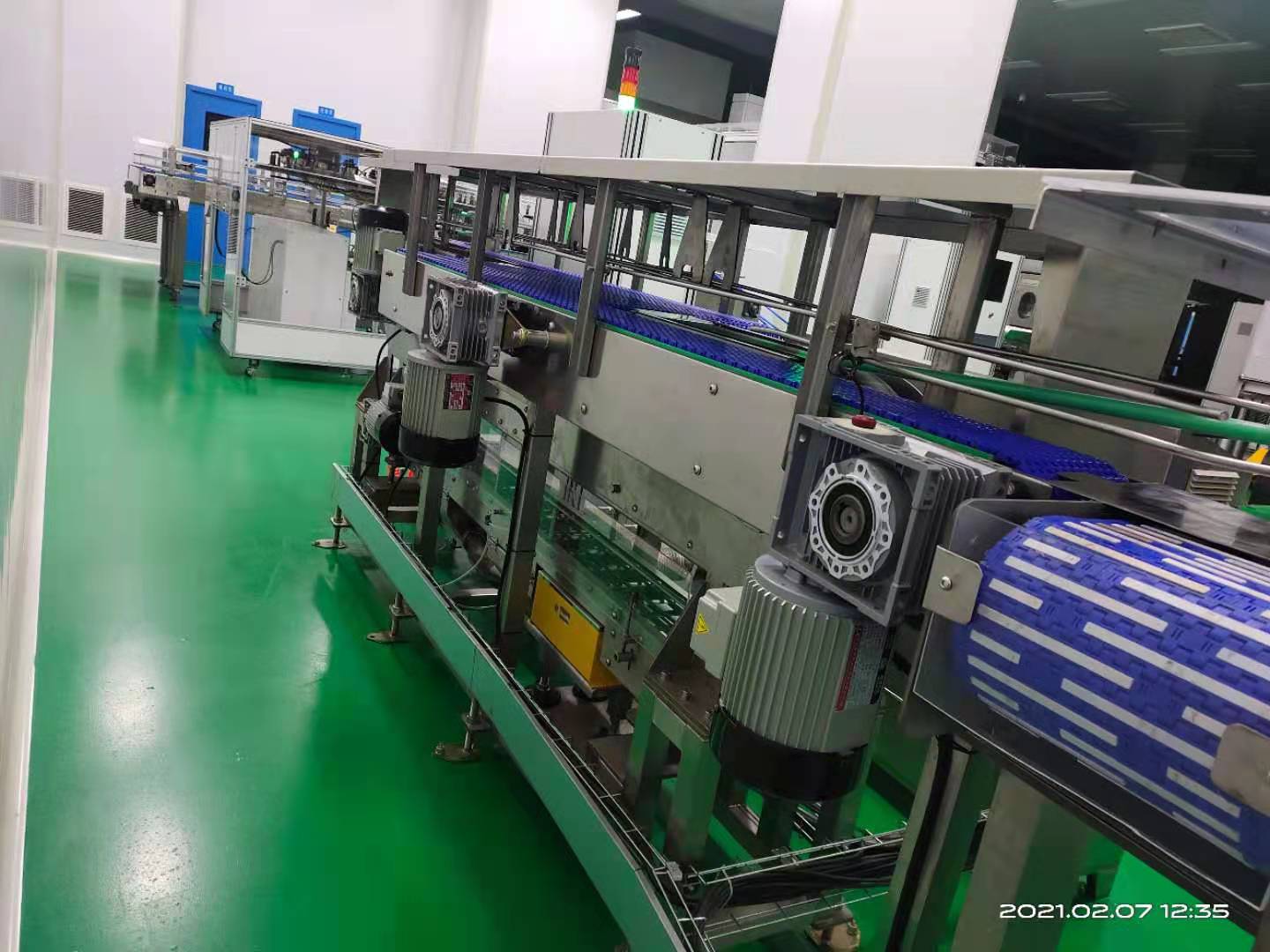
For many medium- and high-speed production lines, a Conveyor Feeding System is the most practical solution for transferring tinplate sheets from the collection area to the can body welder.
Instead of carrying sheets manually, the conveyor transports them smoothly and continuously while maintaining proper spacing and alignment.
The conveyor system is designed specifically for thin tinplate sheets, ensuring stable movement without unnecessary vibration or impact.
Main advantages include:
Continuous automatic transportation
Stable sheet positioning
Smooth material flow
Reduced operator workload
Easy integration with existing equipment
Simple maintenance
Reliable long-term operation
Each conveyor is customized according to:
Sheet dimensions
Production capacity
Workshop layout
Feeding direction
Equipment arrangement
Unlike standard conveyors used in other industries, Hubei Baoli's feeding conveyors are engineered specifically for can manufacturing, where feeding accuracy directly affects welding quality and production efficiency.
The conveyor speed is synchronized with downstream equipment to ensure every sheet arrives at the correct position at the correct time.
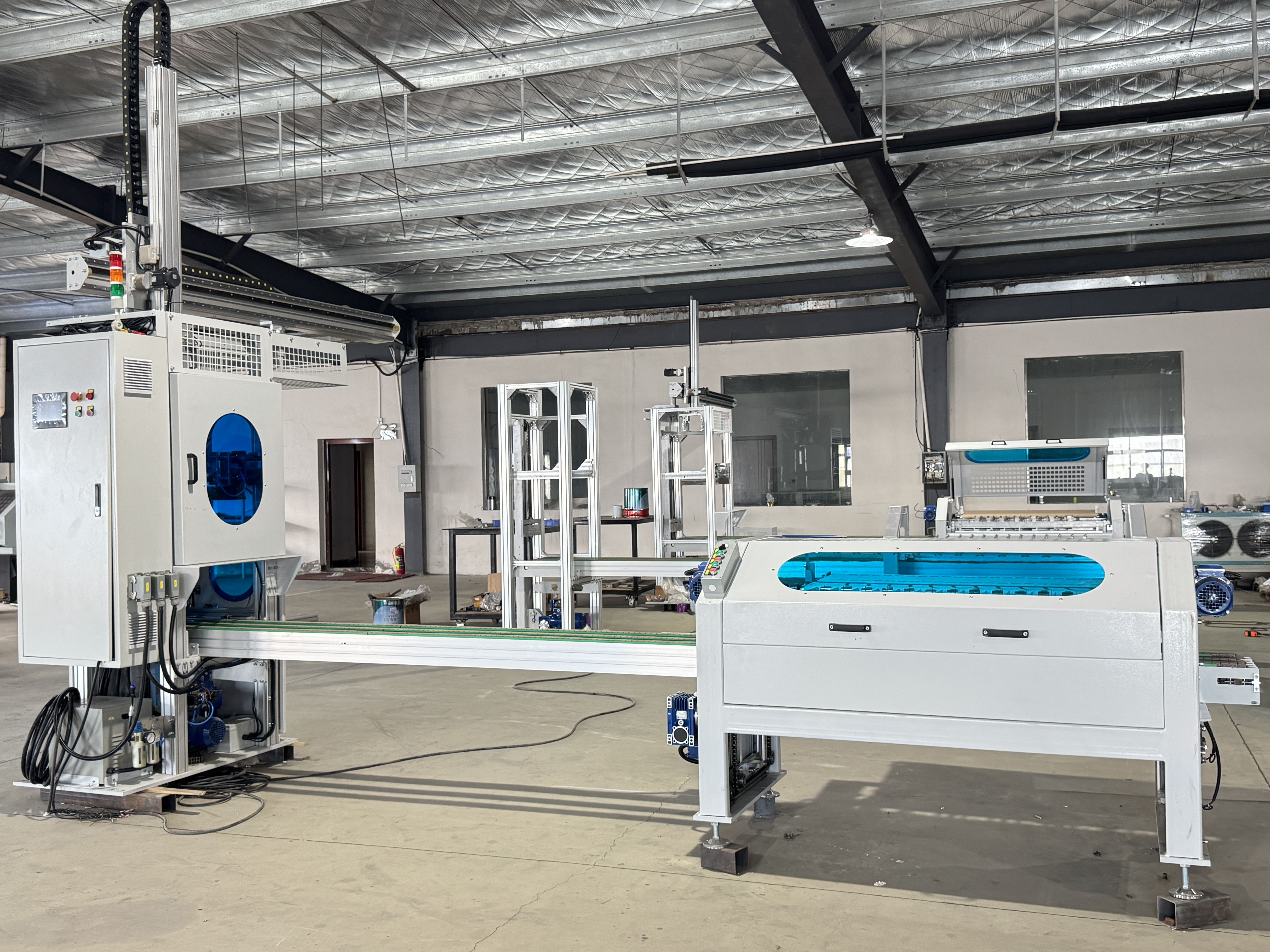
For manufacturers seeking the highest level of automation, the Robotic Sheet Feeding System provides maximum flexibility, precision and production efficiency.
Using an industrial robot equipped with a customized end-of-arm gripper, individual tinplate sheets are automatically picked from the collection station and transferred directly into the can body welder.
The robotic system continuously monitors the feeding process to ensure stable positioning and accurate sheet placement.
Compared with conventional feeding methods, robotic feeding offers several important advantages.
Robotic positioning ensures every sheet is delivered to the welding machine with excellent repeatability, reducing positioning errors and improving welding consistency.
Robot movement can be programmed according to different sheet sizes, production speeds and equipment layouts.
This allows manufacturers to adapt quickly when changing product specifications.
Once production starts, the robot automatically completes repetitive feeding tasks, allowing operators to focus on equipment monitoring and quality control.
Continuous automatic feeding helps maintain a stable production rhythm, reducing unnecessary interruptions and increasing equipment utilization.
As production capacity grows, robotic systems can be integrated with additional automation equipment, helping manufacturers build a smarter and more connected production line.
Both feeding methods provide reliable automation, but they are designed for different production requirements.
Existing production equipment is already installed.
The factory prefers a cost-effective automation upgrade.
Production capacity is medium to high.
Workshop layout is suitable for conveyor installation.
Customers want simple operation and maintenance.
Maximum automation is required.
Production speed is very high.
Multiple product sizes need to be handled.
Factory space requires flexible movement.
Customers plan long-term automation expansion.
Our engineering team evaluates each customer's production process before recommending the most suitable feeding solution.
In many projects, customers begin with conveyor feeding and later upgrade to robotic feeding as production requirements increase.
Mechanical equipment alone cannot guarantee stable production. An efficient Automatic Sheet Feeding System also requires an intelligent control system that coordinates every movement.
Hubei Baoli integrates advanced electrical and control technology to synchronize sheet collection, transfer and feeding with upstream and downstream equipment.
System features include:
Automatic operation
Servo positioning
Speed synchronization
Sensor monitoring
Fault detection
Emergency stop protection
Human-machine interface (HMI)
PLC control system (optional)
These functions improve production stability while making equipment operation more intuitive and easier for operators.
Every can manufacturing plant has unique space limitations and equipment arrangements.
Rather than supplying standard machines with fixed dimensions, Hubei Baoli designs each system according to the customer's workshop.
Our engineers optimize:
Equipment positioning
Feeding direction
Conveyor length
Robot working range
Maintenance access
Operator safety
Future production expansion
This customized engineering approach allows the sheet feeding system to integrate smoothly with both new and existing production lines.
The sheet feeding process is only the beginning of the entire manufacturing workflow.
After sheets are accurately fed into the can body welder, the finished can bodies continue through curing, cooling, inspection, conveying and end-of-line packaging.
Hubei Baoli provides complete automation solutions that connect every stage of production.
After welding, products can be transferred through our Can Conveyor System to downstream equipment, creating a continuous manufacturing process with minimal manual handling.
For customers planning complete factory automation, our 3-Piece Can Production Line Solution introduces how sheet feeding, conveying, palletizing and packaging equipment work together as one integrated system.
By combining intelligent sheet handling with customized conveying and packaging equipment, manufacturers can achieve higher productivity, improved product consistency and more efficient factory operations.
Every can manufacturing plant has different production capacities, workshop layouts and automation requirements. Therefore, Hubei Baoli provides fully customized Automatic Sheet Feeding Systems rather than standard fixed models.
The following technical specifications are for reference only. Our engineering team will recommend the most suitable configuration based on your production requirements.
| Item | Specification |
|---|---|
| Product Name | Automatic Sheet Feeding System |
| Application | 3-Piece Can Production Line |
| Material | Tinplate Sheets |
| Sheet Collection | Automatic |
| Feeding Method | Conveyor Feeding or Robotic Feeding |
| Robot Type | Industrial Robot (Optional) |
| End Effector | Customized Vacuum or Mechanical Gripper |
| Control System | PLC + HMI |
| Drive System | Servo Motor |
| Positioning Accuracy | Customized According to Production Requirements |
| Production Capacity | Customized |
| Power Supply | According to Local Standards |
| Installation | Overseas Installation & Commissioning Available |
Every system is engineered according to sheet dimensions, production speed, factory layout and equipment configuration to ensure stable operation and long-term reliability.
Choosing the right supplier is just as important as choosing the right equipment.
Hubei Baoli Technology has focused on automation equipment for 3-piece can production lines for more than 20 years. Rather than supplying standalone machines, we provide integrated automation solutions that improve the efficiency of the entire production process.
Unlike general automation equipment manufacturers, we specialize in equipment designed specifically for metal can production.
Our engineering team understands the challenges faced by can manufacturers, including high-speed production, precise sheet positioning, continuous material flow and equipment integration.
No two factories are exactly the same.
Every Automatic Sheet Feeding System is designed according to:
Sheet dimensions
Production capacity
Factory layout
Existing equipment
Automation level
Future expansion plans
This customized approach ensures that each solution fits the customer's production requirements instead of forcing the customer to adapt to standard equipment.
The sheet feeding system is only one part of the complete manufacturing process.
Hubei Baoli also provides automation equipment for downstream production, allowing customers to build a fully integrated production line.
Our equipment can be integrated with:
For customers planning complete factory automation, please also visit our 3-Piece Can Production Line Solution page.
Our equipment has been exported to more than 20 countries and regions.
We have accumulated valuable experience serving customers with different production capacities, factory layouts and technical requirements.
From project planning and equipment manufacturing to installation and commissioning, Hubei Baoli provides comprehensive engineering support throughout the entire project.
For a customer in Vietnam, Hubei Baoli supplied an automation solution that included sheet handling equipment, conveying systems and end-of-line packaging equipment.
The Automatic Sheet Feeding System helped reduce manual handling while improving production continuity between the slitting machine and the can body welder.
The customer achieved:
Higher production efficiency
More stable material flow
Reduced labor requirements
Improved workplace safety
A customer in Oman required a customized solution based on limited workshop space and specific production requirements.
Our engineering team designed a sheet collection and feeding system that integrated smoothly with the customer's existing equipment while maintaining reliable production performance.
For an Australian can manufacturer, Hubei Baoli supplied automation equipment that connected sheet handling, conveying, palletizing and packaging into one continuous production process.
The project demonstrated the advantages of integrated automation, allowing the customer to improve production efficiency while reducing manual operations.
A South African customer upgraded an existing production line by introducing automatic sheet handling equipment.
Instead of replacing the complete production line, the customer gradually improved automation through customized equipment designed by Hubei Baoli.
This flexible upgrade reduced investment risk while delivering measurable improvements in production efficiency.
The system is designed for tinplate sheets used in 3-piece can production lines. Different sheet sizes and specifications can be accommodated through customized engineering.
Yes. Our engineering team designs the Automatic Sheet Feeding System according to your existing production equipment, ensuring smooth integration without requiring a complete production line replacement.
The best solution depends on your production capacity, factory layout and investment plan.
Conveyor Feeding is ideal for stable, cost-effective automation, while Robotic Feeding offers greater flexibility and higher automation for complex or high-speed production lines.
Our engineers will recommend the most suitable configuration after evaluating your production requirements.
Yes. The robotic feeding system can be programmed to accommodate different tinplate sheet sizes within the specified operating range.
Yes. The modular design allows future expansion, including upgrading from conveyor feeding to robotic feeding or integrating additional automation equipment.
Yes. We provide installation guidance, commissioning assistance, operator training and after-sales technical support for overseas customers.
To prepare a suitable proposal, we recommend providing:
Tinplate sheet dimensions
Production capacity
Factory layout drawing
Existing equipment information
Preferred feeding method
Electrical standards
Available installation space
This information enables our engineers to design the most appropriate automation solution.
Hubei Baoli is committed to providing long-term technical support beyond equipment delivery.
Our services include:
Technical consultation before purchase
Factory layout recommendations
Equipment installation guidance
Commissioning support
Operator training
Spare parts supply
Remote technical assistance
Long-term maintenance support
We believe that reliable after-sales service is essential to maintaining stable production and building long-term partnerships with our customers.
To learn more about the global metal packaging and can manufacturing industry, you may find the following resources useful:
The Canmaker – Global news and technical insights for the metal packaging industry.
PMMI – Packaging and Processing Technologies Association.
These organizations regularly publish information on manufacturing technologies, packaging trends and industrial automation.
Looking for a reliable Automatic Sheet Feeding System for your 3-piece can production line?
Whether you need an Automatic Sheet Collection System, a Conveyor Feeding System, or a Robotic Sheet Feeding System, Hubei Baoli can provide a customized solution tailored to your production process.
Our experienced engineering team will work with you to evaluate your production requirements, optimize your factory layout and recommend the most suitable automation configuration.
Contact us today to discuss your project and receive a professional proposal for your can manufacturing plant.
Connecting Every Stage of Can Manufacturing with Intelligent Automation Solutions.
Copyright © Hubei Baoli Technology Co., Ltd. All Rights Reserved - Blog - Privacy Policy
 EN
EN
 AR
AR
 HR
HR
 DA
DA
 NL
NL
 FI
FI
 FR
FR
 DE
DE
 EL
EL
 HI
HI
 IT
IT
 JA
JA
 KO
KO
 NO
NO
 PL
PL
 PT
PT
 RO
RO
 RU
RU
 ES
ES
 SV
SV
 TL
TL
 IW
IW
 ID
ID
 LT
LT
 SR
SR
 VI
VI
 SQ
SQ
 HU
HU
 TH
TH
 TR
TR
 AF
AF
 MS
MS
 GA
GA
 BN
BN
 HA
HA
 IG
IG
 MR
MR
 NE
NE
 YO
YO
 MY
MY