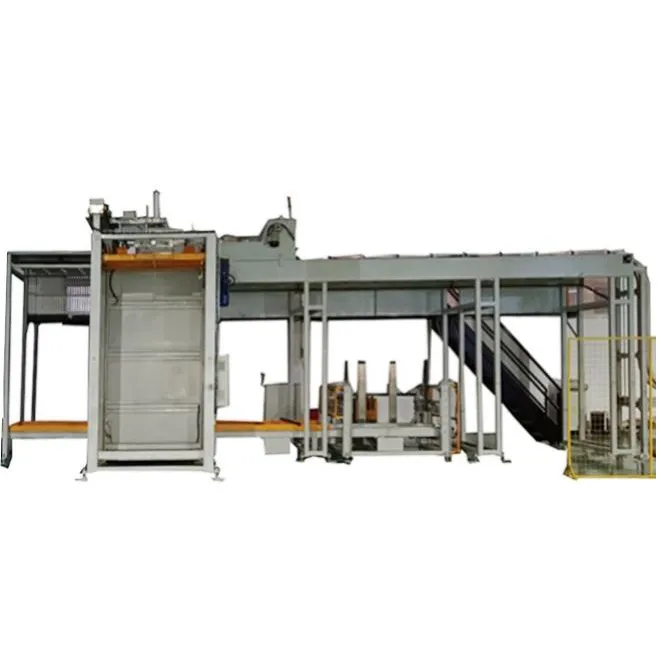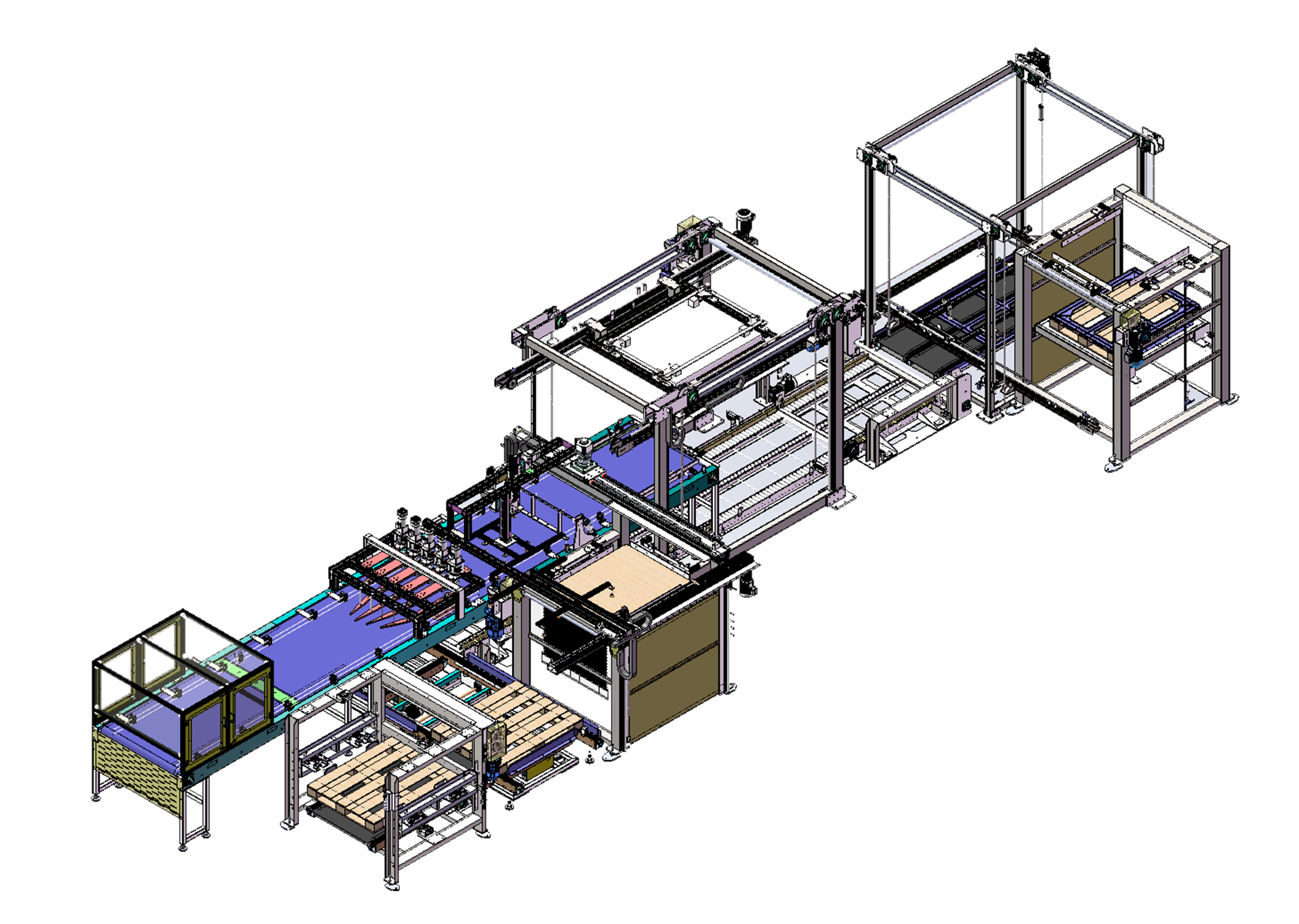
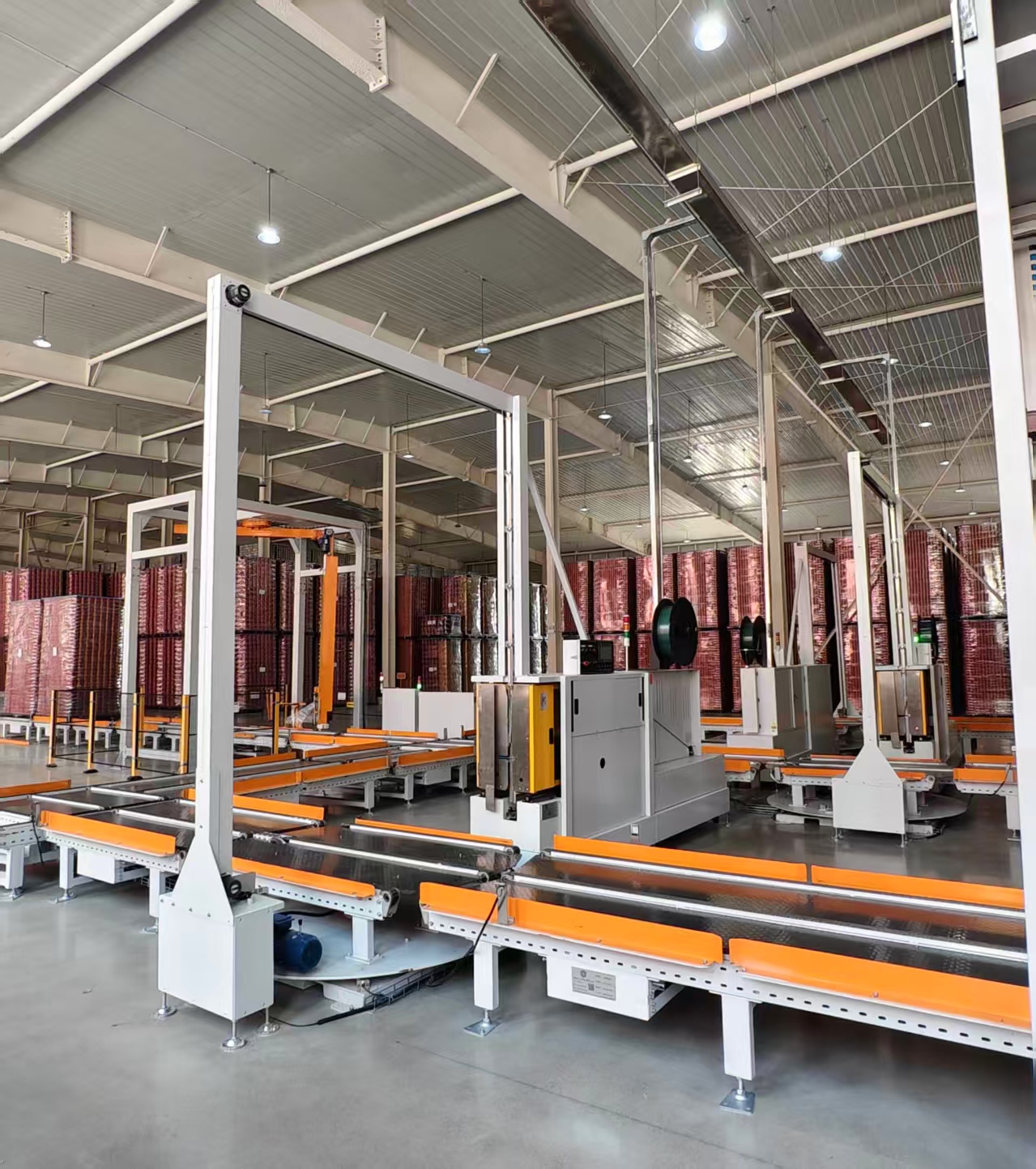
A can production line does not finish when cans are palletized. The final pallet still needs to be transferred, secured and wrapped before it can be moved to storage or transportation.
Baoli provides complete end-of-line packaging solutions that connect these processes into one automated workflow.
Can Palletizing → Pallet Conveying → Strapping → Stretch Wrapping → Finished Pallet
Instead of supplying individual machines as isolated units, Baoli can design the equipment arrangement and production flow around the customer's production speed, pallet specifications and factory layout.
A palletizer, strapping machine or stretch wrapping machine can each operate independently. However, the real challenge in an automated can factory is making these machines work together smoothly.
The pallet needs to leave the palletizer at the right time, move accurately through the conveyor system, enter the strapping station, continue to the stretch wrapping machine and finally leave the packaging line as a completed pallet.
This requires more than individual machines.
It requires a coordinated end-of-line packaging system.
Baoli can integrate the major stages of the process into one connected solution.
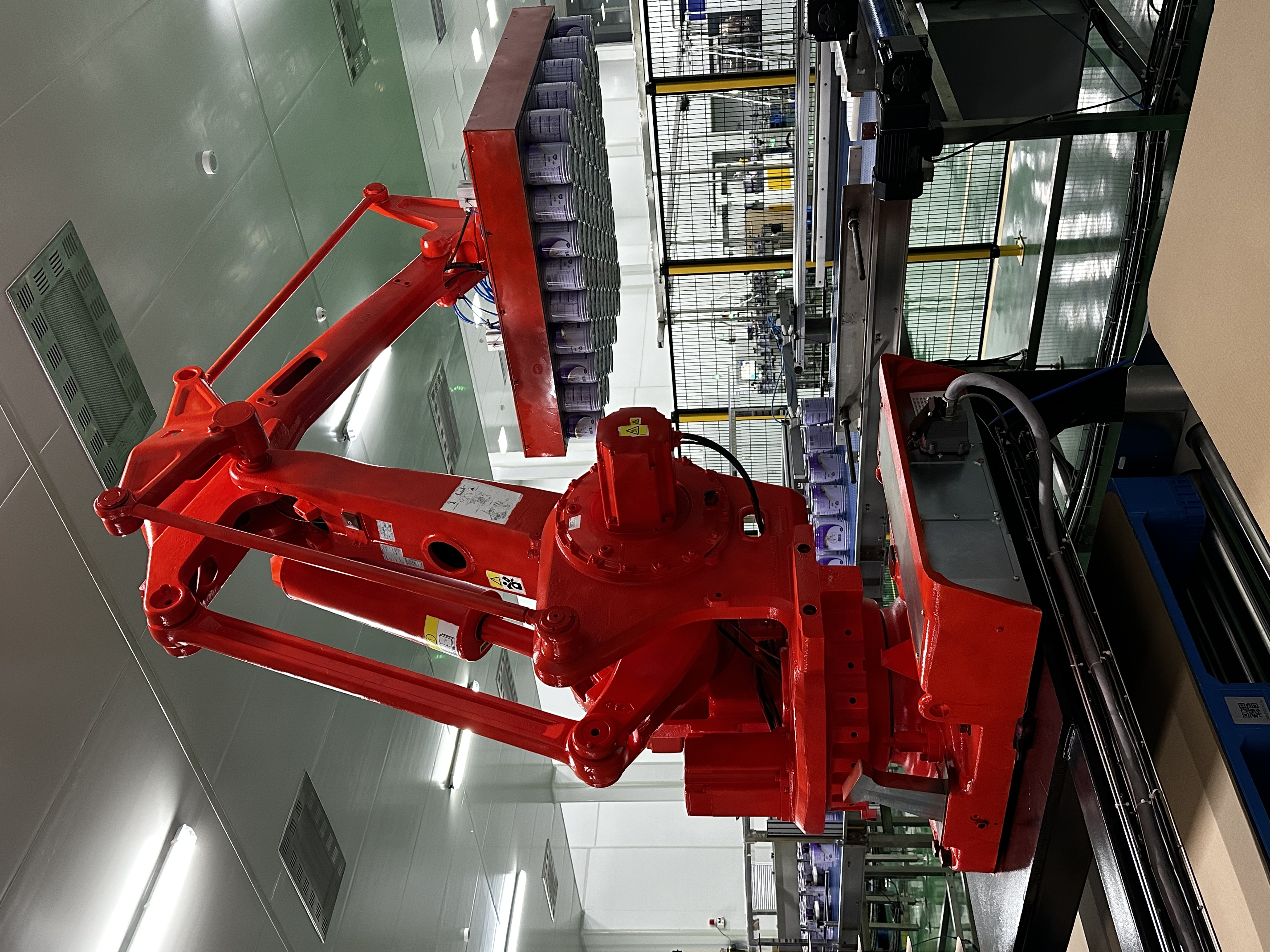
The process starts with automatic palletizing.
Baoli can provide different palletizing configurations according to production speed, pallet pattern, available space and automation requirements.
Available solutions can include:
The palletizer automatically arranges cans onto the pallet according to the required pattern.
[View Can Palletizer →]
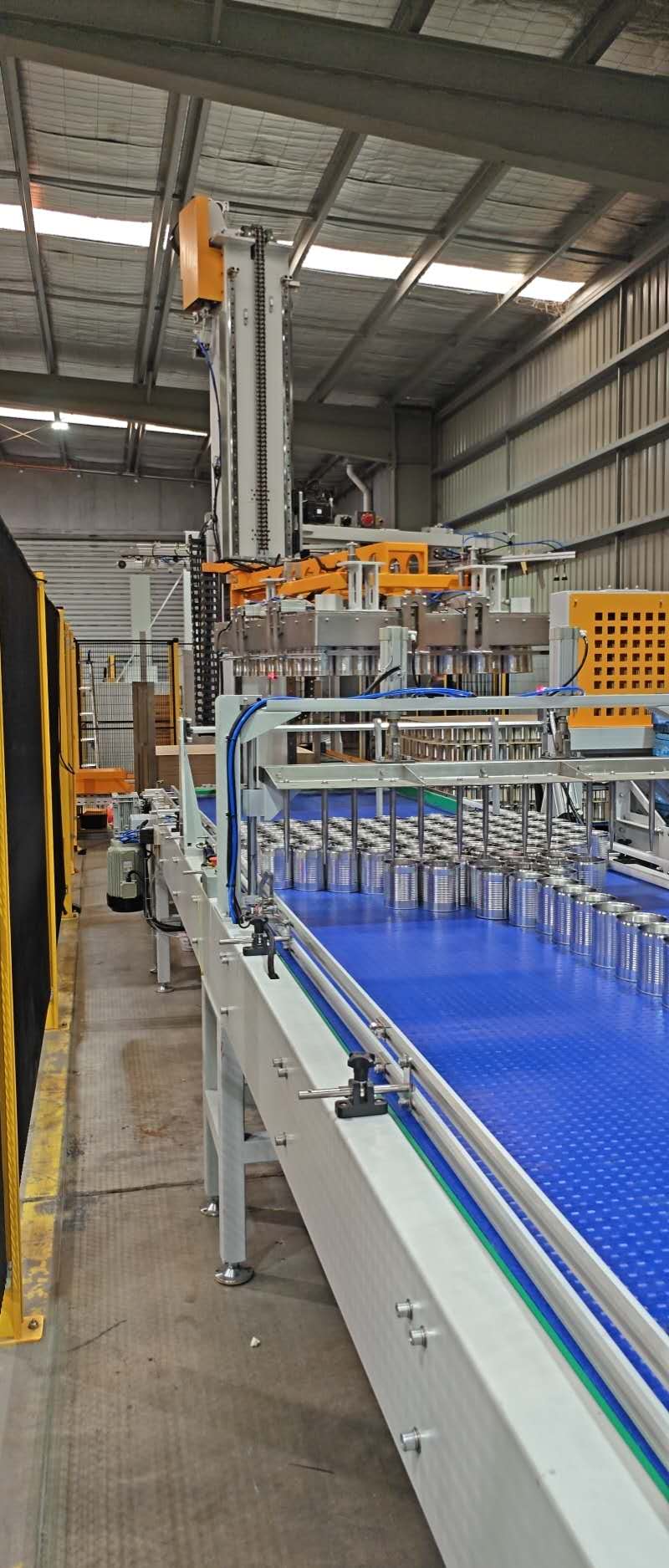
Once palletizing is completed, the pallet is transferred to the next stage through an automatic pallet conveyor.
The conveyor is not simply a transport device. Its layout and transfer points need to match the palletizer, strapping machine and stretch wrapping machine.
Baoli can design the pallet conveying arrangement according to the available factory space and required production flow.
[View Pallet Conveyor System →]
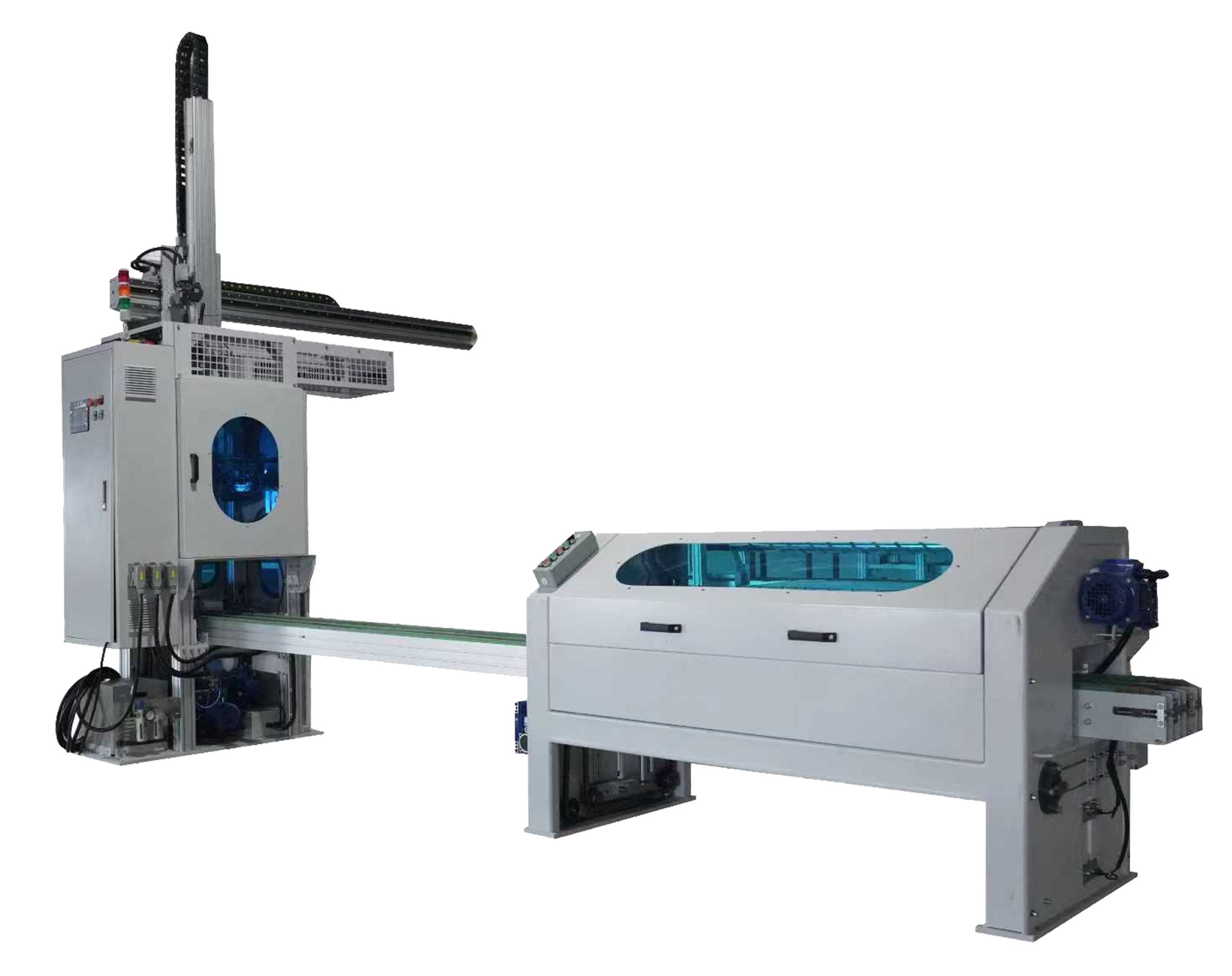
The completed pallet then enters the automatic strapping station.
The strapping machine automatically feeds, tensions, seals and cuts the strap to secure the palletized cans.
This reduces repetitive manual work and provides a consistent strapping process.
[View Automatic Strapping Machine →]
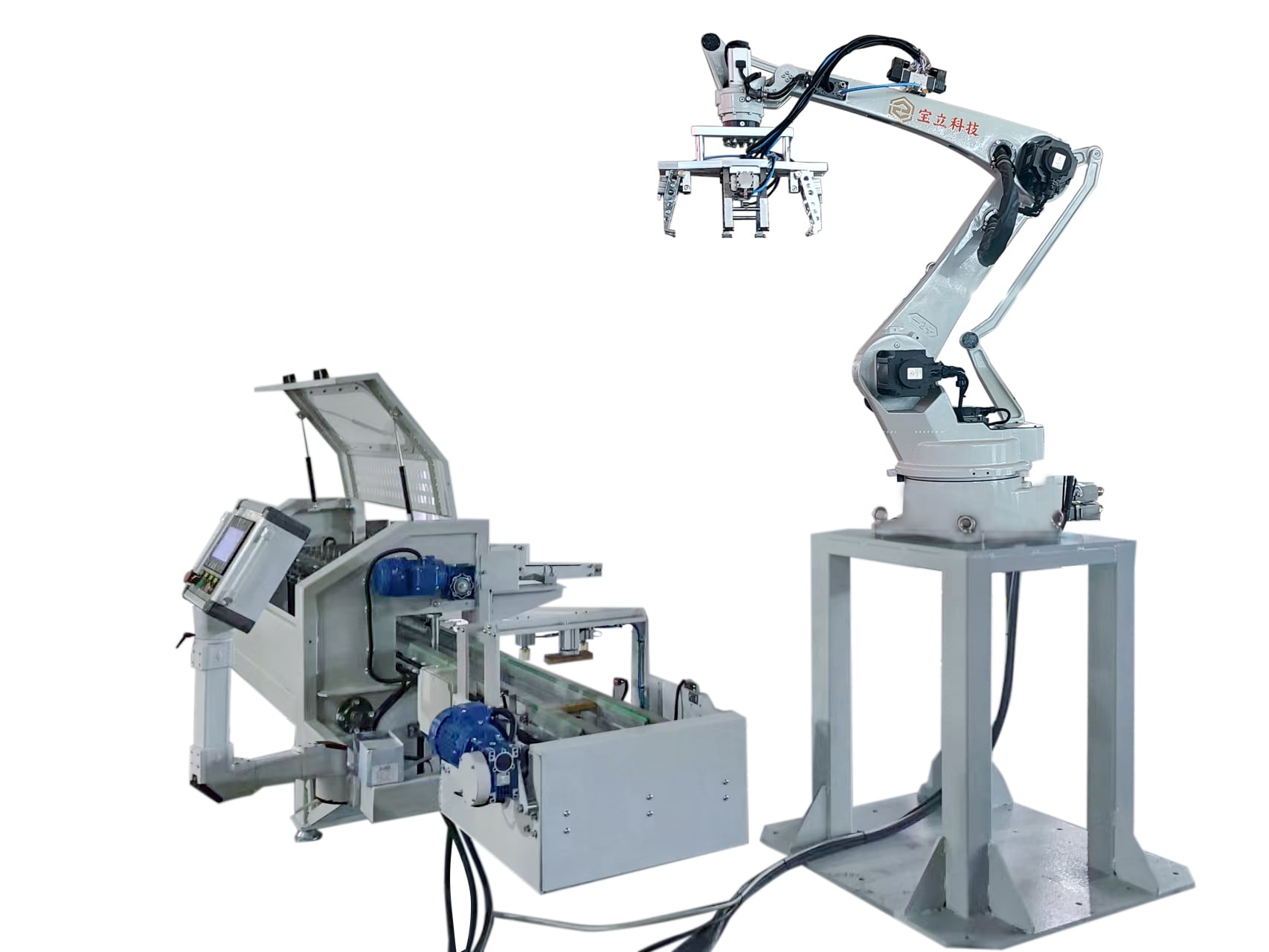
After strapping, the pallet is automatically transferred to the stretch wrapping machine.
Stretch film is applied around the palletized load to help stabilize and protect the finished pallet during handling, storage and transportation.
[View Stretch Wrapping Machine →]
After wrapping, the finished pallet leaves the end-of-line packaging system and can be transferred to the warehouse, loading area or other downstream handling equipment.
The complete process becomes:
Palletizing → Conveying → Strapping → Stretch Wrapping → Finished Pallet
Baoli specializes in automation equipment for can production and packaging applications.
Our equipment covers key processes such as can conveying, palletizing and end-of-line packaging. This allows us to look at the complete material flow instead of designing one machine without considering the surrounding equipment.
The value of an automated packaging line is not only the performance of individual machines.
The palletizer, conveyor, strapping machine and stretch wrapper need to communicate and operate as one production flow.
Baoli can consider these connections during the equipment selection and layout design stage.
Working with one equipment supplier for several connected processes can simplify project coordination.
Instead of separately coordinating:
Palletizer Supplier + Conveyor Supplier + Strapping Supplier + Wrapping Supplier
Baoli can provide the equipment combination and integration for the complete end-of-line process.
Every factory has different space limitations and production requirements.
Baoli can design the equipment arrangement according to:
The objective is to create a practical packaging flow that fits the actual factory.
A typical Baoli system can include four main sections:
Automatically arranges cans onto pallets.
[Explore Can Palletizer →]
Transfers completed pallets between packaging stations.
[Explore Pallet Conveyor →]
Secures palletized cans before wrapping.
[Explore Strapping Machine →]
Wraps the finished pallet with stretch film for further handling and transportation.
[Explore Stretch Wrapping Machine →]
These machines can be selected and integrated according to the customer's actual requirements.
A typical automatic line operates as follows:
Step 1 — Palletizing
Cans are automatically arranged onto the pallet.
↓
Step 2 — Pallet Transfer
The completed pallet enters the pallet conveyor system.
↓
Step 3 — Strapping
The pallet is automatically positioned and strapped.
↓
Step 4 — Transfer
The pallet conveyor transfers the strapped pallet to the wrapping station.
↓
Step 5 — Stretch Wrapping
The pallet is automatically wrapped with stretch film.
↓
Step 6 — Finished Pallet
The completed pallet is discharged for storage or transportation.
The key is that these operations are designed as one continuous process rather than several unrelated machines.
Strapping and stretch wrapping are particularly suitable for integration.
The two processes perform different functions:
Strapping
Secures the palletized load with straps.
Stretch Wrapping
Applies stretch film around the pallet to help stabilize and protect the load.
When connected by an automatic pallet conveyor, they can operate as one continuous packaging section.
Palletizer → Conveyor → Strapping → Stretch Wrapping
For detailed information about each process:
[Automatic Strapping Machine →]
[Automatic Stretch Wrapping Machine →]
Not every can factory requires the same packaging configuration.
The appropriate solution depends on factors such as:
Higher production speeds may require different palletizing and conveying configurations.
Can diameter and height affect palletizing patterns, conveying and packaging requirements.
Pallet size determines the working area and conveyor configuration.
Available floor space and existing equipment determine how the complete system can be arranged.
Customers may require a complete automatic system or a specific combination of equipment.
Baoli can configure the equipment around these actual production conditions.
A complete packaging project involves more than manufacturing machines.
Baoli can support the project through several stages:
1. Requirement Analysis
Understand the customer's products, production speed and packaging requirements.
2. Layout Design
Review the factory space and determine the equipment arrangement.
3. Equipment Selection
Select the appropriate palletizer, conveyor, strapping and wrapping configuration.
4. Manufacturing
Manufacture the equipment according to the approved design.
5. System Integration
Connect the individual machines into a continuous packaging process.
6. Installation & Commissioning
Support installation and commissioning of the equipment.
7. Production Support
Provide technical support after the system enters production.
To recommend a suitable end-of-line packaging system, customers can provide:
With this information, Baoli can evaluate the production flow and recommend a suitable equipment combination.
We start with your production requirements and factory layout, rather than simply selecting a standard machine.
Baoli end-of-line packaging systems can be designed for:
The exact equipment combination depends on the application, production requirements and factory conditions.
Baoli specializes in automation equipment for can production lines and related packaging applications.
Our equipment covers multiple stages of the production and handling process, including can conveying, palletizing and end-of-line packaging.
For customers looking for a complete packaging solution, the advantage is not simply having several machines from one supplier. It is having the equipment selection, layout and production flow considered together.
Can Palletizing → Conveying → Strapping → Stretch Wrapping
This is the approach Baoli takes when designing an automated end-of-line packaging system.
It is an automated system used after the main can production or filling process to palletize, transfer, secure and wrap finished cans or empty cans before storage or transportation.
A typical system can include a can palletizer, pallet conveyor, automatic strapping machine and stretch wrapping machine.
Yes. The machines can be connected through an automatic pallet conveying system to create a continuous packaging process.
Baoli can provide the equipment combination and system integration according to the customer's project requirements, including palletizing, conveying, strapping and stretch wrapping.
Yes. The equipment layout can be designed according to factory space, production speed, pallet dimensions and the required material flow.
The choice depends on production speed, can dimensions, pallet size, palletizing pattern, available space and required automation level.
Yes. They are often installed sequentially in the same end-of-line packaging section, with pallet conveying between the two machines.
Tell us your can dimensions, production speed, pallet size and factory layout.
Baoli can evaluate your requirements and recommend a suitable combination of:
Can Palletizer + Pallet Conveyor + Strapping Machine + Stretch Wrapping Machine
Request a Complete Packaging Solution →
Copyright © Hubei Baoli Technology Co., Ltd. All Rights Reserved - Blog - Privacy Policy
 EN
EN
 AR
AR
 HR
HR
 DA
DA
 NL
NL
 FI
FI
 FR
FR
 DE
DE
 EL
EL
 HI
HI
 IT
IT
 JA
JA
 KO
KO
 NO
NO
 PL
PL
 PT
PT
 RO
RO
 RU
RU
 ES
ES
 SV
SV
 TL
TL
 IW
IW
 ID
ID
 LT
LT
 SR
SR
 VI
VI
 SQ
SQ
 HU
HU
 TH
TH
 TR
TR
 AF
AF
 MS
MS
 GA
GA
 BN
BN
 HA
HA
 IG
IG
 MR
MR
 NE
NE
 YO
YO
 MY
MY