
 EN
 AR
 HR
 DA
 NL
 FI
 FR
 DE
 EL
 HI
 IT
 JA
 KO
 NO
 PL
 PT
 RO
 RU
 ES
 SV
 TL
 IW
 ID
 LT
 SR
 VI
 SQ
 HU
 TH
 TR
 AF
 MS
 GA
 BN
 HA
 IG
 MR
 NE
 YO
 MY
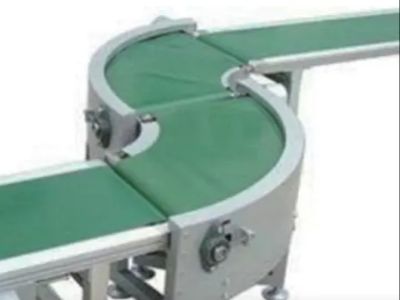
Can Drive Belt Conveyor Manufacturing Process: From Raw Material to Finished Product Every Step of the Way
A reliable can drive belt conveyor starts with more than a motor and a conveyor belt. Its performance depends on accurate frame fabrication, properly matched drive components, correct belt tension, stable speed control, and thorough factory testing. For can manufacturing plants, these details help ensure smooth material transfer, reduce unplanned downtime, and keep connected production equipment running efficiently.
At Hubei Baoli Technology, conveyor systems are designed around production requirements, factory layouts, and the equipment they need to connect. Here is how an industrial belt conveyor moves from the initial design stage to a finished system ready for installation.
https://youtube.com/shorts/9O4ppdVlpgY?is=1aqclXO7gJITmaby
Step 1: Defining the Conveyor's Operating Requirements
Before manufacturing begins, the engineering team needs to understand how the conveyor will operate within the production line.
Key considerations include:
Conveying application: Whether the system handles cans, components, cartons, or pallets.
Product dimensions: Diameter, height, weight, and the stability of the items being conveyed.
Required throughput: The target production speed and the transfer rate of upstream and downstream equipment.
Factory layout: Conveyor length, width, elevation changes, turning sections, and available installation space.
Operating environment: Temperature, dust, moisture, cleaning requirements, and contact-material requirements.
Control requirements: Standalone operation or integration with other production-line equipment.
These details determine the conveyor structure, belt specification, drive capacity, sensor arrangement, and control strategy. A properly engineered can conveyor should fit the production process rather than force the customer to redesign the line around the equipment.
Step 2: Selecting Raw Materials and Key Components
Material and component selection directly affect conveyor stability, service life, and maintenance requirements.
Conveyor frame and structural materials
The frame must provide sufficient rigidity to support the conveyor and maintain alignment during operation. Carbon steel with a suitable protective coating is a practical choice for many industrial applications. Stainless steel can be specified where corrosion resistance, hygiene, or cleaning requirements justify its use.
The selection depends on the operating environment, not simply the appearance of the finished machine.
Belt, rollers, bearings, and transmission components
The belt material must match the conveyed product, operating speed, loading conditions, and required friction characteristics. Rollers, shafts, bearings, and transmission components should be selected to suit the expected load and duty cycle.
For can manufacturing applications, the design must also consider product spacing, smooth transfers between sections, and the risk of cans tipping, colliding, or accumulating at transfer points.
Drive motor and electrical components
The drive system is central to a can drive belt conveyor. The motor and gearbox must provide sufficient starting torque and operating capacity without unnecessary oversizing.
For a medium- to high-end industrial configuration, the electrical system may use:
Siemens PLCs for programmable control.
Siemens, Schneider Electric, or Mitsubishi drive and control solutions, depending on the project.
Schneider Electric low-voltage electrical components.
Industrial sensors selected for the product, detection distance, and operating environment.
Pneumatic components, where required, can be selected from established suppliers such as SMC. The final component brands and models should be confirmed against the customer's technical specification and quotation.
Choosing reputable components is only part of the process. Correct sizing, professional wiring, suitable protection, and consistent assembly standards are equally important.
Step 3: Frame Fabrication and Mechanical Processing
Once the design and materials are approved, manufacturing moves to frame fabrication.
The process typically includes cutting raw materials, machining connection points, welding structural sections, and preparing mounting surfaces. After fabrication, critical dimensions and mounting positions are checked against the engineering drawings.
For a belt conveyor, particular attention should be paid to:
Frame straightness and structural rigidity.
Parallel alignment of rollers and shafts.
Accurate positioning of motor and gearbox mounting points.
Consistent support along the conveyor length.
Appropriate surface treatment for the working environment.
Poor frame alignment can lead to belt tracking problems, uneven wear, and unnecessary load on bearings and drive components.
A well-manufactured frame provides the foundation for accurate assembly and stable long-term operation.
Step 4: Assembling the Drive System and Conveyor Belt
This is one of the most important stages in the can drive belt conveyor manufacturing process.
The motor, gearbox, drive roller, return rollers, belt, and tensioning mechanism must work together as a coordinated system.
Drive motor and gearbox installation
The motor and gearbox are installed according to the design, with attention to mounting accuracy, transmission alignment, and accessibility for future maintenance.
The drive ratio and motor capacity must suit the required conveyor speed and conveying load. Variable-speed control may be used when the production process requires adjustable conveying rates.
Belt installation and tension adjustment
The belt is installed and adjusted to achieve appropriate tension and tracking. Excessive tension can increase stress on bearings, shafts, and the belt itself. Insufficient tension may cause slipping or unstable conveying.
The belt should run centrally and smoothly throughout its operating range. Tracking adjustments are made before the system proceeds to electrical commissioning and functional testing.
Transfer-point inspection
For can production lines, transfer points deserve special attention. Differences in height, gaps between conveyor sections, and abrupt speed changes can cause cans to tip, collide, or accumulate.
The engineering team should verify the transition between connected conveyors and confirm that the transfer arrangement matches the actual product and line speed.
Step 5: Electrical Integration and Speed Control
After mechanical assembly, the electrical control system is installed and checked.
Depending on the project, the control configuration may include a PLC, variable-frequency drive, motor protection, emergency-stop circuits, photoelectric sensors, and other detection devices.
The control system can be configured to support functions such as:
Start and stop control.
Adjustable conveying speed.
Product detection and transfer coordination.
Accumulation or blockage monitoring, where required.
Interlocking with upstream and downstream equipment.
Alarm indication and troubleshooting support.
For a conveyor integrated into a can manufacturing line, control logic should be designed around the complete transfer process. A conveyor that runs at the correct speed in isolation may still cause problems if it is not synchronized with the equipment before and after it.
The final control architecture depends on the number of conveyor sections, operating sequence, safety requirements, and the customer's existing automation system.
Step 6: Factory Inspection and Performance Testing
Before delivery, the completed conveyor should undergo systematic inspection and testing.
Mechanical inspection
Engineers check the frame, fasteners, rollers, belt tracking, tensioning arrangement, guards, and accessible maintenance points. The drive system is also inspected for abnormal vibration, noise, or overheating during operation.
Electrical and functional testing
The team verifies motor rotation, speed adjustment, sensor responses, control functions, and emergency-stop operation. Where applicable, the conveyor is tested together with its associated equipment.
Running tests
The conveyor is operated to assess running stability and identify issues such as belt deviation, slipping, abnormal noise, and inconsistent conveying.
Where the project specification requires it, testing can include representative products or loads and a longer continuous-running test.
Factory acceptance criteria should be agreed in advance. These may include the required conveying speed, load capacity, operating sequence, safety functions, and interface requirements.
Testing against defined criteria provides a more meaningful quality check than simply confirming that the motor starts.
Step 7: Final Quality Checks and Delivery Preparation
After testing, the conveyor is prepared for shipment.
The final inspection may cover:
Overall dimensions and connection interfaces.
Belt condition and tracking.
Motor, gearbox, and electrical component installation.
Safety guards and emergency-stop functions.
Cable identification and electrical documentation.
Spare parts and maintenance instructions, where included in the contract.
Protective packaging suitable for transportation.
For overseas projects, clear installation drawings, electrical information, and connection details can help reduce uncertainty during installation and commissioning.
The conveyor is then packed according to the shipping arrangement and prepared for delivery to the customer's facility.
What Determines the Quality of a Can Drive Belt Conveyor?
The manufacturing process involves several stages, but three factors deserve particular attention.
First, mechanical accuracy. A rigid frame, correctly aligned rollers, and properly adjusted belt reduce tracking issues and unnecessary wear.
Second, drive-system matching. The motor, gearbox, belt, and control system must be selected as a coordinated package. Reputable electrical components cannot compensate for an incorrectly designed drive system.
Third, integration and testing. A conveyor must work reliably under the actual operating conditions and transfer products smoothly to connected equipment.
These factors are especially important when the conveyor forms part of a larger automated production line, where a small transfer problem can interrupt several connected processes.
Can Conveyor Systems from Baoli
Hubei Baoli Technology specializes in auxiliary automation equipment for tinplate three-piece can manufacturing lines. Its equipment portfolio includes conveyor systems, sheet-handling equipment, can-handling equipment, palletizers, and end-of-line packaging solutions.
Conveyor configurations can be developed around the customer's conveying requirements, factory layout, product dimensions, and connections to other equipment. Depending on the application, the solution may involve belt, chain, mesh, magnetic, or other suitable conveyor arrangements.
For projects requiring a complete material-transfer process, the engineering team can also consider how individual conveyor sections connect with upstream machinery, palletizing equipment, and downstream packaging systems.
Rather than selecting equipment by price alone, can manufacturers should evaluate structural quality, drive-system suitability, control integration, maintainability, and the supplier's ability to support the complete application.
Conclusion
The can drive belt conveyor manufacturing process begins with understanding the application and continues through material selection, frame fabrication, drive-system assembly, electrical integration, and factory testing.
Each stage contributes to the finished conveyor's stability, service life, and ability to work reliably within an automated production line.
If you are planning a conveyor project for a can manufacturing facility, share your product dimensions, required conveying speed, conveyor layout, and connection requirements with Baoli. These details help determine a suitable configuration for your production line.
Table of Contents
- Step 1: Defining the Conveyor's Operating Requirements
- Step 2: Selecting Raw Materials and Key Components
- Step 3: Frame Fabrication and Mechanical Processing
- Step 4: Assembling the Drive System and Conveyor Belt
- Step 5: Electrical Integration and Speed Control
- Step 6: Factory Inspection and Performance Testing
- Step 7: Final Quality Checks and Delivery Preparation
- What Determines the Quality of a Can Drive Belt Conveyor?
- Can Conveyor Systems from Baoli
- Conclusion