
 EN
EN
 AR
AR
 HR
HR
 DA
DA
 NL
NL
 FI
FI
 FR
FR
 DE
DE
 EL
EL
 HI
HI
 IT
IT
 JA
JA
 KO
KO
 NO
NO
 PL
PL
 PT
PT
 RO
RO
 RU
RU
 ES
ES
 SV
SV
 TL
TL
 IW
IW
 ID
ID
 LT
LT
 SR
SR
 VI
VI
 SQ
SQ
 HU
HU
 TH
TH
 TR
TR
 AF
AF
 MS
MS
 GA
GA
 BN
BN
 HA
HA
 IG
IG
 MR
MR
 NE
NE
 YO
YO
 MY
MY
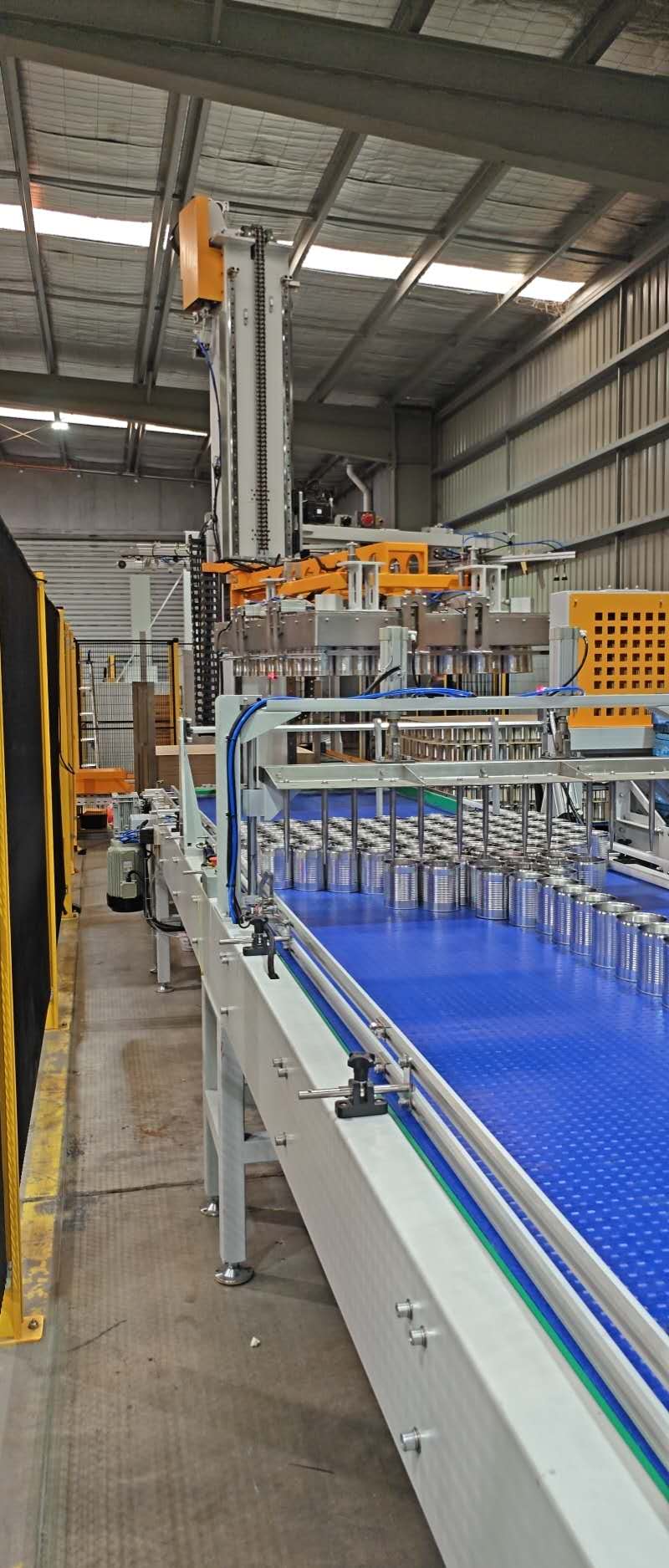
A can palletizer is an automatic palletizing machine designed for empty can production lines. It organizes and stacks empty cans onto pallets after the conveying and inspection process, helping can manufacturers improve production efficiency and reduce manual labor.
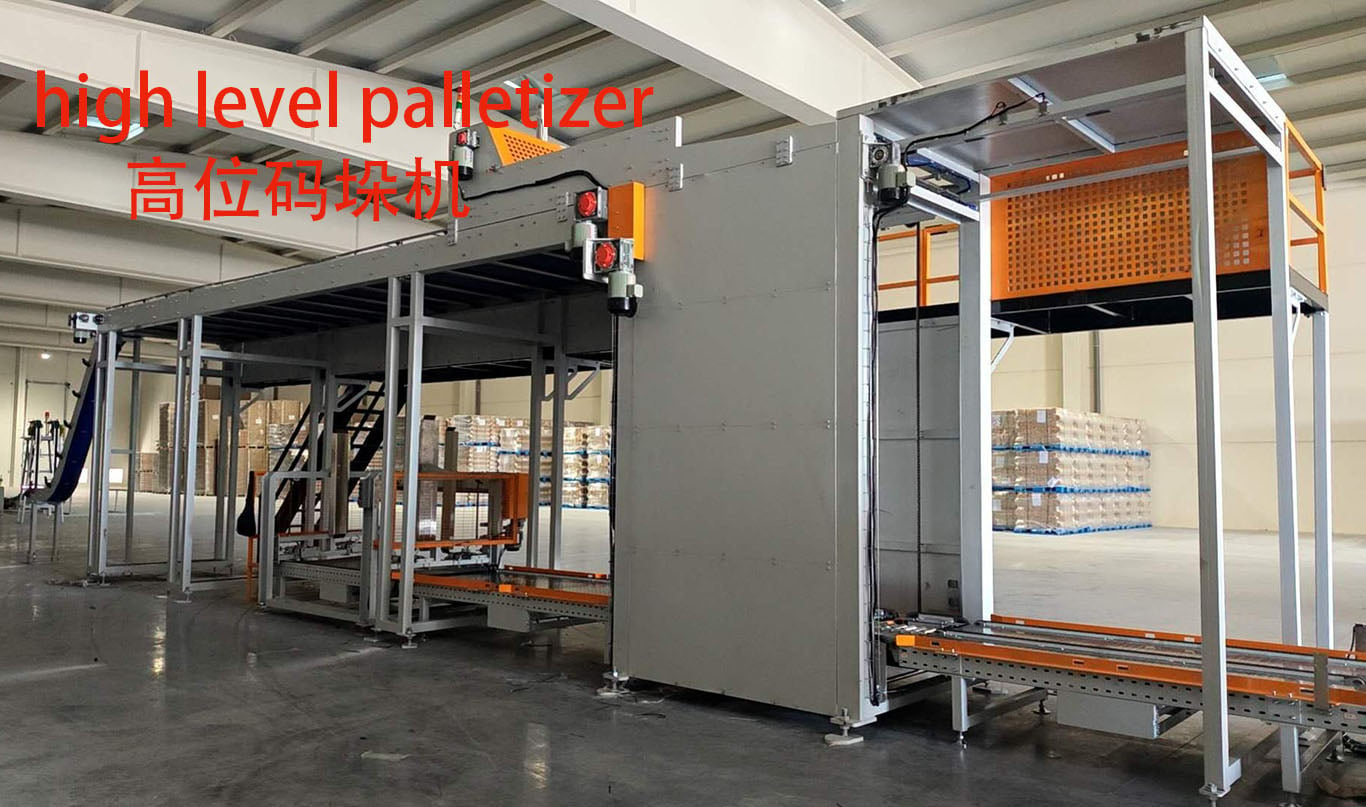
How does a Empty Tin Can Palletizer Work?
A metal empty food can palletizer may seem to simply "pick" and "place," but its operation involves sophisticated engineering. This article breaks down the three main working methods of can palletizers, helping you understand their core technologies and providing a reference for selection.
When you see a metal empty food can can palletizer smoothly stacking cases of products into neat pallet loads, have you ever wondered how it's done? In practice, based on different technological approaches, palletizers are mainly divided into the following three types, which together form the backbone of automated palletizing.
1. Beverage Can Mechanical Palletizer: The Efficient and Stable "Workhorse"
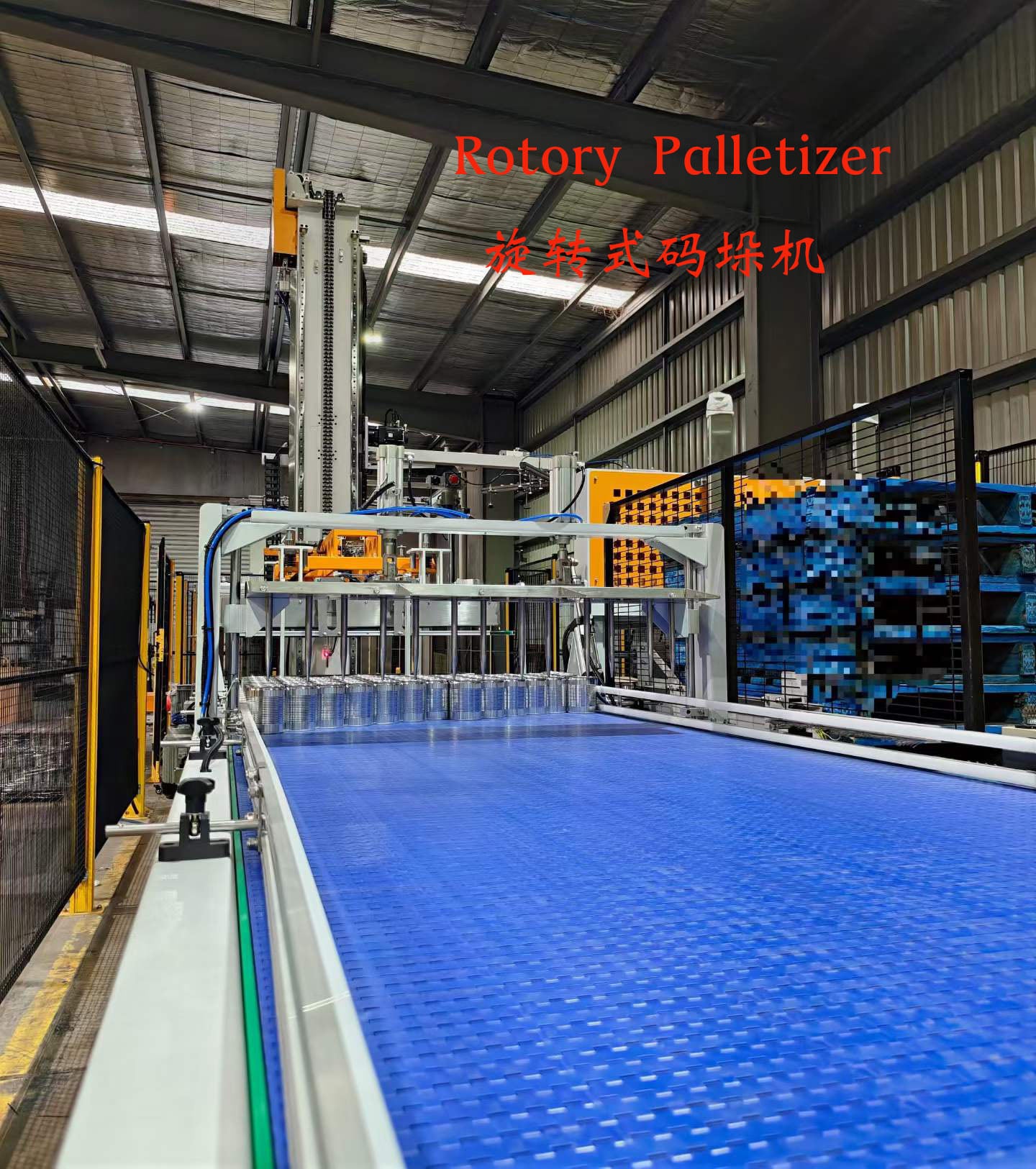
This is the most classic and common type. It operates using a large mechanical arm (gantry style) and an end-effector (palletizing head).
Workflow:The conveyor line delivers the cased cans to a designated position → The mechanical arm descends, and the palletizing head picks up the entire layer of products using vacuum cups or mechanical clamps → Lifts and moves over the pallet → Precisely places the layer → Repeats the cycle.
Advantages:High load capacity, extremely fast speed, especially suitable for high-volume production of a single product type.
Core Technology:Its stability relies on a precise servo control system and a robust mechanical structure.
2. Empty Food Can Robotic Palletizer: The Flexible and Agile "All-Rounder"
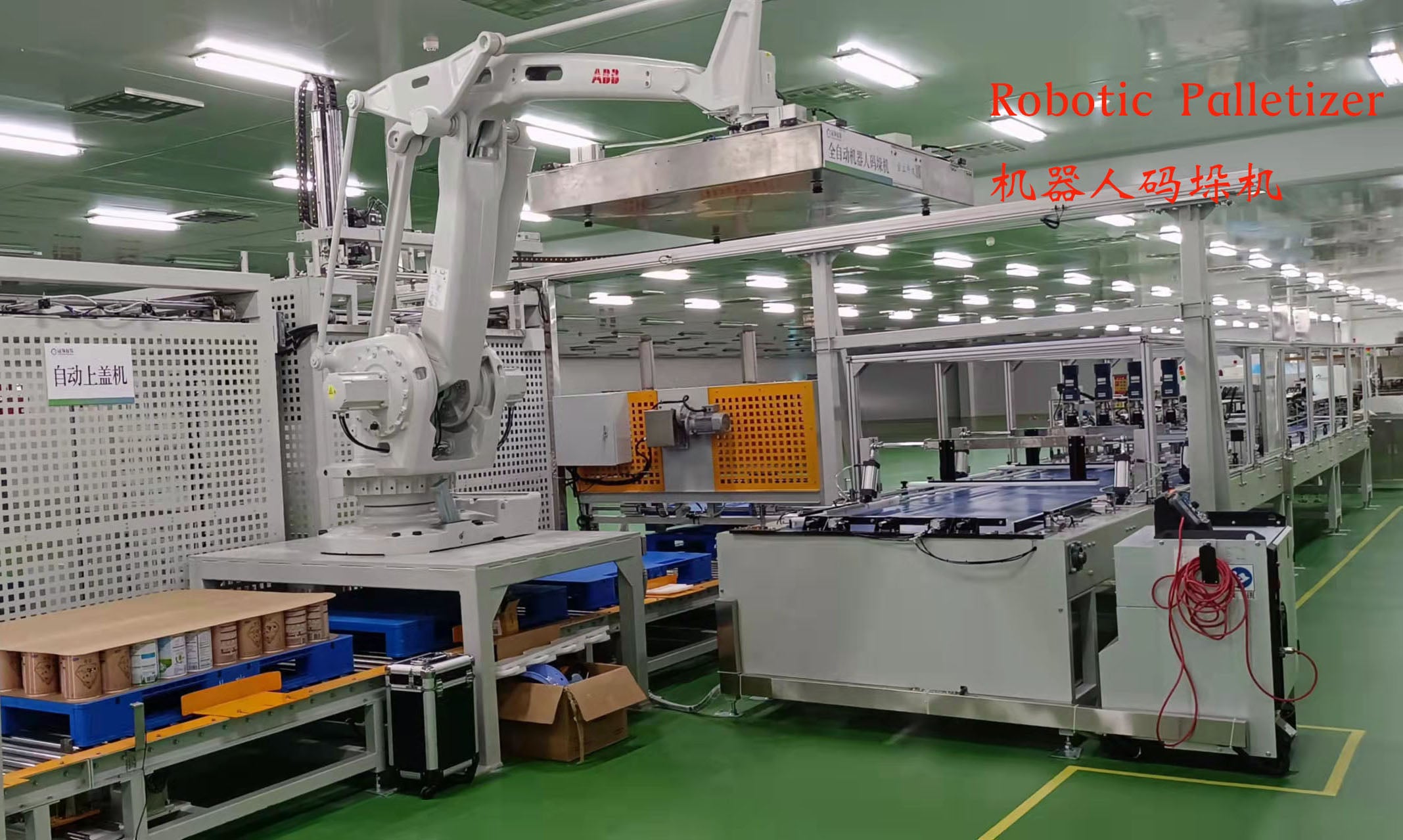
This type uses a high-degree-of-freedom industrial robot (typically a six-axis robot) as the main body, with a customized gripper attached to the end.
Workflow:Similar to the mechanical type, but the robot's movements are more flexible. It can complete complex motion paths within a smaller footprint, easily handling multiple production lines or multiple palletizing stations.
Advantages: Extremely high flexibility, small footprint, able to adapt to products of different specifications by changing grippers, making it ideal for flexible production.
Core Technology: Its intelligence lies in an advanced robot control system and trajectory planning algorithms.
3. Cartesian Palletizer: The Economical and Practical "Precision Archer"
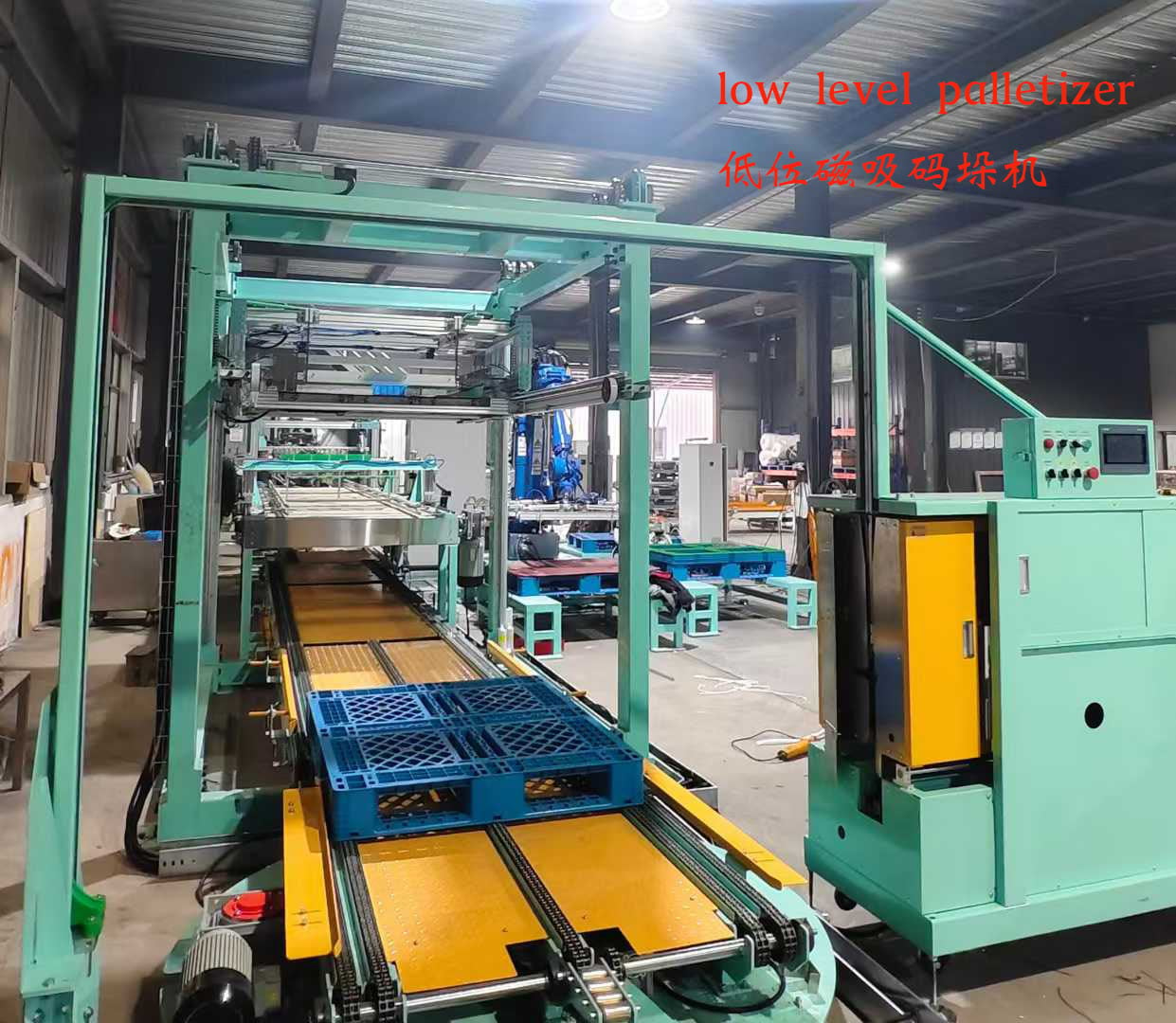
This palletizer moves along three linear axes (X, Y, Z), making its structure relatively simple.
Workflow:Through linear movement in three directions, it combines to create a movement path in three-dimensional space, completing the pick-and-place operation.
Advantages: Lower cost, simple structure, easy maintenance, very suitable for medium-to-low speed production scenarios with limited space.
Core Technology:The key lies in the precision and reliability of the linear modules and drive systems.
How to Choose?
Read more article about how to choose the can palletizers according to your capacity and factory space:https://www.baoli-hubei.com/product-robot-palletizer-for-tin-can-production-line
There is no absolute best, only the most suitable configuration. A high-capacity metal beer can production line might prefer a beer can Mechanical Palletizer; while a beverage factory with diverse products and frequent changeovers might favor the flexibility of a metal empty beverage can Robotic Palletizer.
Hubei Baoli provides automatic can palletizer solutions for three-piece can production lines. Our palletizing systems have been installed in can factories in Australia, Vietnam, Russia and other markets.
Please view our youtube channel for more video:https://youtube.com/shorts/9O4ppdVlpgY?is=nTCtZQbG3gpDD7a4