
 EN
 AR
 HR
 DA
 NL
 FI
 FR
 DE
 EL
 HI
 IT
 JA
 KO
 NO
 PL
 PT
 RO
 RU
 ES
 SV
 TL
 IW
 ID
 LT
 SR
 VI
 SQ
 HU
 TH
 TR
 AF
 MS
 GA
 BN
 HA
 IG
 MR
 NE
 YO
 MY
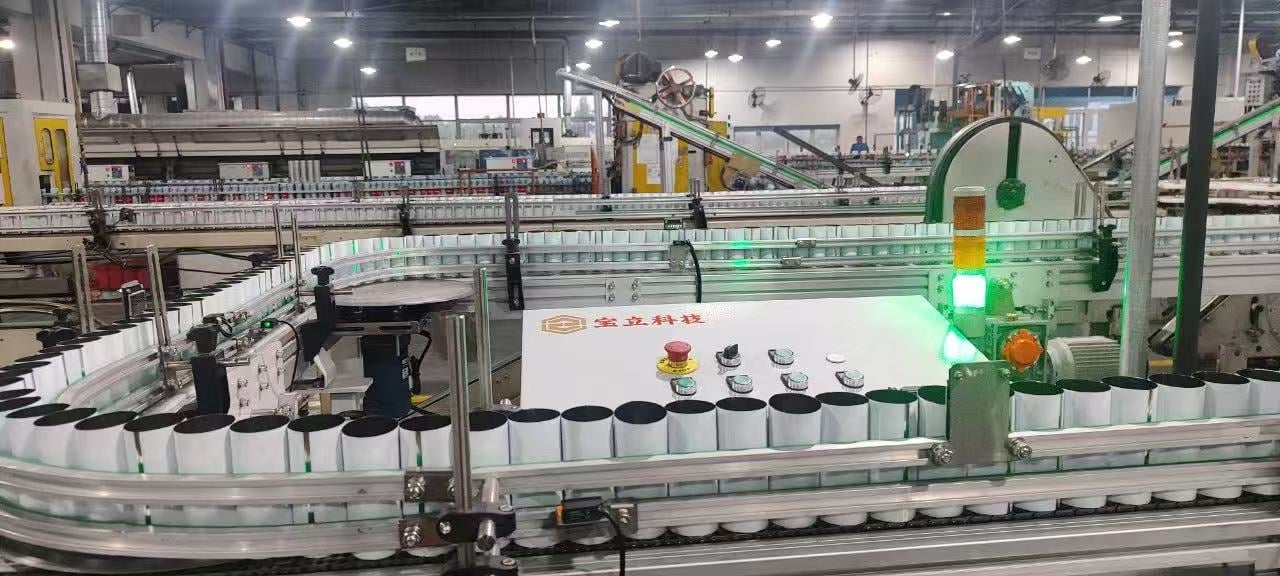
Empty Can Body Conveyor Machine: The Backbone of a Modern 3-Piece Can Line
An empty can body conveyor machine is the transport system that moves empty tinplate can bodies between stations on a 3-piece can line — welder, curing oven, cooling section, inspection, and on to end-of-line equipment. It's not one machine but a connected system, usually combining several conveyor types matched to what each section of the line requires.
Manual handling at any transfer point means dented cans, tipped stacks, and a line that stops every time someone clears a jam by hand. This is usually the part of the line buyers think about last, even though it often sets the real throughput ceiling — not the welder, not the oven.
If you're planning conveyor upgrades as part of a broader 3-piece can production line automation project, this is where to start.
Why Conveyor Systems Matter in Tin Can Manufacturing
Continuous flow. A conveyor that can't keep pace with the welder creates a queue nobody planned for, and queued cans get handled manually — defeating the point of automating the rest of the line.
Less can damage. Empty tinplate bodies are light and easy to dent. Sharp direction changes and inconsistent handoff speed are the most common causes of surface damage, usually invisible until final inspection.
Real throughput. A line's rated speed and its actual output are often two different numbers. The gap is usually transfer inefficiency, not the individual machines — which is why plants sometimes upgrade the wrong equipment first.
End-of-line automation. An automatic palletizing system can only run unattended if cans arrive at a consistent rate and orientation, which depends entirely on the conveyor feeding it.
Types of Empty Can Conveyor Systems
Chain conveyor handles long-distance, station-to-station transfer — the default for most of a can conveyor system's length.
Mesh conveyor runs through the oven and cooling section, where it needs to tolerate heat and let air circulate around the can for even curing.
Magnetic conveyor is specific to tinplate: since tinplate is ferromagnetic, a magnetic bed holds the can against the belt at high speed or on an incline, where gravity alone isn't reliable. This is the same principle behind a high-level magnetic palletizer.
Inclined and vertical conveyors let a line change elevation — feeding a mezzanine oven or routing around existing equipment — without breaking the transfer chain, usually paired with magnetic hold-down.
How an Empty Can Conveyor Fits the Line
Welder → Conveyor → Curing Oven → Cooling Section → Inspection → Conveyor → PalletizerAt each step, something has to happen without stopping flow: temperature has to drop before inspection, orientation has to stay consistent, and the final segment has to hand cans to the palletizer at a rate it can actually stack. A conveyor designed without these junctions in mind tends to work fine in testing and bottleneck at full speed.
How to Choose a Can Conveyor Machine
- Line speed — know your target cans per minute before comparing specs
- Can dimensions — diameter and height range determine guide spacing and belt selection
- Factory layout — floor-level chain conveyor is simplest, but incline/vertical sections solve space constraints
- Material contact — SUS304 for food-contact applications, non-negotiable on food can lines
- Integration — the conveyor needs a working PLC handshake with the welder and oven, not just a physical connection; mismatched control logic in a sheet feeding system is a common source of intermittent faults
Baoli's Conveyor Solutions
Hubei Baoli Technology Co., Ltd. designs and manufactures auxiliary automation equipment for 3-piece tinplate can production lines, including empty can conveyor systems, sheet feeding equipment, ovens, palletizers and end-of-line packaging machinery.
We don't sell conveyor as a standalone product — every layout is designed against the specific line it feeds, using Siemens PLC control with Schneider electrical components and SUS304 contact surfaces where required. Because we work across the whole line, we can tell you honestly whether a conveyor rebuild solves your bottleneck or the real constraint is elsewhere. See our empty can palletizer guide for the stage that follows.
Typical Applications
Food can lines need food-contact materials throughout and typically run high speeds. Beverage lines often run the highest speeds of the three, putting more weight on magnetic hold-down and PLC synchronization. General-line and chemical can production sees more size variation, so changeover flexibility matters more than raw speed.
Conclusion
A can conveyor isn't a connector between the machines that matter — it's the system that sets the line's real speed ceiling. If you're rebuilding or extending a 3-piece can line, send us your can spec and layout. We'll design the conveyor section around it.
FAQ
What is an empty can body conveyor machine? The transport system moving empty tinplate can bodies between stations on a 3-piece can line — from the welder through the oven, cooling, inspection, and on to end-of-line equipment.
Why is a magnetic conveyor preferred for tinplate cans? Tinplate is ferromagnetic, so a magnetic bed holds the can in place at high speed or on inclines, where gravity and guides alone aren't reliable.
Can Baoli design a conveyor for my existing line? Yes — we regularly design conveyor sections to integrate with existing welders, ovens, and palletizers rather than requiring a full-line replacement.
Please view more video from our youbute channel:https://youtube.com/shorts/9O4ppdVlpgY?is=go6wsjeyQzwHfVm5
The metal packaging industry{target="_blank"} continues to push line speeds higher while holding can damage down, driven partly by PLC-based automation{target="_blank"} replacing older relay control, in line with broader food packaging automation trends{target="_blank"} across the industry.