
 EN
 AR
 HR
 DA
 NL
 FI
 FR
 DE
 EL
 HI
 IT
 JA
 KO
 NO
 PL
 PT
 RO
 RU
 ES
 SV
 TL
 IW
 ID
 LT
 SR
 VI
 SQ
 HU
 TH
 TR
 AF
 MS
 GA
 BN
 HA
 IG
 MR
 NE
 YO
 MY
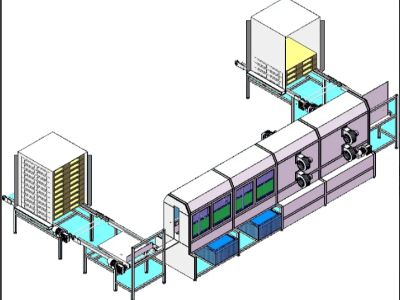
Brazilian Industries Embrace Automation: The Rise of Palletizers and Depalletizers for Milk Powder Cans
Improving Milk Powder Can Palletizing and Packaging Efficiency
A milk powder can palletizer helps manufacturers automate the stacking of milk powder cans or packaged products onto pallets, reducing repetitive manual handling and creating more consistent pallet loads. For manufacturers serving Brazil's food market, palletizing equipment, conveyors, and end-of-line packaging machines can work together to improve the handling of milk powder products before storage and transportation.
However, not every milk powder packaging line handles products in the same way. Some lines handle individual metal cans, while others palletize cartons or grouped packages containing multiple cans. Selecting the right palletizer depends on the actual product format, required output, stacking pattern, and factory layout.
https://youtube.com/shorts/PBQ3BA-aqGk?feature=share
https://youtube.com/shorts/Ft54I9BBYV8?is=jixwpHox1tGvkOvY
1. Why Palletizing Matters in Milk Powder Can Packaging
Milk powder cans need to be handled carefully throughout production and packaging. Depending on the packaging format, products may be vulnerable to dents, deformation, unstable stacking, or movement during transportation.
Manual palletizing can also involve repetitive lifting and stacking, particularly when production volumes increase. An appropriately configured automatic palletizer helps standardize the stacking process and reduces the need for operators to handle every package individually.
Before selecting a milk powder can palletizer, manufacturers should identify three key requirements:
Product format: Determine whether the machine will handle individual cans, multipacks, or cartons containing milk powder cans.
Stacking requirements: Define the pallet dimensions, number of layers, package orientation, and required load stability.
Production output: Match the palletizing speed to the actual output of the upstream packaging line.
These details help determine whether a conventional palletizer or a robotic palletizing system is more suitable.
2. Choosing a Palletizer for Different Milk Powder Can Formats
The packaging format is one of the most important factors when selecting a palletizer. A machine designed to handle cartons may not be suitable for stacking individual cans without an appropriate handling arrangement.
For manufacturers handling packaged milk powder products, several palletizing options may be considered.
Low-level palletizers can be suitable for applications where the required throughput, stacking method, and investment budget align with a simpler configuration.
High-level palletizers can support automated stacking operations with different product infeed and pallet-handling arrangements.
Rotary palletizers are suitable for specific stacking patterns and production layouts.
Robotic palletizers offer flexibility when handling different package formats or pallet patterns, provided that the gripping system and robot configuration are designed for the products involved.
The right choice depends on the actual application rather than the machine name alone. Manufacturers should consider package dimensions, product weight, required throughput, pallet specifications, and available installation space before making a decision.
For factories planning to expand production, it is also worth considering whether the palletizing system can accommodate future changes in packaging formats.
3. From Palletizing to Secure End-of-Line Packaging
Palletizing is only one stage of the packaging process. Once products have been stacked onto pallets, the loads may need to be transferred to strapping and stretch wrapping equipment before storage or shipment.
An integrated end-of-line packaging system can include:
Pallet conveyors to transfer completed pallet loads between workstations.
Automatic strapping machines to secure suitable palletized loads with straps.
Stretch wrapping machines to apply stretch film around the load and help maintain stability during handling and transportation.
When these machines are connected through an appropriately designed conveyor system, operators do not need to manually move every pallet between individual packaging stations.
The final configuration should match the product packaging, pallet dimensions, required packaging cycle, and shipping requirements. Strapping and stretch wrapping should be selected according to the load characteristics rather than treated as interchangeable processes.
For milk powder manufacturers, coordinating palletizing with downstream packaging can help create a more organized material flow from production to warehouse handling.
4. The Role of Empty Can Depalletizers in Milk Powder Filling Lines
While palletizers handle the finished products at the end of the process, empty can depalletizers serve a different purpose: unloading empty cans from pallets before they enter a filling line.
An automatic empty can depalletizer can reduce manual unloading and provide a more consistent supply of cans to downstream equipment.
The unloading method must match the can material. Magnetic depalletizers are suitable for tinplate cans, while push-type depalletizers can handle tinplate and aluminum cans, depending on the machine configuration.
Equipment selection should also account for can dimensions, pallet arrangement, filling-line speed, and the available space around the infeed area.
For manufacturers handling milk powder in metal cans, integrating an appropriate depalletizer at the beginning of the filling process and a suitable palletizer at the end creates two distinct automation points. Each should be designed around its own handling requirements.
5. Planning a Practical Automation Solution for Brazilian Manufacturers
For manufacturers in Brazil, an effective palletizing solution begins with an accurate understanding of the production process.
Before requesting a quotation, it is helpful to prepare the following information:
Can dimensions and material.
Whether the palletizer will handle individual cans, cartons, or multipacks.
Required production capacity and packaging cycle.
Pallet dimensions and desired stacking pattern.
Available factory space and conveyor layout.
Requirements for strapping, stretch wrapping, and pallet transfer.
Providing these details allows an equipment supplier to assess the application and recommend a suitable configuration.
Hubei Baoli Technology Co., Ltd. supplies auxiliary automation equipment for tinplate three-piece can production lines and also provides empty can depalletizing solutions for food and beverage filling lines. Its equipment portfolio includes low-level, high-level, rotary, and robotic palletizers, conveyor systems, automatic strapping machines, and stretch wrapping machines.
Depending on the project requirements, these machines can be evaluated as individual units or as part of a connected end-of-line packaging solution. Baoli provides solution design, equipment manufacturing, installation guidance, production support, and after-sales service.
For milk powder can applications, the key is to select equipment based on the actual product and packaging format, ensuring that palletizing and downstream packaging work together effectively.
Conclusion: A More Consistent Approach to Milk Powder Can Palletizing
For milk powder manufacturers in Brazil, a properly selected milk powder can palletizer can help standardize pallet stacking, reduce repetitive manual handling, and improve the flow of packaged products toward storage and shipment.
When combined with suitable pallet conveyors, strapping machines, and stretch wrapping equipment, automated palletizing can become part of a more coordinated end-of-line packaging process. An empty can depalletizer can provide additional automation at the beginning of the filling line.
The best solution depends on product format, production capacity, pallet specifications, and factory layout.
Looking for a palletizer or an integrated end-of-line packaging solution for your can handling operation? Contact Baoli to discuss your product dimensions, required capacity, and factory layout.
Table of Contents
- Improving Milk Powder Can Palletizing and Packaging Efficiency
- 1. Why Palletizing Matters in Milk Powder Can Packaging
- 2. Choosing a Palletizer for Different Milk Powder Can Formats
- 3. From Palletizing to Secure End-of-Line Packaging
- 4. The Role of Empty Can Depalletizers in Milk Powder Filling Lines
- 5. Planning a Practical Automation Solution for Brazilian Manufacturers
- Conclusion: A More Consistent Approach to Milk Powder Can Palletizing