
 EN
EN
 AR
AR
 HR
HR
 DA
DA
 NL
NL
 FI
FI
 FR
FR
 DE
DE
 EL
EL
 HI
HI
 IT
IT
 JA
JA
 KO
KO
 NO
NO
 PL
PL
 PT
PT
 RO
RO
 RU
RU
 ES
ES
 SV
SV
 TL
TL
 IW
IW
 ID
ID
 LT
LT
 SR
SR
 VI
VI
 SQ
SQ
 HU
HU
 TH
TH
 TR
TR
 AF
AF
 MS
MS
 GA
GA
 BN
BN
 HA
HA
 IG
IG
 MR
MR
 NE
NE
 YO
YO
 MY
MY
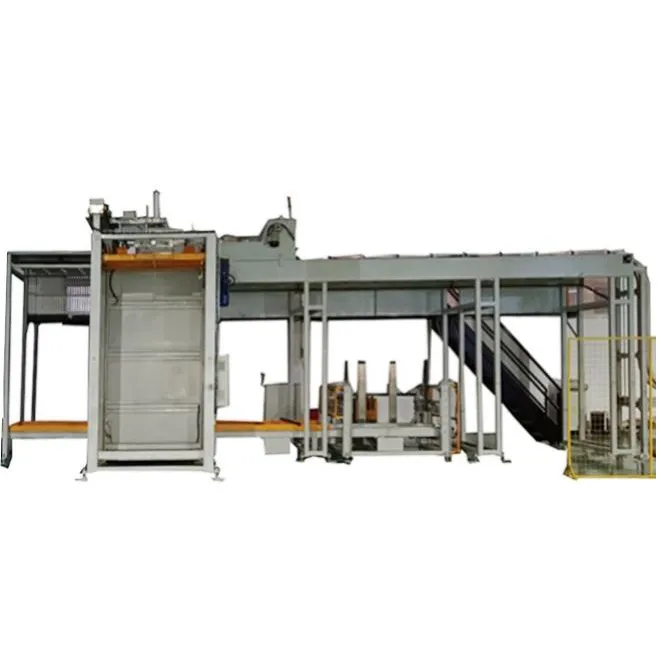
Best Automatic Palletizing Solution for Can Factories: How Automation Improves Production Efficiency
In the modern can manufacturing industry, production efficiency and automation level have become important factors that determine a factory’s competitiveness.
As labor costs continue to increase and customers demand faster delivery, many can manufacturers are upgrading their production lines with automated equipment. Among all automation processes, palletizing plays an important role because it directly affects product handling, storage, and transportation efficiency.
A well-designed automatic palletizing solution can help can factories reduce manual operations, improve production stability, and create a smoother connection between manufacturing and logistics.
Hubei Baoli Technology specializes in automation equipment connecting every key process of the 3-piece can production line—from sheet handling and can conveying to palletizing and end-of-line packaging.
With extensive experience in can production automation, we provide customized solutions including automatic palletizers, can conveying systems, robotic handling equipment, and complete end-of-line automation systems for global can manufacturers.
Why Do Can Factories Need an Automatic Palletizing Solution?
For many years, manual palletizing was widely used in factories. However, as production speeds increase, manual operations are becoming less efficient and more difficult to manage.
Can factories often face challenges such as:
• Increasing labor costs
• Difficulty recruiting skilled workers
• Unstable pallet stacking quality
• Lower production efficiency
• Limited production capacity
An automatic palletizing solution can solve these problems by replacing repetitive manual stacking work with reliable automation.
With an automated system, products can be arranged according to preset pallet patterns, ensuring consistent stacking quality and improving transportation safety.
For 3-piece can manufacturers, automation is especially important because production lines often operate continuously at high speeds. A stable palletizing system helps ensure that the final production stage does not become a bottleneck.
What Is an Automatic Palletizing Solution?
An automatic palletizing solution is a complete system that uses mechanical equipment, control systems, and automation technology to automatically arrange products onto pallets.
Unlike a single palletizing machine, a complete solution usually includes:
• Product conveying system
• Pallet positioning system
• Palletizing equipment
• Pallet supply system
• Layer separation system
• Control system
• Packaging connection equipment
The purpose is to create a continuous process from production line output to warehouse transportation.
For can factories, an effective automatic palletizing solution should be designed according to:
• Can type and size
• Production speed
• Packaging method
• Factory layout
• Storage requirements
Learn more about our customized solution:
[Automatic Palletizing System for Can Production Lines → /products/automatic-palletizer]
Key Benefits of Automatic Palletizing for Can Factories
1. Higher Production Efficiency
One of the biggest advantages of automation is improved production speed.
Manual workers cannot always maintain the same working speed for long periods. An automatic palletizing system can operate continuously and maintain stable performance.
This is especially important for high-output can factories where production lines may run 24 hours a day.
By connecting palletizing equipment with upstream and downstream machines, factories can achieve a smoother production process.
Related equipment:
[Can Conveyor System → /products/can-conveyor-system]
2. Reduced Labor Dependency
Finding experienced operators has become a challenge for many manufacturers.
Automatic palletizing reduces the amount of repetitive manual work and allows employees to focus on more valuable production tasks.
For factories expanding production capacity, automation can provide long-term cost advantages.
3. More Stable Pallet Quality
A properly stacked pallet is important for transportation and storage.
Manual stacking may cause:
• Uneven pallet layers
• Unstable product arrangement
• Increased risk of product damage
An automatic palletizing solution uses programmed patterns to ensure consistent results.
This helps improve:
• Warehouse efficiency
• Transportation safety
• Customer satisfaction
4. Better Integration With Smart Manufacturing
Modern factories are moving toward intelligent production systems.
An automatic palletizing solution can be integrated with:
• Conveyor systems
• Packaging machines
• Warehouse management systems
• Production monitoring systems
This allows manufacturers to create a more connected and efficient factory environment.
According to the International Federation of Robotics, industrial automation and robotics continue to expand across manufacturing industries as companies look for higher efficiency and flexibility.
Choosing the Right Automatic Palletizing Solution for Can Production
Different can factories have different production requirements. Choosing the right system requires considering several important factors.
1. Production Speed Requirements
Production speed is one of the most important factors.
A small factory may need a simple palletizing system, while a large beverage or food can manufacturer may require a high-speed solution.
Before selecting equipment, manufacturers should evaluate:
• Current production output
• Future expansion plans
• Number of production lines
• Required palletizing speed
A professional supplier should recommend equipment based on actual production conditions.
2. Can Handling Method
Different products require different handling technologies.
For metal cans, especially empty cans, stable handling is very important.
Common solutions include:
Magnetic Palletizing System
Magnetic palletizers use magnetic technology to move metal cans efficiently.
Advantages:
• Fast handling speed
• Stable product transfer
• Suitable for metal cans
Robotic Palletizing System
Robotic palletizers provide flexibility and are suitable for factories with multiple product types.
Advantages:
• Flexible operation
• Easy product changeover
• Multiple pallet patterns
The right choice depends on factory requirements and production goals.
3. Factory Layout and Space
Every factory has different installation conditions.
A professional automatic palletizing solution should consider:
• Available floor space
• Conveyor direction
• Pallet storage area
• Operator access
• Maintenance requirements
Customized layout planning can help maximize production efficiency.
Hubei Baoli Technology provides automation planning based on customer factory conditions and production requirements.
Automatic Palletizing Solution for 3-Piece Can Production Lines
The 3-piece can production process includes many interconnected steps.
A typical production flow includes:
Sheet handling
↓
Can forming and welding
↓
Inspection
↓
Can conveying
↓
Packaging
↓
Palletizing
↓
Stretch wrapping and storage
At the end of this process, palletizing connects production with logistics.
Hubei Baoli Technology focuses on automation equipment for 3-piece can production lines, helping manufacturers improve efficiency through integrated solutions.
Our automation solutions include:
• Can handling equipment
• Can conveying systems
• Automatic palletizers
• Robotic feeding systems
• End-of-line packaging systems
Learn more:
Why Choose Hubei Baoli Technology?
Choosing an automation supplier is a long-term decision.
A reliable supplier should provide not only equipment but also engineering experience and technical support.
Hubei Baoli Technology specializes in automation equipment connecting every key process of the 3-piece can production line—from sheet handling and can conveying to palletizing and end-of-line packaging.
Our advantages include:
• Focus on can manufacturing automation
• Customized equipment design
• Complete production line integration
• Engineering support
• Experience with international projects
We understand that every can factory has different challenges. Our team works with customers to develop solutions based on production speed, product characteristics, and factory layout.
More about our company:
[About Hubei Baoli Technology → /about-us]
Future Development of Automatic Palletizing in Can Manufacturing
As the global manufacturing industry continues to move toward automation, can factories will increasingly adopt intelligent production solutions.
Future palletizing systems will focus on:
• Higher speed
• Greater flexibility
• Better energy efficiency
• Smarter production management
An automatic palletizing solution is not only a replacement for manual labor. It is an important step toward building a modern and competitive factory.
For can manufacturers, investing in the right automation system can improve productivity, reduce operating costs, and create long-term business value.
Conclusion
A reliable automatic palletizing solution can significantly improve the efficiency and stability of can production lines.
When choosing a solution, manufacturers should consider production speed, product characteristics, factory layout, and supplier experience.
The ideal automation partner should understand the complete production process and provide customized solutions rather than only selling individual machines.
Hubei Baoli Technology is committed to helping global can manufacturers achieve more efficient and intelligent production through professional automation solutions.
Table of Contents
- Why Do Can Factories Need an Automatic Palletizing Solution?
- What Is an Automatic Palletizing Solution?
- Key Benefits of Automatic Palletizing for Can Factories
- Choosing the Right Automatic Palletizing Solution for Can Production
- 1. Production Speed Requirements
- 2. Can Handling Method
- 3. Factory Layout and Space
- Automatic Palletizing Solution for 3-Piece Can Production Lines
- Why Choose Hubei Baoli Technology?
- Future Development of Automatic Palletizing in Can Manufacturing
- Conclusion